Most exhibit material decisions are made by picturing the booth on the show floor, lit and finished, on the morning the doors open. That is the one moment in an exhibit component’s life when nothing bad happens to it. The damage happens everywhere else: in the crate, in the truck, on the drayage dock, during a build against the clock and a teardown against a louder one. Scoring acrylic and polycarbonate against the show floor alone picks the prettier material. Scoring them against the whole cycle picks the right one — and the answer is usually both, in different places.
Score the materials against the real cycle
An exhibit component’s year looks like this, repeated per show: packed into a crate, loaded onto a truck, unloaded by a forklift that is handling fifty other crates, moved across a hall by drayage labor, unpacked and assembled by a crew with a deadline, shown for three days, then disassembled by a crew with a flight to catch, repacked, and trucked home. Temperature swings in the trailer, handling by people who have never seen the piece, and a teardown that is always faster than the build. A material that only considers the show floor misses every one of those abuse points, and the exhibit weight and drayage post explains why the handling leg is where exhibit budgets quietly go.
Acrylic’s case: presentation
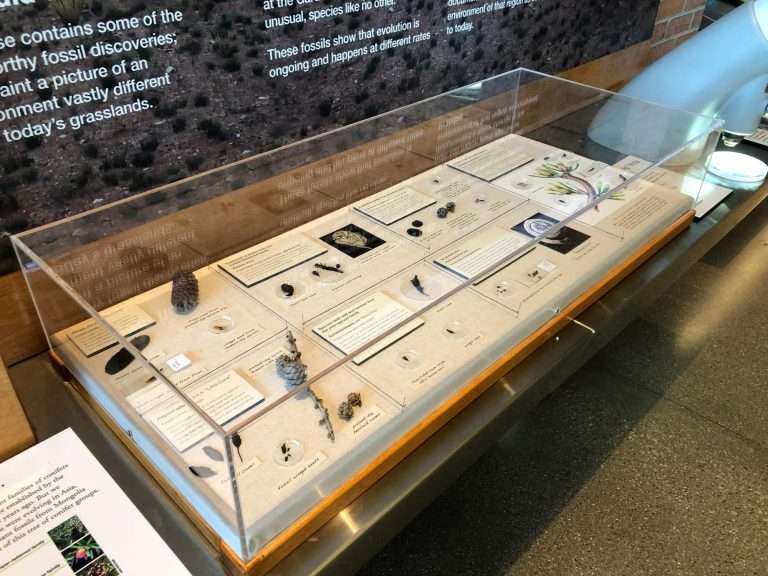
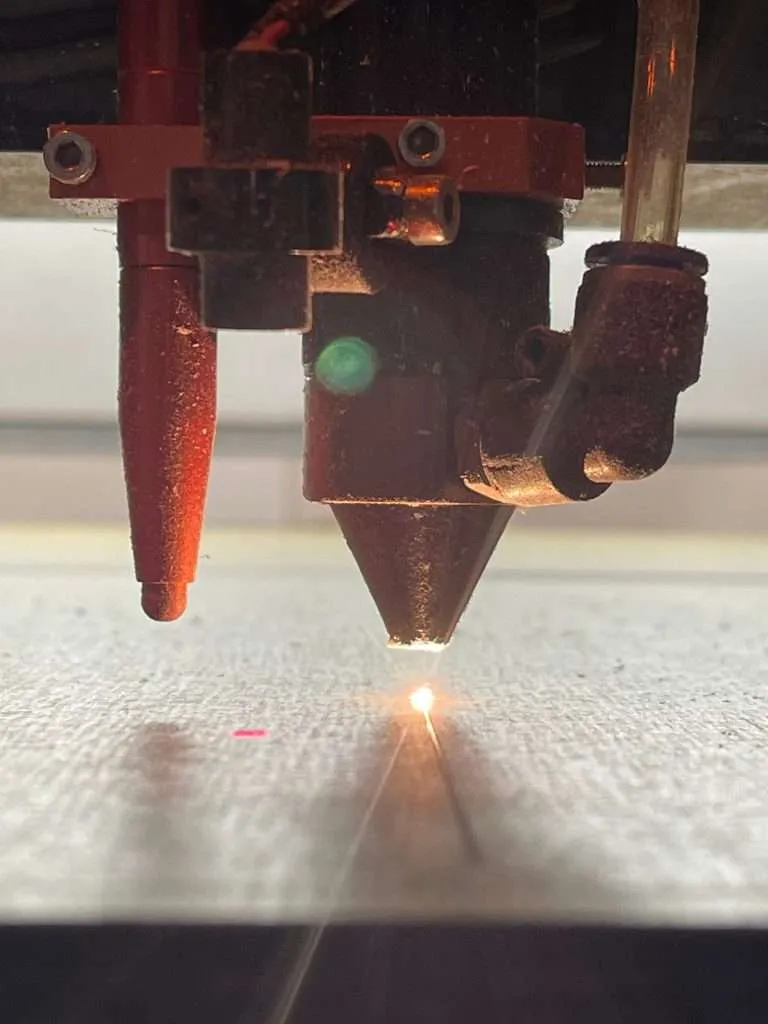
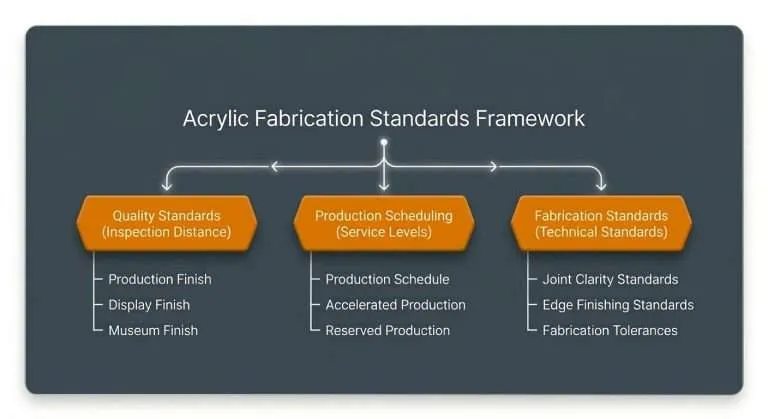
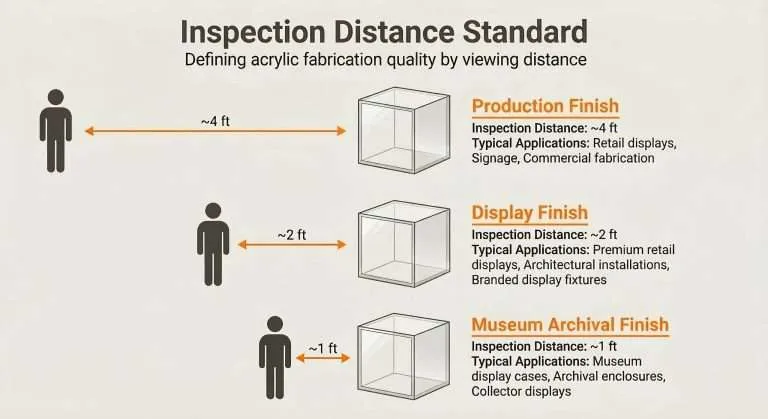
Acrylic is the presentation material. Its clarity is the benchmark the other clears are measured against; it is stiffer per thickness than polycarbonate, so a panel stays flat in a frame with less thickness; and it takes a true polished edge — the six published methods of the Acrylic Edge Finishing Standards, from raw saw-cut through sanded, laser-cut, flame-polished, buff-polished and diamond-polished, apply to acrylic in full. Laser cutting and flame polishing in particular are acrylic methods; neither is used on polycarbonate, which is cut and machined by other methods. For vitrines, product cases, photographed surfaces and any component held to a Display Finish or Museum Archival Finish under the Acrylic Quality Standards, acrylic is the material that can be finished to the grade. Its trade is that it is the less tough of the two, so edges, fastener holes and sharp inside corners are where it needs design attention or a different material.
Polycarbonate’s case: survival
Polycarbonate is the survival material. Its impact toughness is far beyond acrylic’s — it is the material for parts that get dropped, pried, racked and leaned on: high-touch demo surfaces, guards around a working product, the connection pieces that are assembled and disassembled at every show, panels in the path of the drayage cart. Its trades are the mirror of acrylic’s: a softer surface that scratches and hazes with handling and cleaning, and edges that do not finish the way acrylic’s do, because flame polishing — the method that makes most acrylic edges disappear — is not an option on polycarbonate, and a mechanically finished polycarbonate edge does not read the way a polished acrylic edge does. A polycarbonate component is specified to survive, and its visible surfaces are either protected or accepted at a Production Finish grade. The acrylic vs polycarbonate post covers the two materials’ properties outside the exhibit context.
The crack-vs-scratch decision rule
The rule that resolves most component-level decisions is to name the part’s failure mode in the field. If the way this part will fail is cracking — it carries fastener holes, it has snap-fit or slide-fit features, its edges take impact during handling or assembly, it is a surface people lean on or set things down on — specify polycarbonate. If the way this part will fail is scratching — it is a flat visible surface that is wiped, repacked and looked at closely, and it is never struck — specify acrylic, and consider retaining the protective masking between shows so that the surface arrives at each show as it left the shop.
Two refinements. A part that faces both failure modes — a demo surface that is both struck and scrutinized — is a part to redesign so the two jobs are split between two pieces, rather than a part to compromise on. And a part that fails by cracking only because of its design — a fastener hole crowding an edge, a sharp inside corner — may be an acrylic part with a design problem rather than a polycarbonate part; the fastening vs bonding post covers the joint and fastener details that decide this.
Mixed booths are correct booths
Specify per component, not per booth. An acrylic vitrine over the hero product and a polycarbonate guard over the working demo in the same build is not inconsistency — it is the sign of a specification done thoughtfully, each piece chosen for what will happen to it. A booth specified as “all acrylic” has polycarbonate jobs being done by the wrong material, and a booth specified as “all polycarbonate” has given up the finish on every surface that could have carried it. The exhibit component materials guide lists the common components with the material each usually wants, and designing exhibits for repeat shows covers how the per-component decision pays back over a season.
The cost factors that actually dominate
Material cost differs between the two, and buyers often start there. It is rarely the deciding economics. Over an exhibit’s life, two factors dominate: replacement frequency and drayage weight. A panel that survives five shows beats a cheaper panel replaced twice, once the replacement’s fabrication, shipping and the scramble to get it to the next show are counted. And every pound in the crate is paid for at every move — material thickness, which the toughness decision partly sets, is a weight decision too. Score the two materials by what the component costs across a season, not by what the sheet costs on the day, and the per-component answer usually becomes obvious. The trade show and event builds guide places the material decision in the full planning sequence.
Building out a booth component list? Send the drawings with a note on which parts get handled, struck or scrutinized, and the material question comes back answered per component with the quote.