A research deadline is not like a retail deadline, and it is worth saying why before talking about tiers. A grant period ends on a date the sponsor set. Equipment has to be operational for an experiment that is scheduled around shared instruments, booked beam time or a visiting collaborator. A review committee’s site visit is on the calendar. A missed window on a custom fixture can cost a season of data, not a week of sales — and “we’ll try” is not an answer a lab manager can take back to a principal investigator. What the research buyer needs from a fabricator is date language. The Production Scheduling tiers are that language.
The three tiers, stated accurately
The Production Scheduling standard defines three service levels, and the differences between them are precise.
Production Schedule — the standard tier. Projects are scheduled based on available fabrication and assembly capacity and completed in sequence with other scheduled work. The manufacturing completion date is scheduled, not guaranteed. It is appropriate for projects that do not require a guaranteed completion date.
Accelerated Production allows a project to move forward in the production schedule when available capacity allows. It improves timelines, and its completion date is still scheduled, not guaranteed.
Reserved Production allocates dedicated fabrication capacity to guarantee a specific manufacturing completion date. It is designed for projects with fixed deadlines. Only Reserved Production guarantees a completion date.
Two of the three tiers are explicit that the date is not guaranteed. That is not a weakness in the standard — it is the standard refusing to call an estimate a commitment, which is exactly the property a research buyer should want from the document they are relying on. The tiers explained post works through the three in more depth.
The honest decision rule
The tier is risk allocation, not a speed upgrade, and the decision rule follows from that. If the date can slip a week without consequence — a replacement cover for an instrument that is already running, a fixture for a project still months from its first experiment — the standard Production Schedule is the economical choice, and it is the choice most lab orders should make. If the date is contractual — a grant close, scheduled beam time, a committee visit, an experiment that cannot be rebooked — Reserved Production is the correct specification, because it is the only tier whose date is a guarantee rather than a forecast. Accelerated Production sits between them for the case where sooner is genuinely preferred and the date is not fixed.
The question to ask is not “how fast can you make it” but “what happens if it arrives a week late.” If the answer is “nothing much,” the standard tier. If the answer is “we lose the window,” Reserved. Put the consequence next to the tier and the choice makes itself.
One worked timeline
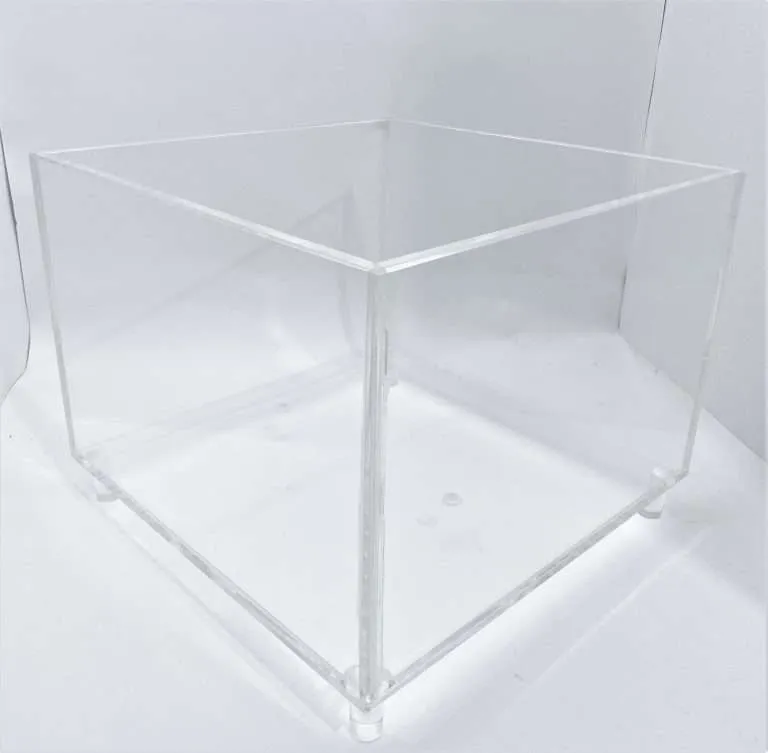
Take a fixture needed for experiments starting the first week of a term — an enclosure of the kind the instrument enclosures and equipment covers post describes, built around an instrument that is already in the lab. Plan it backward, without durations, because the durations are the quote’s to state and the ordering is what matters.
The last step is the first experiment, on a date that is fixed. Before it, installation and fit-up in the lab, which needs the fixture on site. Before that, transit, which needs a manufacturing completion date. Before the completion date, fabrication, which needs the project in the schedule. Before scheduling, the project has to be ready and paid — an approved drawing, confirmed material, and payment made, because the Production Schedule is built in the order projects come in and are paid for. Before readiness, the drawing has to be approved, which means the file review and any clarifying questions have been answered. And before that, the RFQ, with the drawing package the RFQ drawing checklist describes.
Now notice where the tier decision lands. It is chosen on the quote — where Reserved Production is priced as its own line, and accepted when the schedule can support the date — and takes effect the moment the project becomes ready and paid, which is when a Reserved booking commits capacity to the completion date. Every day between the quote and that moment is a day the guarantee is not yet protecting. A research buyer who decides on Reserved at the RFQ, and who gets the drawing approved and the payment made promptly, has a guaranteed completion date that back-plans cleanly to the first experiment. A buyer who waits to see how the standard queue looks has, by the time the answer is known, already spent the time that a Reserved booking would have protected.
The procurement-office translation
Purchasing offices buy from quotes, and a quote line that says “Reserved Production” means nothing to a buyer who has not read the standard. Give purchasing the one-line translation, in the requisition or wherever your office records what a line item is for:
“Reserved Production service level per the quote — dedicated fabrication capacity for the manufacturing completion date stated on the quote; required for [experiment / grant period / site visit] on [date].”
That sentence tells the purchasing officer that the tier is a deliverable with a reason, not an upgrade someone added, and it puts the deadline the tier protects next to the order. If the standard tier was chosen on purpose, say that too — “Production Schedule service level; no guaranteed completion date required” — so that nobody later reads a standard-tier order as a missed Reserved one. If your purchasing office issues a purchase order number, include it with the order and it goes on the order and the invoice for your records; the project enters the schedule once it is approved and paid. The acrylic in universities and research labs guide covers the rest of specifying custom fabrication for a research setting.
Have a fixture with a date that cannot move? Send the drawing and the date, and the quote comes back with the service level that fits it.