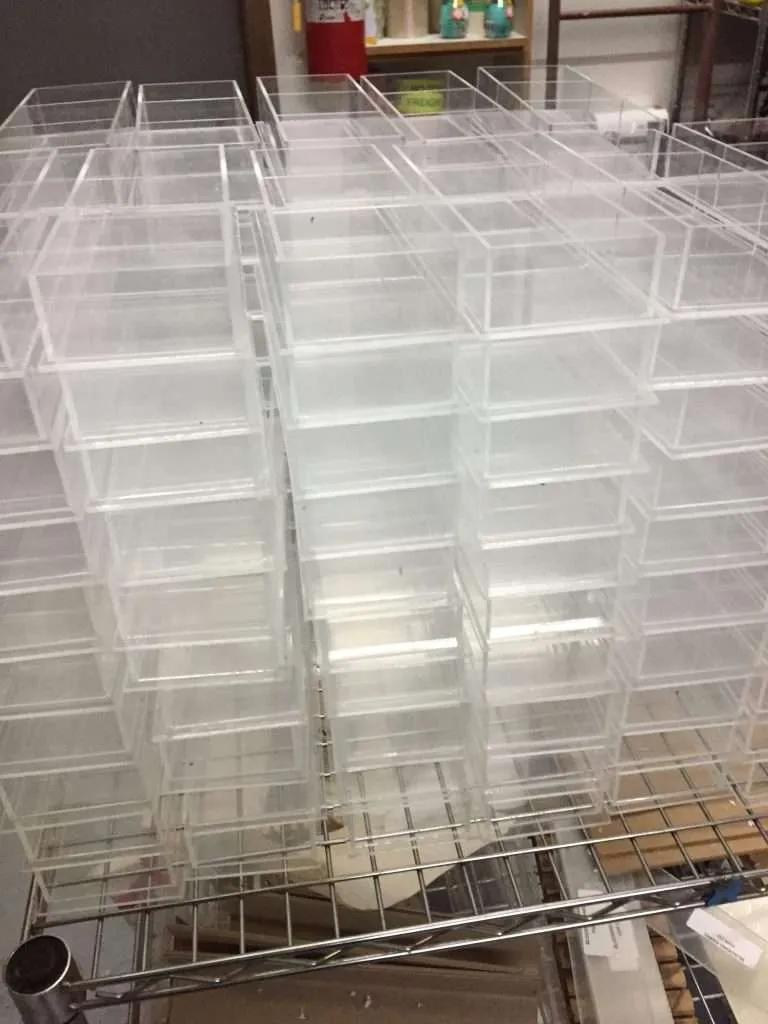
Acrylic almost never breaks in transit. It scratches. The failure mode is cosmetic, not structural — fine abrasion from a part vibrating against its own packaging for seven hundred miles, a polished edge that took a knock through a thin void in the foam. A part can arrive geometrically perfect and commercially ruined. Everything about packing finished acrylic follows from that one fact, and so does most of what a buyer should know about receiving it.
Protection is scratch-first
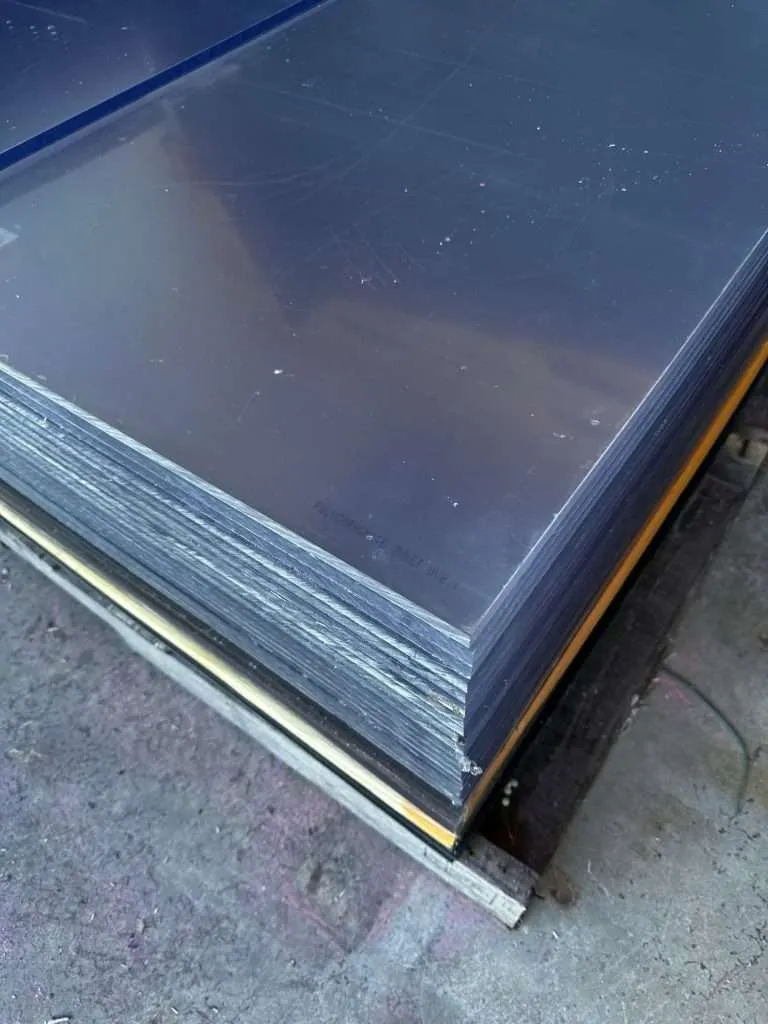
Acrylic sheet arrives from the manufacturer wearing protective masking, and that film is the cheapest insurance in the whole process: it stays on through fabrication wherever the work allows, and the single best thing a buyer can do at the other end is leave protection in place until the piece is actually being installed. Unwrapping a display in the receiving bay, then moving it twice before it reaches the floor, is how pristine work picks up its first scratch on the buyer’s side of the dock.
Inside the box, the rules are soft interleaving between parts, no part-on-part contact anywhere, and extra attention to polished edges — the most finished surface on the piece is also the one that shows a transit knock most honestly, which is why a finished edge earns its own protection and not just a spot in the quality spec.
Parcel or freight: what actually decides
The decision drivers are size, weight, quantity, and value density — how much finished value is concentrated in one box.
- Parcel suits smaller parts in modest quantities, and its risk profile is the sorting hub: many short, rough handling events. Packing for parcel means packing for drops.
- Freight takes over as parts get large, heavy, or numerous, and its risk profile is the forklift and the transfer dock: fewer events, bigger ones. Crated freight is how large display work and volume runs travel.
Crating is a value question, not a line item to shave. On a significant display or a volume run, the priority is arriving in good condition — the crate exists to protect weeks of fabrication, and economizing on it is the classic false saving. We factor crating into the work because rebuilding a damaged piece costs far more than boxing it properly ever did. (Weight itself becomes its own planning problem in exhibit work — the drayage post covers that side.)
One wrinkle worth planning deliberately: a multi-store rollout changes the answer. Thirty identical kits can ship as one consolidated freight move to a staging point, or as thirty parcel shipments direct to stores — the right choice depends on who installs, when stores can receive, and how much handling each kit can absorb. Program work usually settles this once, in the program spec, instead of re-deciding it per wave.
Transit time is part of the deadline
Here’s the deadline math that catches buyers: most people plan to the completion date, but the floor set, the install crew and the opening all run on the arrival date. The guaranteed date in Reserved Production is a manufacturing completion date — the day the work comes off our floor, not the day it reaches yours — so the right way to plan is backward from the install date: install date, minus receiving and staging time, minus transit days, equals the manufacturing completion date the project actually needs. Bring that date to the quote conversation — it’s the date the schedule should be built around. A project that books Reserved against the install date instead of the completion date it needs has quietly spent its schedule guarantee on the wrong milestone — the same backward-planning discipline that holding a client promise requires everywhere else.
Receiving discipline that protects you
The last leg belongs to the buyer, and a few habits cleanly separate a freight claim from a fabrication question:
- Photograph the crate before opening it — condition on arrival, timestamped, from a phone.
- Note any carrier damage on the delivery receipt before signing. A clean signature is the carrier’s best friend in a claim dispute.
- Inspect within your receiving window, not when the install crew shows up three weeks later. Freight claims have clocks.
None of this is adversarial — it’s bookkeeping that keeps a transit problem a transit problem. If something’s wrong with the work itself, that’s a different conversation, and the photos help there too.
Shipping isn’t an afterthought to production planning; it’s the last phase of it, and it belongs in the schedule from the first conversation — the production planning guide treats it that way. If your project has a hard floor date and a long lane, bring both to the quote: the freight calendar is easiest to solve while it’s still long.