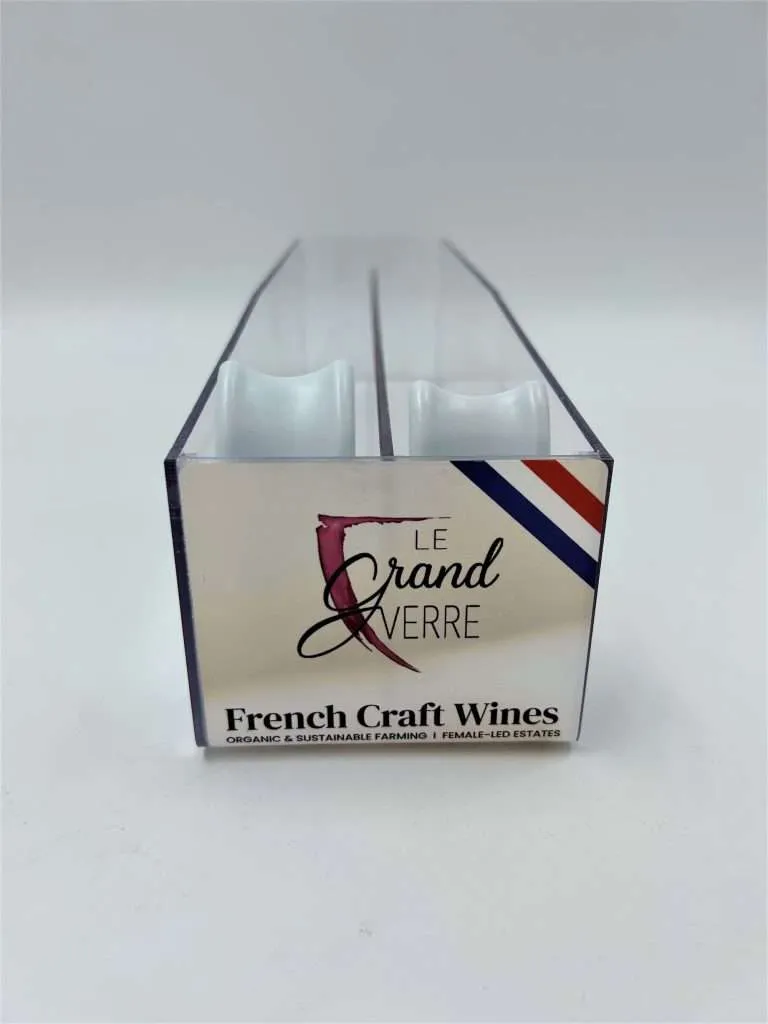
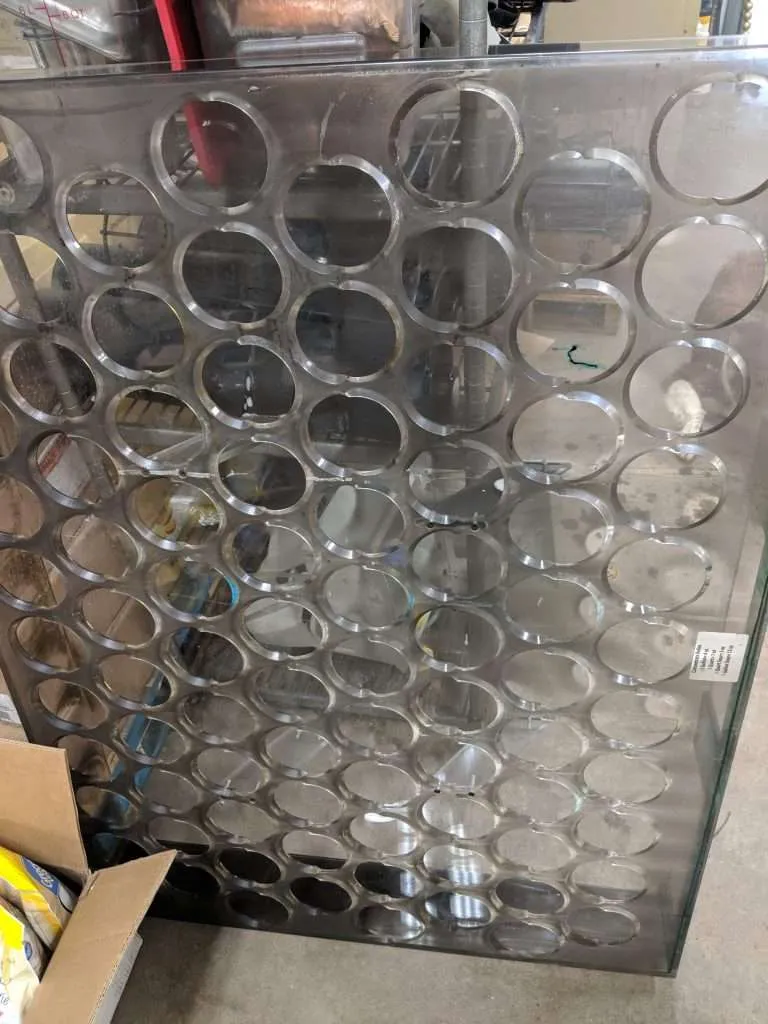
A real share of the requests that reach our quote desk begin with a picture. A photo of a display seen at a trade show, a screenshot, a piece that’s been on the counter for years and needs a sibling — and the question “can you make something like this?” The answer is usually yes. But a photo is a thin file format for a physical object, and the distance between “like this” and a buildable spec is a short list of facts the picture doesn’t carry. Knowing the list is what makes this kind of request quote fast.
What a photo cannot tell a fabricator
Five things, almost every time. Real dimensions — a photo has no scale unless something recognizable sits in frame. Thickness — the single spec that most changes how a piece is built and what it costs, and nearly invisible in a picture. The material itself — clear acrylic, glass and polycarbonate photograph alike, and they are not interchangeable to build with. Edge treatment — whether those edges are flame-polished, buff-polished or machine-finished is a labor question the camera flattens. Joint construction — how the piece is actually held together, which drives both its strength and its look. These five are exactly the questions we come back with, so a request that answers them up front skips the round trip.
What to send with the picture
Approximate is fine to start — the point is to bound the problem, not to draft. With the photo, send: overall dimensions (even paced-off ones); what goes in or on it, since the held object drives the fit; quantity, because one and forty are different projects; where it lives — indoor or outdoor, handled hourly or dusted monthly; and the needed-by date. That handful plus the image is enough for a meaningful first conversation, and it feeds the same intake as a drawn project: every RFQ gets a file review, process planning, and a material and yield check against available sheet sizes. If some of the details are still open, we can give a rough estimate of the project cost on what you’ve sent, with the firm quote following once they settle. The quoted figure is then what the project costs — unless the project itself changes along the way (a new element, added printing, a revised dimension), in which case the change is priced accordingly. The full checklist of what makes any request quotable is in file prep for quoting and the questions your fabricator will ask.
A physical reference beats any photo
If you have the actual piece — the survivor of the original set, the sample from the old supplier — it outranks every picture of it. A sample shows thickness directly, puts the real edge and joint under the light, and settles the material question in seconds. It helps the build, not just the quote: holding close to an original is much easier with the original on the bench, because the comparison is made against the part rather than a memory of it. Fully custom pieces can vary slightly between makers and between runs, so “much easier to hold close” is the honest phrasing — a reference raises the fidelity ceiling without pretending to be a drawing.
“Like this, but…” — know which changes are which
Most reference requests carry a modification, and modifications sort into two bins. Simple: bigger, smaller, thicker, a different color, a different closure — the geometry survives, the numbers change. Process-changing: a formed curve where the original was flat, printed graphics where the original was engraved, a one-piece look where the original was fastened — these change how the piece is made, not just its dimensions, and they’re worth flagging as the real design decisions they are. The cutting-route comparison and the rendering-to-spec post both show the same principle from other directions: the look and the build method are separate decisions, and the second one is ours to propose and yours to approve.
The one hard line
Worth stating plainly: we can make the piece you’re specifying, but we can’t breach someone else’s intellectual property. A product category — a riser, a tray, a five-sided cover, a literature holder — belongs to nobody, and building you an excellent one is ordinary work. Reproducing another company’s protected design, mark or distinctive product is not something we’ll do. In practice the line almost never binds, because what buyers actually want from a reference photo is the function and the quality level, not the clone — and we’ll work with you toward a version that meets what you actually need, proposing modifications where the original’s approach wasn’t right for your use anyway. What tolerances the finished piece is held to works the same as any project: per process, under the published Fabrication Tolerances.
So: photograph the piece in front of you — the sample on your counter, the survivor of the original set — square-on and at an angle, put a tape measure or a credit card in one shot if you can, note the five facts above, and send the lot. “Can you make this?” is a question we’re set up to answer quickly — the design-for-fabrication guide covers everything that happens after the answer is yes.