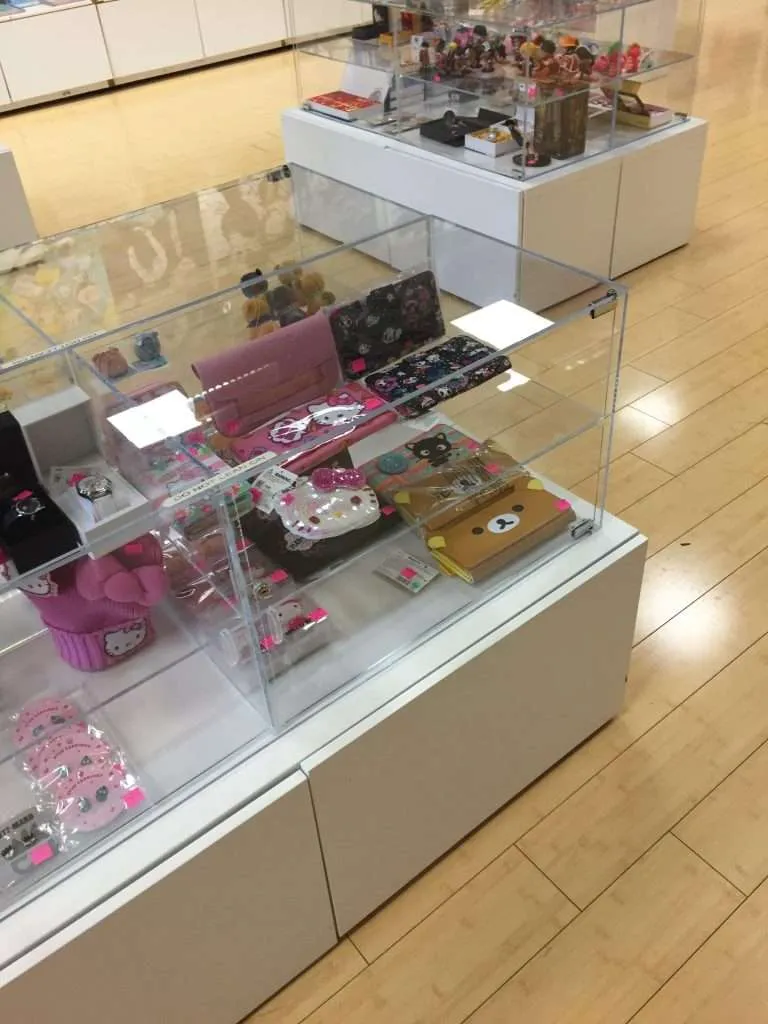
The move from direct-to-consumer to a physical shelf changes what your brand is evaluated on. Online, the product and the content carried everything. In the buyer meeting, a category manager is weighing something additional and largely invisible to DTC brands: can this brand execute at retail? Will the fixtures fit the planogram, survive the floor, and arrive on the reset date — in every door, on the first try? The display program is part of the sell-in, because it answers a question the buyer was going to ask anyway. Walking in with one is the difference between pitching a product and pitching a program.
What “retail-ready” concretely includes
Planogram-dimensioned fixtures. Retail space is allocated in exact inches — shelf depth, height clearance, facing width. A fixture designed to the retailer’s planogram constraints slots into the reset like it belongs there; a beautiful fixture designed to the product alone becomes a field problem in three hundred stores at once. The planogram document is a design input, and asking for it early reads as competence, not dependence.
Compliant pack-out. Chains publish routing and labeling requirements — carton specs, label placement, shipment structure — and compliance is scored. The display program includes its pack-out design: how fixtures are protected, labeled, and structured so receiving at each door is a non-event. This is unglamorous and completely load-bearing.
Replacement parts on call. Floors break things. A program answer sounds like: damaged components are reorderable individually, from drawings and files retained on record, so a cracked shelf in one door is a small parcel, not a fixture replacement or — worse — a gap on the shelf where your brand used to be.
Production that scales. Buyers think in door counts, and “what happens at five hundred doors” is a fair question. The answer is a fabrication partner and a program design built for repeatability — which is what the next two sections are about.
The pilot-door discipline
Launch programs prove themselves in limited doors first, and the discipline is treating the pilot as an instrumented experiment rather than a small launch. Three kinds of learning come back from pilot doors, all cheap at ten doors and expensive at five hundred: restock reality — does the fixture reload the way the design assumed, one-handed, by staff who have never seen it before; damage patterns — what actually cracks, scuffs, or walks away, which is reliably not what the design review predicted; and shopper interaction — what gets touched, moved, and leaned on. The chain-wide order multiplies whatever the pilot taught — or whatever it would have taught. Revise the design between pilot and rollout, and door 500 inherits the fixes instead of the mistakes.
Reset dates are guaranteed-ship-date problems
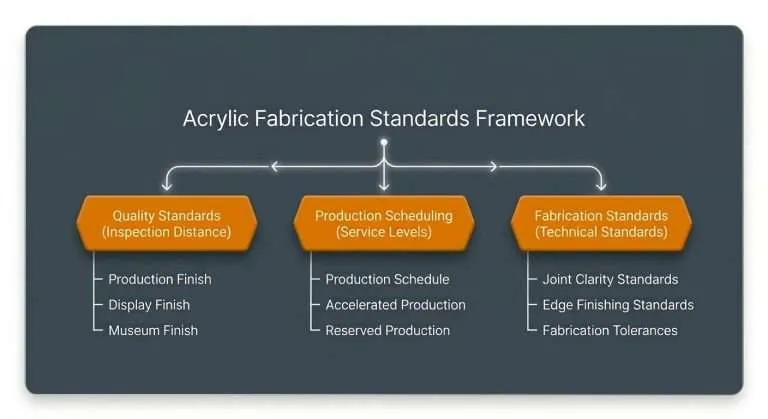
Retail dates are unlike DTC dates: a confirmed reset window and a PO compliance window are commitments with consequences, not targets. In Production Scheduling terms, that maps cleanly: a confirmed chain-wide reset is Reserved Production territory — dedicated capacity against a guaranteed ship date, because the floor-set will not move for your fixtures — while pilot quantities and ongoing replenishment can ride the standard Production Schedule, where the date pressure is real but negotiable. Using the tiers deliberately, matched to what each order actually risks, is what program maturity looks like from the fabrication side.
Consistency across doors is a specification
Door 300 matching door 1 is not an aspiration; it is a set of named standards in the program file. Finish grade against a defined Inspection Distance per the Acrylic Quality Standards, so every door’s fixture is inspected to the same criterion. Color locked at proof approval — color-managed printing matched to your brand references, with artwork retained in the quoting system — so run three matches run one. Dimensions per the Fabrication Tolerances, so fixtures interchange and replacement parts fit fixtures built a year apart. This vocabulary is the whole trick: it converts “keep it consistent” from a hope into acceptance criteria.
The execution layer beyond the program design — rollout logistics, reset-window timing, multi-door shipping — is its own body of work in the retail and POP display world, and it is where a launched program graduates next. If a buyer meeting is on your calendar, the time to design the program is before it: bring the planogram and the pitch date, and the fixture program can be part of what wins the meeting.