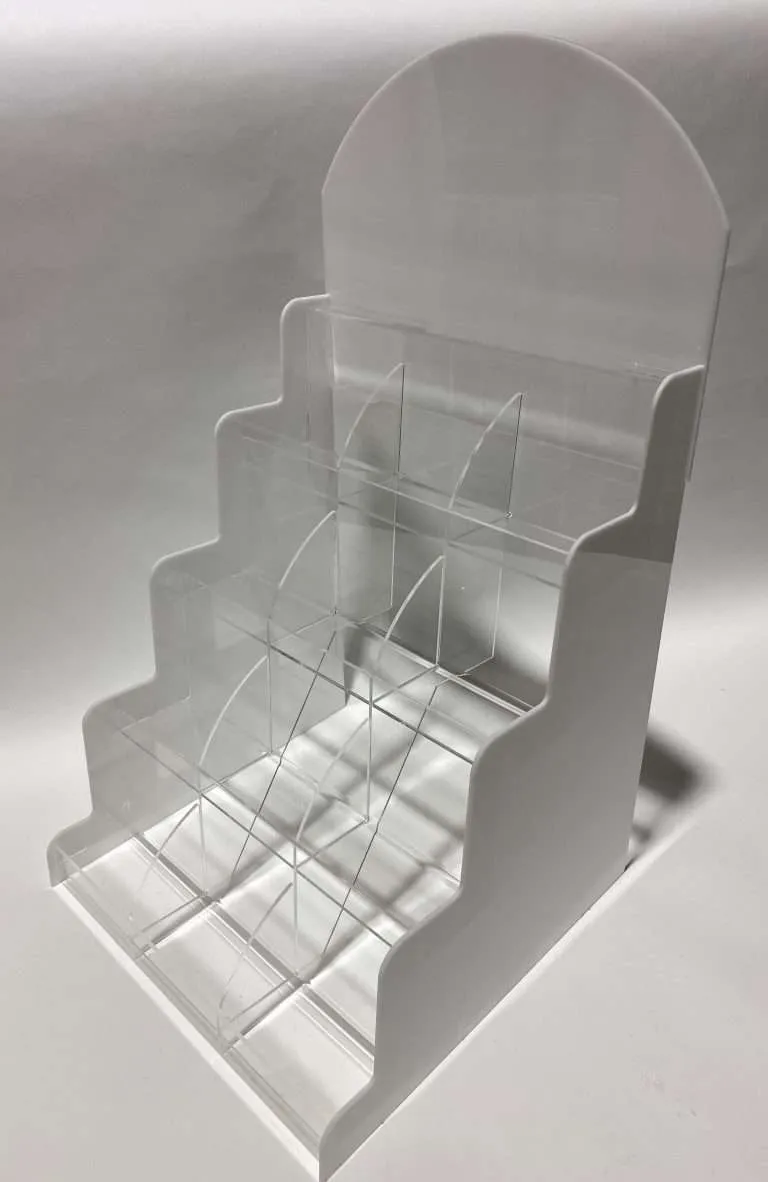
The call comes a month or two after a flawless install: fine cracks are radiating out from the screw holes on the counter display, or creeping along an inside corner of the literature holder. Nothing hit the fixture. Nobody dropped it. It cracked standing still — and it cracked in the two places retail fixtures always crack: at the fasteners and at the corners, exactly where stress concentrates and where cleaning solution pools.
This failure is so common it has a predictable anatomy, which is good news: every cause has a countermeasure, most of them free on the drawing.
What’s actually happening
Three things gang up on the same square inch of material:
Fastener stress. A screw driven tight through a tight hole leaves the acrylic permanently loaded. Acrylic is notch-sensitive — stress gathers at holes and sharp inside corners — so a tight, over-torqued fastener is a crack waiting for a reason.
Fabrication stress. Machining and forming leave residual stress in the material unless it’s relieved — the subject of annealing. A stressed part can look perfect on day one and still be carrying the load internally.
The store’s cleaner. Here’s the trigger. Sheet manufacturers’ guidance is blunt about it: solvents and alcohol-containing cleaners attack stressed acrylic, producing the network of fine cracks called crazing. The glass cleaner in every retail back room is usually an ammonia-or-alcohol formulation — made for glass, hostile to acrylic. Sprayed daily, it pools at fastener heads and inside corners, which is why the cracks appear exactly there and not in the middle of the panel. The full mechanism is in crazing: causes and prevention.
Stress supplies the vulnerability; the cleaner supplies the attack. Fix either and most fixtures survive; fix both and the problem essentially disappears.
The design half: details that cost nothing on the drawing
- Oversized holes and slots. The fastener should pass through with clearance, never thread tightly through the acrylic itself. Slots where the fixture spans anything that moves or where mounting tolerance is needed.
- Edge distance. A hole crowded against an edge concentrates stress in the little bridge of material left over. Keep fasteners back from edges per the sheet manufacturer’s guidance — the guidance exists because this exact failure keeps funding it.
- Soft interfaces. Washers or grommets between fastener and acrylic spread the load; snugged, not cranked. “Tight enough that it doesn’t rattle” is the energy a fastener in acrylic should carry.
- Radii on inside corners. A generous inside radius is the difference between a corner that sheds stress and one that collects it. Hard square notches in a retail fixture are a specification error, not a style.
- Standoffs where they fit the design. Standoff hardware moves the clamping load into metal and spares the panel — which is why standoff-mounted graphics tend to hold up better at the fastener than screwed-flush ones.
A fixture carrying these details can take years of store life. The same fixture without them is betting its service life on which bottle the night crew grabs.
The cleaning half: one instruction, written into your program
The store crew isn’t wrong to clean the fixture — they’re wrong to clean it like glass. The countermeasure is one line in the brand’s own fixture program: point the people who maintain the displays at a published acrylic cleaning protocol — ours is the cleaning and maintenance guide — and name the rule that matters most: no solvent or alcohol glass cleaners on acrylic, ever. Put it in the planogram packet, the same document that tells the store how to stock the fixture. Take away the cleaner and a stressed fixture loses its trigger; skip the line, and the replacements get budgeted as wear.
Specify it like you mean to keep it
A retail fixture is a small structure with a maintenance life, and the ones that last were specified that way: holes, radii and hardware from the manufacturer’s guidance on the drawing, stress relief where fabrication warrants it, finish expectations named against the quality standards, and a cleaning instruction written into the fixture program the store already follows. The rest of the fixture-longevity picture lives in the retail and POP display guide — and if you’ve got a crazed fixture on a sales floor right now, the rebuild conversation is also the chance to fix the drawing so the replacement doesn’t repeat it.