By late November, most exhibiting programs know next year’s show list — which shows, which cities, roughly which booth. What few programs do in that same sitting is the one exercise that makes the whole year calmer: converting the show list into a fabrication calendar. It takes an afternoon, it fits on one page, and it replaces a year of reactive deadline scrambles with a set of decision dates you chose in advance.
The one-sitting exercise
Build a table with a row per confirmed show and work each row backward from the least negotiable date on it:
- Move-in and advance-warehouse dates — the real receiving deadlines, which for advance freight land well before the show itself.
- Backward from there: freight transit, then production, then proof approval — landing on each show’s design-lock date: the day the components must be decided, not the day they must ship.
- Between the rows: mark the gaps between shows as the audit and refresh windows they are — the weeks when crates can be opened, damage assessed, and replacements ordered without any deadline pressure at all.
One row might read: spring flagship show — move-in March 30 — advance warehouse from March 16 — design lock mid-January — refresh window: the six open weeks after the winter show. The finished page is a year of fabrication decision dates, none of which will feel urgent when it arrives — because the urgency was spent this afternoon instead.
What the completed calendar reveals
The exercise tends to surface three things:
- Shared production windows. Two shows a few weeks apart draw on the same design attention, the same approval bandwidth, and the same build window — the calendar shows them competing before they actually do, while the fix is still just sequencing.
- The quiet window. Most exhibit calendars have a lull where refresh and replacement work can run as ordinary scheduled production, unhurried and uncontested. The calendar turns that lull from dead time into the year’s maintenance window.
- The fleet-driving show. Usually a single row carries the biggest build or the tightest chain. Naming it in November means the year’s hardest fabrication conversation happens first, with the most room.
Planning a year in tiers
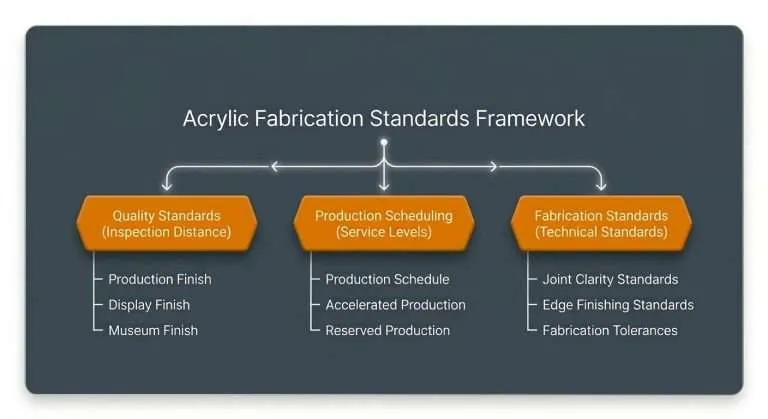
A show calendar is also where the Production Scheduling tiers stop being abstractions and become a planning vocabulary. The hard-date builds — the shows where the opening is immovable and the booth must be there — get flagged early as Reserved Production conversations, because dedicated capacity against a guaranteed ship date is the tool built for exactly those rows. Work that is flexible but preferred sooner is Accelerated Production territory — moved forward when capacity allows, still without a guaranteed date — and refresh work and replenishment map onto the standard Production Schedule in the windows the calendar already identified as quiet. A program that uses all three tiers deliberately, matched to each row’s actual date pressure, is what a mature exhibiting operation looks like on paper.
Why this belongs in November
There is one more reason this exercise belongs in November–December specifically: annual budgets are being set at exactly the moment the calendar exists to inform. A signed show calendar lets known Q1–Q2 builds be committed at decision time — and capacity reserved against a confirmed calendar in December is how the January crunch becomes someone else’s problem. The programs that feel effortless in February did this in November.
If your show list for next year is confirmed, send it over — mapping it against the production calendar is a short conversation now, and a very different one in January.