The order almost always starts the same way: a guard, sash, or shield on a piece of equipment cracked — an instrument enclosure panel, a fume hood sash, a machine guard on something bought fifteen years ago — and the path back to whole is blocked. The original manufacturer is gone, or was acquired twice and no longer supports the line, or quotes the replacement panel with a lead time measured in months for a machine the lab needs on Monday. It is a fabrication request facilities and lab managers rarely plan for, and the answer to it has a name: replicate from sample.
Replicate from sample
The broken part is the drawing. Send it — cracked, taped, in pieces — and the replacement is built from it: dimensions measured from the original, material and thickness matched, and every mounting feature reproduced so the new panel lands on the existing hardware. No OEM drawing required, because the part itself carries every fact that matters.
One paragraph on the division of responsibility, stated plainly because it should be: what we replicate is form — dimensions, material, thickness, mounting geometry, matched to the original or to your specification. The equipment owner confirms that the replacement is appropriate for the equipment’s safety function, exactly as they would when sourcing any replacement part. That division is standard, and it is how these projects run.
Matching the material
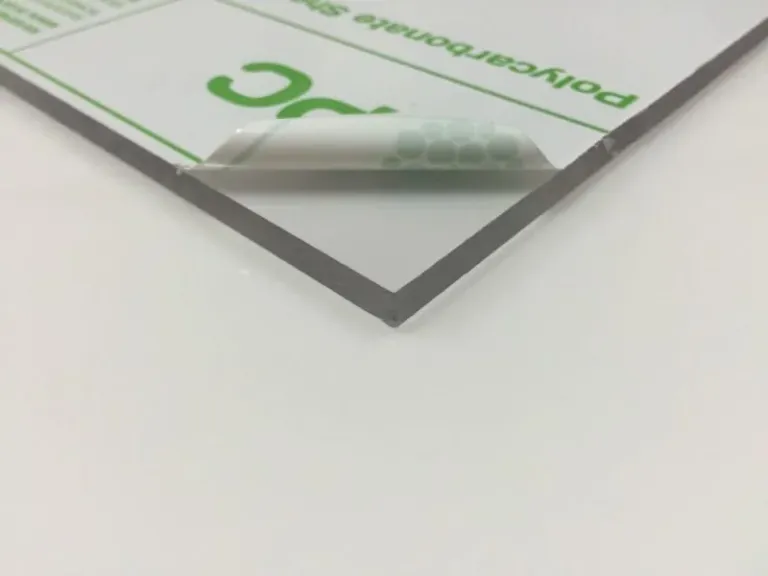
Many OEM guards and sashes are polycarbonate, chosen for impact resistance at the point of operation; many instrument covers and shields are acrylic, chosen for clarity and dimensional stability. Reading which one the broken part is comes from a few practical cues: acrylic breaks — a cracked or shattered original is usually acrylic — while polycarbonate tends to deform and haze; edge appearance differs, with acrylic taking a polish polycarbonate does not; and the equipment’s documentation, where it survives, often names the material outright. The default is to replicate in kind. Where the original’s material was itself the problem — an acrylic panel in a position that takes impact, a polycarbonate window hazed opaque by years of cleaning — the customer can choose to change material or thickness, and that choice is theirs: we will match what was there or build what is specified, and the quote states exactly which sheet the replacement is built from, because what the quote says we build with is what we build with.
What makes it a drop-in fit
The difference between a replacement panel and a project is the mounting features. Hinge-hole patterns, slot positions, cutouts for handles and latches — all measured off the original and machined to the CNC ranges in the published Fabrication Tolerances, which is what lets the new part hang on the old hardware without a single field modification. Edges are finished to match the original’s handling feel — the Edge Finishing Standards give that a specifiable vocabulary — since a sash that hands touch daily is a part whose edges matter functionally. And curved sashes — the formed fronts on older hoods and enclosures — are reproduced by thermoforming to a profile traced from the original, so the curve that no drawing ever documented comes back anyway.
The fleet angle
Here is where a broken part becomes an asset. Once one guard has been measured and drawn, the drawing exists — and every identical machine on the campus or floor has a replacement on file. The second cracked sash on that equipment line is a reorder, not a reverse-engineering project: same drawing, same material, no sample needed, and a lead time that reflects it. Facilities teams with aging fleets can get deliberate about this — the panels that crack once tend to crack again, and a drawing on file converts the next failure from an equipment-down scramble into a purchase order.
If the broken part is sitting on a bench right now, that is all we need to start: send photos and rough dimensions, and ship the part when the quote makes sense.