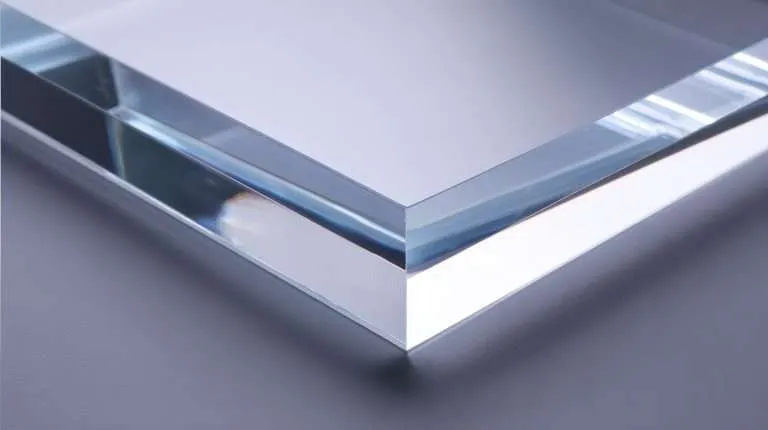
The physics of the choice fits in two sentences. An edge-lit display pipes light through the sheet from a polished edge and glows only where the surface is interrupted — so it rewards line art, logos as strokes, crisp lettering, and it demands a polished light-entry edge as a functional requirement of the Edge Finishing Standards ladder, not a cosmetic one. A back-lit display pushes light through the sheet toward the shopper — so it carries full graphics and photography, and it needs a diffusion build (sheet choice, LED placement, print density) engineered so the light field reads even. That is the whole materials lecture. At retail, it is also the least decisive part of the decision — because the questions that actually pick a winner are about the placement, the program, and the people who will touch the display for the next three years.
Start with the planogram, not the glow
Power. The first placement fact to establish: does the position have a power drop? An endcap or counter position with power supports either approach. A mid-shelf planogram position without one forces the battery/USB/low-voltage conversation — and each of those changes the enclosure design, the weight, and the service model. This single fact eliminates one of the two options in a large share of real placements, which is why it belongs in the RFQ before any design work, where settling it costs one sentence.
Depth. Back-lit’s diffusion build needs enclosure depth — LEDs stood off from the face far enough to blend into an even field. On a counter or floor unit that depth is a design variable; inside a planogrammed shelf gap it is a hard constraint, because the cabinet competes with product facings for the same inches. Edge-lit construction stays close to sheet-thin, which is precisely why it shows up in tight merchandising real estate. Measure the position; the position often votes first.
Think in resets, not launches
A retail display lives through graphic changes — seasonal campaigns, price framework updates, brand refreshes — and the two constructions age differently across them. On an edge-lit unit the artwork is the surface treatment: changing the message means changing the engraved or printed panel itself, so the panel should be designed as the replaceable element from day one. On a back-lit unit the graphic is typically a printed insert in front of the light field, which makes the swap cycle cheap — new insert, same cabinet — provided insert registration and retention were designed for store staff rather than for a technician. For a program that re-messages every season, that difference compounds across every door and every reset; for a permanent brand statement that never changes, it disappears. Ask the reset question before choosing, because it re-prices both options.
Who owns the display staying lit?
Powered placements make this easy. Battery placements make it a program decision: someone — store staff, your merchandising crew, a service cycle — owns recharge or replacement, and the enclosure design should match that answer (tool-free access for staff, secured access for a service crew). Settle the ownership at spec time and the display design carries it; a battery plan is a service plan, and the programs that run smoothly decided both together.
The multi-store test
One display is a build; a program is repeatability, and lighting raises the bar on it. Fifty edge-lit units must glow evenly as a set — which traces straight back to fabrication consistency at the light-entry edge, the reason that hidden edge carries a polished method from the Edge Finishing ladder on every unit, not just the sample. Fifty back-lit units must read as the same brightness and color on fifty different walls. This is a place to put the standards vocabulary to work: finish grade against a defined Inspection Distance per the Quality Standards, edge methods per the standard, and — because lit graphics read differently than bench graphics — make lit approval of the proof a line in your spec, so the program locks against what shoppers will actually see. Bring the lighting spec to the quote; the build follows it.
Cost factors, in retail terms
The two constructions spend in different places, and the placement math decides which spend is worth it. Edge-lit spends on fabrication — polished entry edges, precise surface work — and repays it with a slim footprint and modest LED count: money into the planogram inches you keep. Back-lit spends on coverage — larger LED arrays, diffusion layers, deeper cabinets — and repays it with full-graphic impact: money into stopping power where the aisle gives you room to use it. On a program, multiply each by door count and reset cadence before comparing; the unit that costs more once can cost less across three years of graphic swaps.
And sometimes: neither
High-output big-box lighting can wash out a lit display of either kind. Where the placement’s ambient light is fierce, a UV-printed opaque build with strong contrast can out-stop both while needing nothing from the store — one more reason the placement facts come first. The wider world of retail and POP display work is where this decision usually starts; bring the planogram position, its power reality, and the artwork, and edge-lit versus back-lit tends to answer itself on the first call.