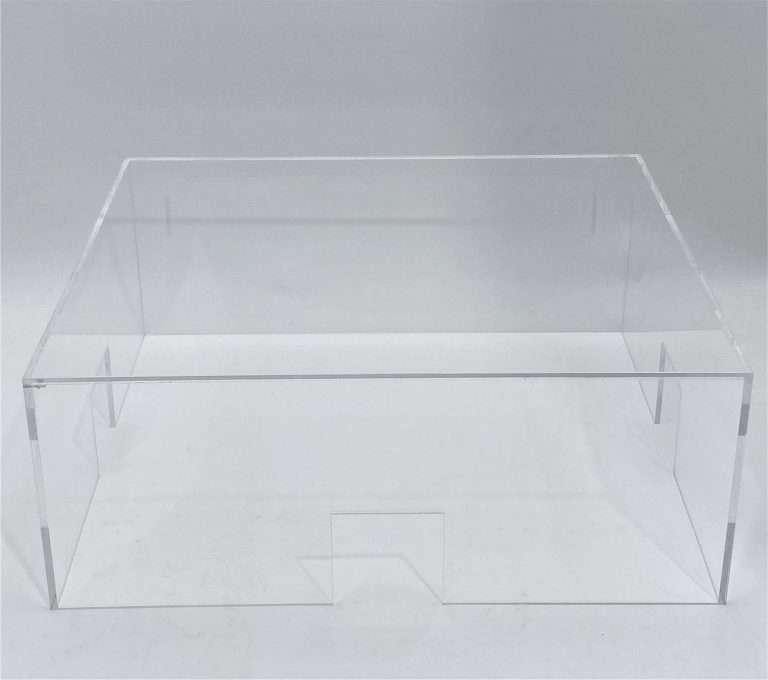
Walk a modern gallery and most of what hangs behind “glass” isn’t glass. Institutions glaze framed and hung works with acrylic for reasons that compound with size: a large-format acrylic panel weighs dramatically less than its glass equivalent, which changes the handling risk every time the work moves and the wall-anchor engineering every day it doesn’t; and when the worst happens, acrylic’s shatter behavior is fundamentally kinder than glass around both the art and the public — no cascade of cutting shards onto a work on paper or a visitor. Add that UV-filtering formulations are available in acrylic, and the institutional default makes sense. The honest trade-offs come with it: acrylic scratches more readily than glass, and it carries a static charge that attracts dust — both manageable, neither deniable, and both covered below.
The option ladder
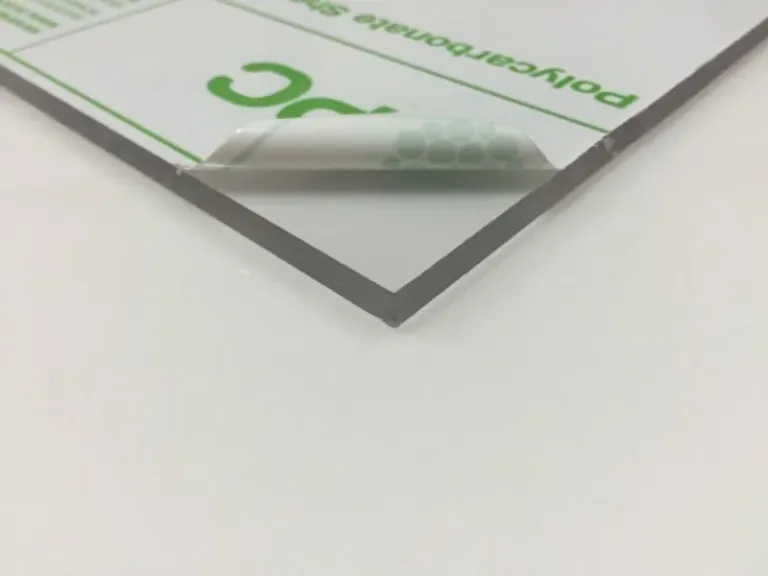
Acrylic glazing is a family of grades, each solving a specific problem and costing something in another property. Described factually:
- Standard clear. The baseline: high light transmission, light weight, forgiving shatter behavior. The right answer for much framing — everything further up the ladder is justified by a named requirement.
- UV-filtering grades. Formulated to filter ultraviolet light, the band that drives fading and embrittlement in works on paper, photographs, and textiles. The specific transmission characteristics vary by product: specify by requirement and request the manufacturer’s data sheet and lot certificate for the actual grade quoted, so the filtering performance in the frame is the documented one, not an assumed one.
- Abrasion-resistant coated grades. A hard coating that closes much of the scratch gap with glass — justified where glazing meets regular handling, traveling shows, or cleaning regimes gentler intentions won’t survive.
- Low-reflection / anti-reflective grades. Surface treatments that cut the veiling reflections standard glazing throws in gallery lighting — the difference between viewing the work and viewing the room behind you. The top of the ladder for glare-critical viewing, specified where sightlines and lighting make reflections the dominant problem.
The ladder is cumulative in cost but not in virtue — a storage-bound framed work needs none of it, a lit gallery wall may justify all of it. Specify by naming the problem each grade solves.
Specifying glazing for a frame or hanging system
Three dimensions of the spec do most of the work. Thickness by panel size: glazing must stay acceptably flat over its span, and large panels — especially large unframed hangs with no rebate support — need thickness chosen for stiffness, not just safety; a thin large panel bows visibly, and a bowed glazing panel is an optical event in gallery light. Edge treatment by exposure: edges captured in a frame rebate can stay as-cut, while exposed edges on floating or standoff-mounted presentations are part of the visual object and deserve a specified finish from the published edge finishing methods. Allowance for movement: acrylic moves with temperature more than glass, so panels are sized with deliberate clearance in the frame rather than cut tight to the rebate — the undersize allowance is what keeps a summer gallery from bowing the panel against its frame.
What the registrar owns after delivery
Glazing care is a different regime from glass, and the handoff should say so explicitly. Static and dust: acrylic attracts dust electrostatically, and the response is the right cloth and anti-static practice, not more aggressive wiping — aggressive dry wiping is exactly how fine scratches accumulate. Cleaners: ammonia- and alcohol-based glass cleaners attack acrylic over repeated use and have no place near it; acrylic-safe cleaners and soft cloths are the whole protocol, and the published cleaning protocol is written for whoever actually cleans the gallery. And the recovery option glass never offers: fine surface scratches in uncoated acrylic can be professionally refinished — a scratched panel is often a maintenance event, not a replacement.
Where glazing meets casework
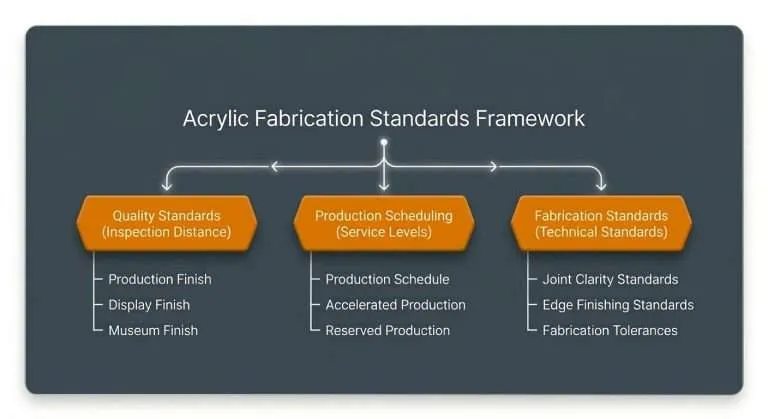
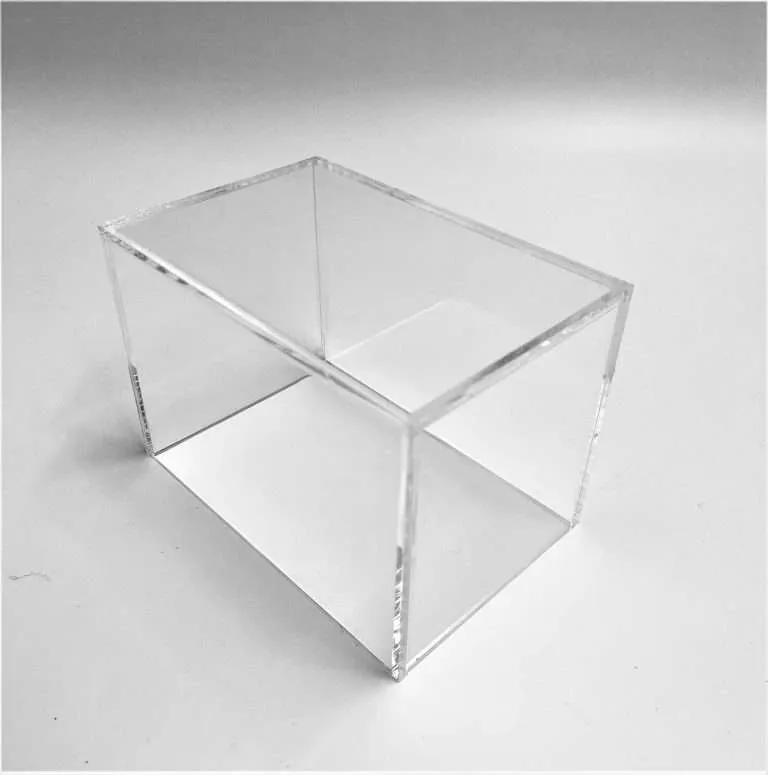
Glazing and casework are one continuum, and the edges blur productively. Glazed frames travel inside vitrines; traveling frames get dual-glazed for transit and display; and sometimes the honest answer to a fragile or dimensional framed work is not better glazing but a five-sided case over the whole framed object — the point where the glazing conversation becomes a graded casework conversation, with inspection distances and joint grades in play. The useful habit is deciding by the object’s actual risk profile rather than by category: glaze what needs a window, case what needs an environment. Bring the work’s dimensions, lighting situation, and travel plans — the right rung of the ladder falls out of those three facts.