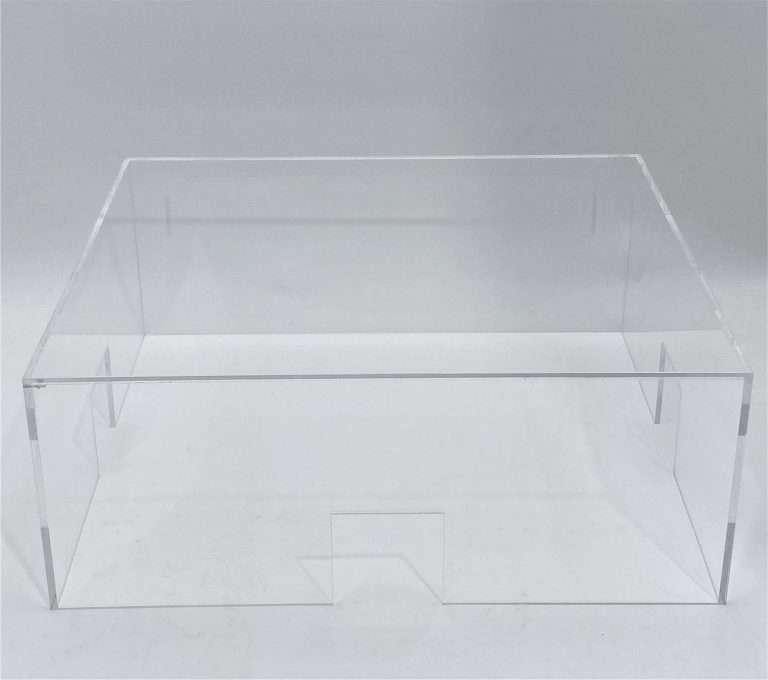
The position to state first, because everything else depends on it: glove-box-style enclosures are built here to the customer’s design. Chamber geometry, port placement, and any sealing or atmosphere performance are engineered and verified by the customer or their integrator — the research group, the instrument builder, the process engineer who knows what the chamber must do. What this post covers is the fabrication: turning that drawing into a bonded, machined, clear enclosure whose surfaces are flat where the drawing says flat and whose holes are where the drawing says they are. That division of roles is how these projects actually run, and it is the right one — the people who designed the experiment own the performance; the shop owns the geometry.
Anatomy of the build
A glove-box-style enclosure decomposes into four fabrication problems:
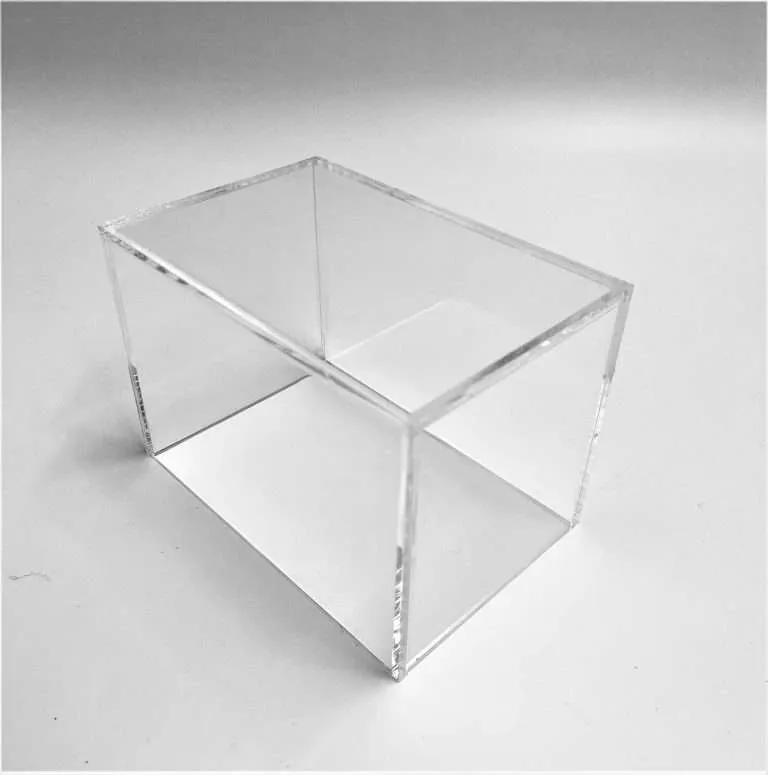
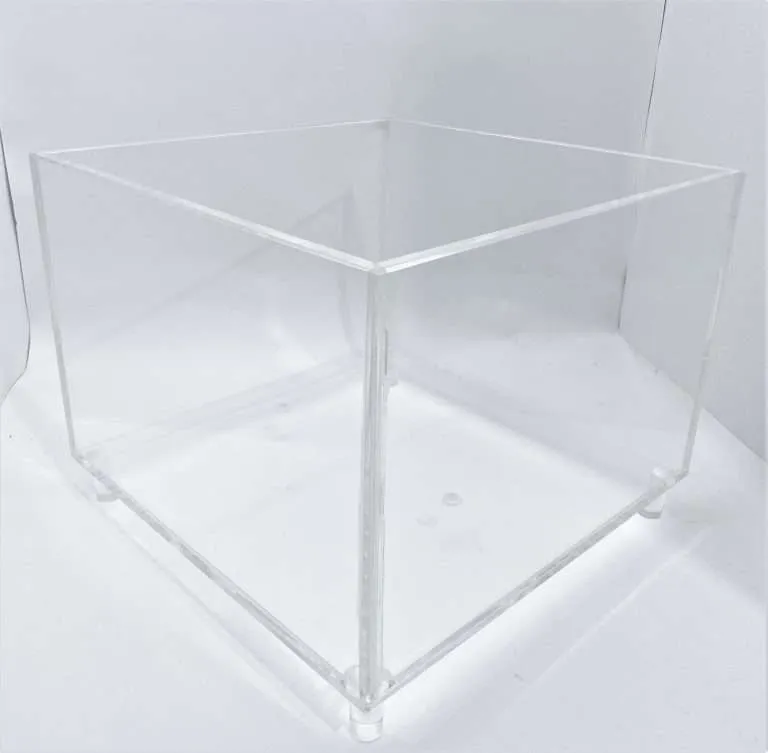
- The bonded chamber body. Panels solvent-bonded into a rigid transparent chamber — the structural shell everything else mounts to. Clear acrylic is the default material for exactly the reason research groups sketch these in the first place: the whole working volume stays visible.
- Machined port rings. The circular port openings and the hole patterns that receive the customer’s port hardware — pure machining work, where position accuracy is the deliverable.
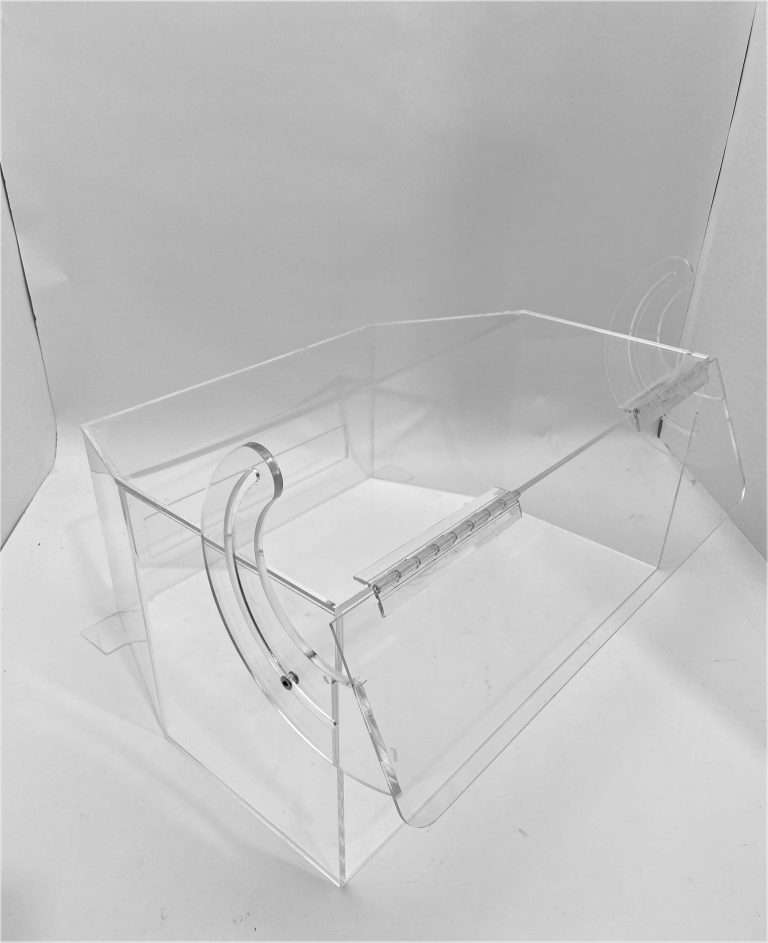
- Transfer-door openings. Door and hatch openings machined with stepped (rebated) lands that receive customer-supplied hinges, latches, and sealing hardware — machined to receive their hardware.
- Pass-through penetrations. Cable ports, plumbing penetrations, instrument feedthroughs — each one a located, radiused, cleanly machined opening for whatever fitting the design installs in it.
What bonded-seam quality means here
On enclosure work, joint quality is specifiable rather than aspirational: continuous, well-formed seams per the Joint Clarity standards, inspectable at the agreed condition like any other graded work. Said precisely: that is fabrication quality — the geometric and cosmetic character of the seam — which the customer’s own testing then qualifies against their performance requirements. A well-made joint is what the fabricator delivers; what the enclosure must achieve in service is established by the people who designed it, with their instruments, in their protocol. Both halves matter, and neither substitutes for the other.
Flatness and hole position: the real deliverables
Strip the project to what the customer’s hardware actually needs from the fabricator and two requirements remain. First, gasket-land surfaces machined flat — the lands around ports and door openings where customer-supplied gaskets will sit, where machined flatness gives their hardware a flat, true surface to seat against. Second, bolt circles that bolt up: port hole patterns held to the CNC tolerance range — approximately ±1/32 inch per the published fabrication tolerances — so the customer’s rings, clamps, and fittings land on the first try, without elongating holes at the bench. Add the acrylic-specific discipline that protects it all: radiused corners at every opening and clearance-holed, strain-free hardware mounting, so the machining that positioned everything precisely is not undone by a stress crack from a square corner.
The iteration pattern research groups actually use
The projects that go smoothest follow a pattern worth copying. The first unit is treated as a first article: built to the drawing, then checked by the customer against the real instrument, the real process, the real reach-and-visibility questions that only surface with hands in the ports. The findings — a port moved two inches, a deeper rebate, one more pass-through — get written back into the drawing, and the confirmed revision goes on file. From then on, the follow-on units other benches inevitably want are reorders of a proven drawing, not re-engineering projects: same geometry, same fit. For a lab standing up multiple stations, that drawing-on-file loop is the difference between one design effort and five. Send the chamber drawing as it stands — including the parts still marked TBD — and the first-article conversation can start there.