Agencies run on sign-offs. Every campaign has an approval chain, and every producer knows the difference between a client who said “love it” in a meeting and a client who approved a specific artifact in writing. Fabrication has the same discipline — and it offers the agency three artifacts to hang those sign-offs on. Used in order, they turn “the client approved the concept” into a chain of approvals fabrication can actually be held to.
The three are not interchangeable, and the most expensive confusion in custom work is treating them as if they were. Each answers a different question, and each approval locks something different.
The mockup: is this the right direction?
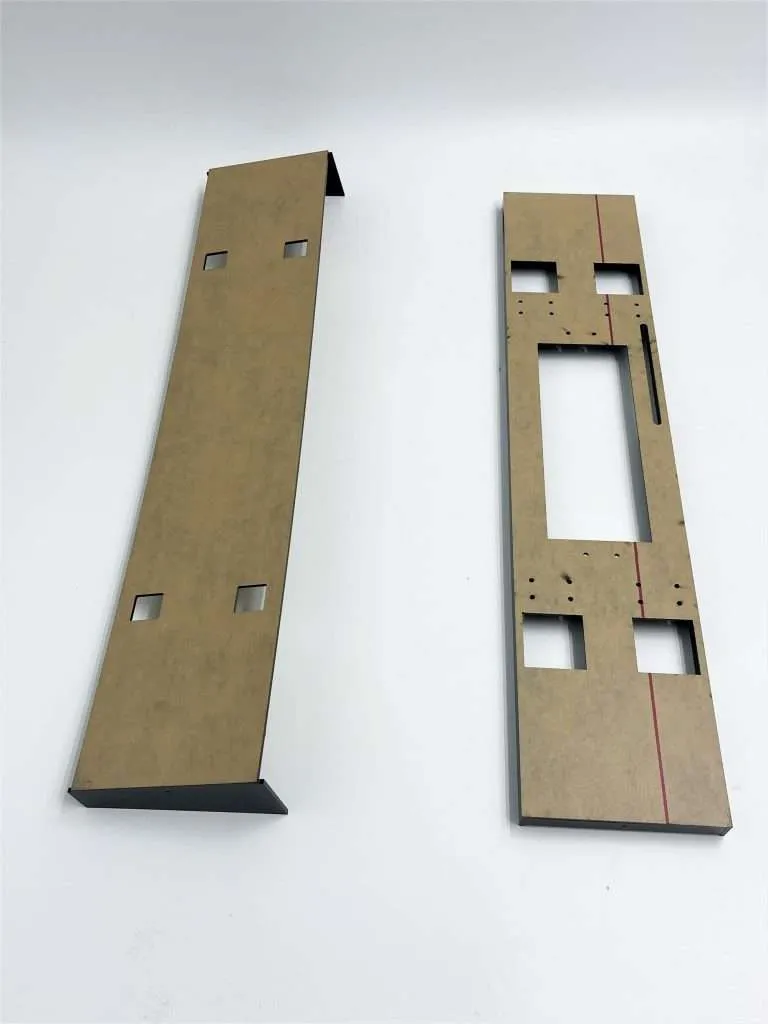
A mockup is fast and representative, not production-true. It might be the right shape in the wrong material, a scale model of a floor unit, or a bench-built study of one detail — enough physical reality to test the direction before anyone invests in production processes. Mockups are for the questions that renders can’t settle: does the proportion work at real scale, does the product actually sit in the well, does the sightline hide what it needs to hide.
What a mockup approval locks: direction. Nothing about a mockup commits geometry, material, or finish — and the discipline is making sure nobody downstream believes it does. The path from an approved rendering to a specification a shop can build is its own translation step, covered in from rendering to buildable spec.
The prototype: is this the right part?
A prototype is one unit of the finished product — typically the real material and the real processes, the thing you can put in a client’s hands. It exists to answer every question that remains once the direction is settled: the exact thickness reading as substantial rather than bulky, the edge finish at viewing distance, the joint where two planes meet, the way it loads and unloads.
What a prototype approval locks: geometry, material, and finish. From here the drawing package is the reference the run is held to, against the published Quality Standards grades the client approved on the physical part. This is also the artifact that pays for itself twice — on a reorder months later, the approved reference piece is what makes it straightforward to hold the run to the same standard. Prototype to production traces what happens to it after approval.
The proof: is this the right color and art?
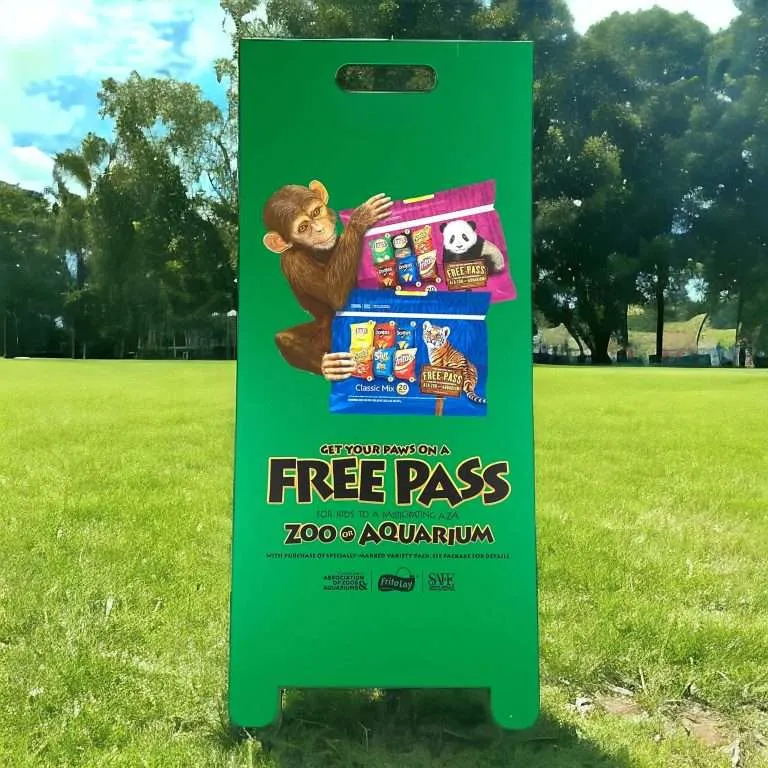
Where a project carries printed graphics, the proof is the artifact that settles artwork and color. Print color is managed as color-managed CMYK matched to the customer’s brand references — and where the color genuinely has to be right, the approved proof is the reference the run is checked against. A proof can be printed on the actual production material, which is the strongest form of the answer, or supplied as a digital proof for review. It is an available gate, not a mandatory one: clients who work with UV print regularly often skip it on familiar artwork, while a brand-critical launch color is exactly what it exists for.
What a proof approval locks: artwork and color. Geometry questions don’t belong at the proof gate — by then the prototype already answered them.
The agency move: put the client sign-off ON the artifact
Here is the mapping that makes this an agency skill rather than fabrication trivia: your client’s approval machinery should fire at these gates, on these artifacts. A client who approved a rendering has approved nothing fabrication can be held to. A client who held the prototype and signed off has committed — and the change requests that would otherwise surface at delivery surface at the gate instead, where they are cheap.
Experienced producers budget the prototype round as client management, not engineering overhead. Put the physical part in the client meeting. Clients who touch the part approve with conviction, and the ones who don’t approve were going to change their minds anyway — better now.
Reopening a locked gate, scripted
Scope changes happen. What the producer owes the client is an honest account of what reopening a gate costs, in calendar terms: a geometry change after prototype approval usually means re-prototyping and a new place in the production schedule; an artwork change after proof approval can mean a fresh proof cycle before the run prints. The costs are factors, not fixed figures — but they are never zero, and the language for carrying that to the client is simple: “that change reopens an approved gate, so here is what it does to the date.”
On a campaign calendar, each gate is a client-approval dependency on the critical path, and the schedule has to reserve real days for the approval loops — production scheduling for campaign dates works through a timeline that does. When the in-market date is immovable, that is a Reserved Production conversation, had early: Reserved is the only tier that guarantees a manufacturing completion date, and the gates are what make that date reachable without drama.
One more quiet payoff: a program whose approvals live on artifacts is a program whose quality conversations stay short. When the run ships, it is checked against things everyone already agreed on — the prototype, the proof, the named grades — which is the whole subject of QC and inspection expectations. Arguments about adjectives end when there is an object to point at.