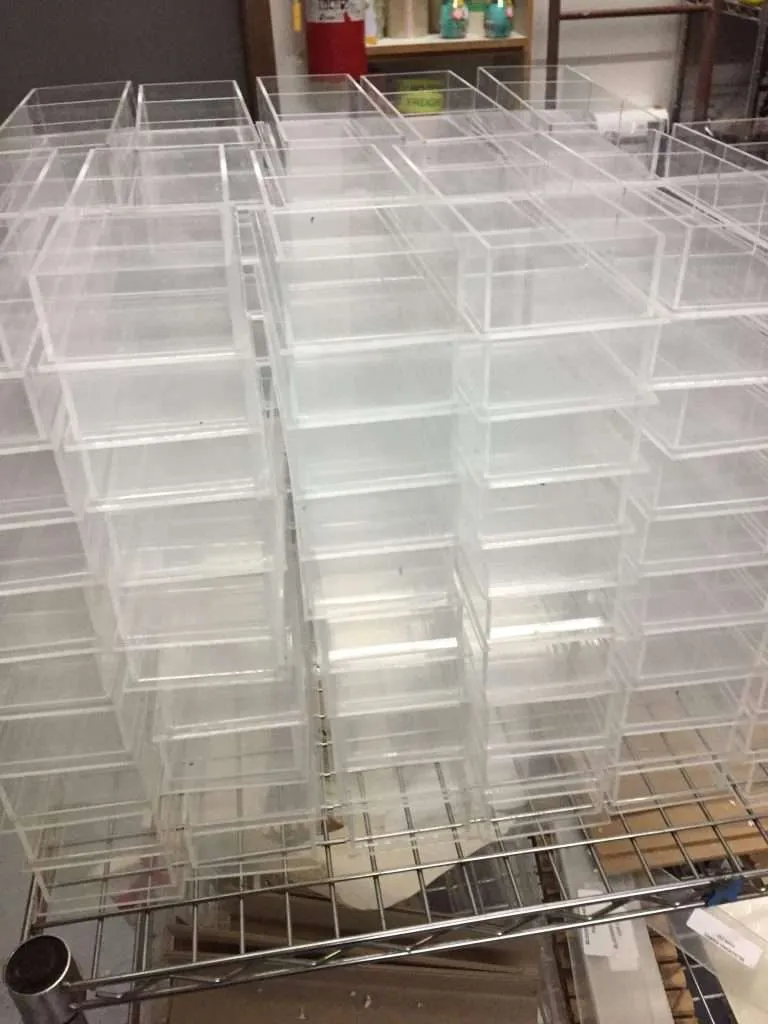
There is a trap built into the retail calendar, and it catches capable teams every year. November and December are when spring-reset fixture decisions have to be made — production spans, proof cycles, and January freight all point backward to a Nov–Dec order date. But November and December are also when every POP buyer’s working attention is consumed by holiday execution: the displays already on the floor, the doors that didn’t receive, the sell-through reports. Spring is the next season, and the next season always feels like next quarter’s problem. The brands that hit January and February resets are the ones running two calendars at once — executing holiday with one hand and ordering spring with the other.
The backward plan from a reset date
Spring resets cluster in the January–March window — post-holiday floor changes, new planogram sets, seasonal category swaps. Whatever your specific reset date, the arithmetic backward from it is the same chain every display program runs:
- Reset date — the day the fixture must be on the floor, set by the retailer or the program, not by anyone’s production schedule.
- − DC receiving — and store distribution: for programs routing through distribution, the fixture arrives at the DC well before it arrives at the store, and January DCs are digesting holiday returns.
- − freight transit — January freight is better than December’s, but a multi-door program still needs its rollout window.
- − production span — the fabrication time for your scope, at your quantities, at your finish grade.
- − proof approval — on printed work, the cycle that runs at the speed of your approver, which over the holidays means honestly slower.
- = order date — which, run for a January or February reset, lands in November or December. That is the whole argument of this post, done as arithmetic.
Scheduling honesty, in Standards terms
There is a second reason the order date matters more than usual for spring work: January ship dates compete with everyone’s Q1 restart. Trade-show programs are shipping for winter shows, other brands are running the same reset math, and the fabrication queue that looked open in October is committed by December. A January ship date on the standard Production Schedule tier is an estimate against that queue — a reasonable estimate, but an estimate. If the reset date is contractual, or the planogram window at your retailer is fixed, Reserved Production is the mechanism that turns the date from a hope into a guarantee: dedicated capacity, held for your program, against a specific ship date. It is the only tier that guarantees one — and reservations for January are made in November and December, while January capacity can still be reserved.
The year-end budget angle, handled as fact
One practical note that surfaces every December, stated as schedule fact rather than finance advice: the purchase decision and the ship date are separable. A display program ordered in December with a January or February ship date is a normal order — the floor date lands where the reset calendar needs it. Teams sometimes assume that ordering now means shipping now, and delay the decision into January for that reason alone; the schedule doesn’t require it, and the January delay is precisely what turns a comfortable reset timeline into a compressed one. If unspent program budget and a firm reset date happen to point at the same purchase order, the production calendar accommodates both.
Running the second calendar
Whatever the reset program needs — refreshed counter units, a new fixture family for a spring planogram, replacements for a season-worn program — the decision still costs the same afternoon of work it always did; only the timing is unforgiving. Our post on retail reset production planning covers the full reset-calendar mechanics — how reset cycles, planogram windows, and fixture programs interlock across the year. The short version for right now: pull the spring reset date forward into this month’s decisions, run the backward plan, and get the order — or at least the drawings — in front of a fabricator in the window when the spring schedule is still open. The floor date will not remember which season you were busy executing when you ordered it. It will only show whether the fixture was there.