Somewhere on a purchase order right now, a display program is specified as “premium finish, retail quality” — and three bidders are pricing three different interpretations of it, and the receiving inspection eight weeks from now will apply a fourth. Vague quality language isn’t just imprecise; it is unpriceable and unenforceable, which means every party in the chain quietly substitutes their own standard and discovers the disagreement at the worst possible moment.
This is the problem the Acrylic Fabrication Standards Framework exists to retire. A finish grade tied to a defined Inspection Distance is specifiable on a drawing, quotable identically by every bidder, and checkable at receiving by someone who has never met your brand team. Here is how the three grades work, and — the part most guides skip — which one your POP display actually needs.
The three grades, as the standard defines them
The Acrylic Quality Standards define three finish classifications, each anchored to the distance at which cosmetic characteristics may become visible under normal viewing conditions. The principle: the closer a piece will be viewed, the higher the cosmetic standard required.
- Production Finish — Inspection Distance approximately 4 feet. The standard fabrication quality for most commercial work: retail displays, signage, product fixtures. Characteristics visible only during close inspection — minor micro-bubbles in adhesive joints, slight variation in flame-polished edges — are acceptable, because at normal viewing distance they’re typically not noticeable.
- Display Finish — Inspection Distance approximately 2 feet. For components viewed up close, where presentation carries more of the job: branded display programs, product presentation fixtures. Tighter cosmetic control, improved joint clarity, more consistent edge finishing.
- Museum Archival Finish — Inspection Distance approximately 1 foot. The framework’s highest cosmetic standard, for pieces viewers may inspect closely: museum cases, archival enclosures, collector displays. Extremely high joint clarity, highly consistent polishing, minimal visible variation — and the additional fabrication and inspection time that implies.
Notice what the definitions do: they convert an adjective into a test. “Is this good enough?” becomes “stand at the grade’s distance — is a characteristic visible?” Both the shop’s final inspection and your receiving dock can run that test and get the same answer, which is the entire job of an acceptance criterion.
Matching grade to placement
The grade question is really a placement question: where does this display live, and how close do shoppers get?
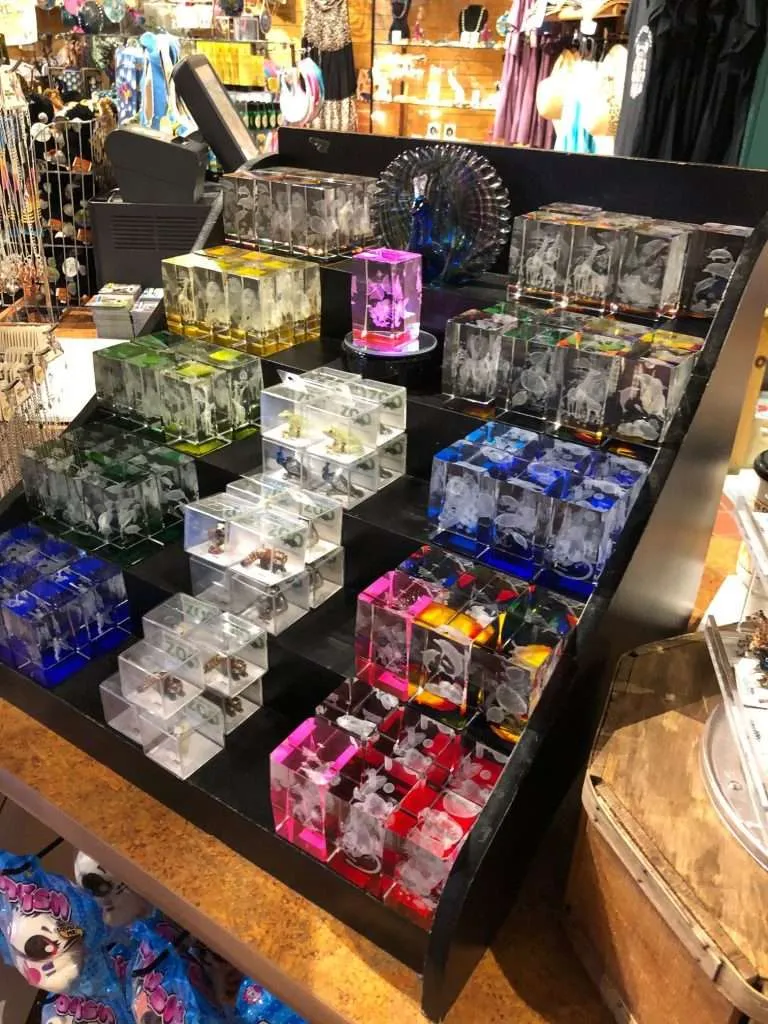
Promotional counter unit → Production Finish. It sits across a transaction counter, viewed at arm’s length or more, in a busy visual field, for one season. Production Finish is the economically correct spec — not the budget compromise, the correct one. Cosmetic characteristics invisible at four feet are invisible at the register, and every dollar of finishing labor past that threshold buys nothing a shopper will ever experience.
Flagship fixture → Display Finish. Customers lean into it, handle product off it, photograph it. It represents the brand at two feet for years. The tighter joint clarity and edge consistency of Display Finish is visible at exactly the distance this fixture is experienced, which is what justifies it.
Museum Archival on POP → rarely, and deliberately. Museum Archival is a finish specification, not an adjective — it names the framework’s tightest inspection criteria, defined for close-viewing casework. Retail work almost never puts a shopper twelve inches from a joint with leisure to study it. The exceptions exist — a luxury vitrine in a flagship, a collector-facing showcase — and they should be specified as the exceptions they are, on the surfaces that earn it.
Over-specifying is a real cost driver
Finish labor scales with grade — that is a cost factor, structural and non-negotiable, because tighter inspection criteria mean more fabrication care and more inspection time per unit. Buying Museum Archival finish for a dump bin is paying for inspection criteria no shopper will ever apply, multiplied by every unit in the program. And the trap is asymmetrical: nobody accidentally under-specifies (the flagship fixture’s owner knows it matters), but programs over-specify constantly, because “give me the best” feels safe and costs the person saying it nothing at spec time. The Standards vocabulary is what makes the deliberate middle expressible: grade per placement, even grade per surface — Display Finish on the customer-facing faces, Production on the concealed back panel — spending finish exactly where eyes go.
Edge finish rides along
Each grade implies expectations from the six-method Edge Finishing ladder — raw/saw-cut, sanded, laser-cut, flame-polished, buff-polished, diamond-polished. The standard’s own pairings: Production Finish projects may commonly use flame-polished or sanded edges; Display Finish work may incorporate buff-polished edges; Museum Archival work often requires diamond-polishing, where the edge itself becomes a visual feature. The same placement logic applies edge by edge — a visible front edge earns its polish, a captured edge in a channel earns a raw cut, and a spec that says so puts the finishing labor where the sightlines are.
The spec line to paste into your RFQ
Everything above compresses into one line your next display program RFQ can carry:
“[Format], quantity [N]. Finish grade: [Production / Display / Museum Archival] per the Akrylix Acrylic Quality Standards; edges: [method] on exposed edges, [method] on captured edges.”
That sentence does three jobs at once: every bidder prices the same object, the shop builds to a testable criterion, and your receiving team inspects against a distance instead of a feeling. If you’re specifying a program now and aren’t sure which grade a placement deserves, describe where it lives and how close shoppers get — matching the grade to the placement is a five-minute conversation, and it’s the five minutes that make the rest of the program boring in the best way.