There is a category of fabrication step whose entire output is the absence of a failure. Annealing is the purest example in acrylic work: a controlled oven cycle that leaves the part looking exactly as it did going in, adds real time to the production plan, and shows up nowhere in the finished piece — except that the finished piece doesn’t crack. Shops that skip it produce the mysterious cracked parts this post explains. Here is what the invisible step actually does, and when it genuinely matters.
What annealing is
Mechanically, it is simple: the fabricated part goes into an oven, is brought up to a temperature below the material’s forming range, held there, and then cooled slowly back down. No shaping happens — the geometry is done before the cycle starts. What changes is invisible: the internal stresses locked into the material by everything that was done to it relax and dissipate.
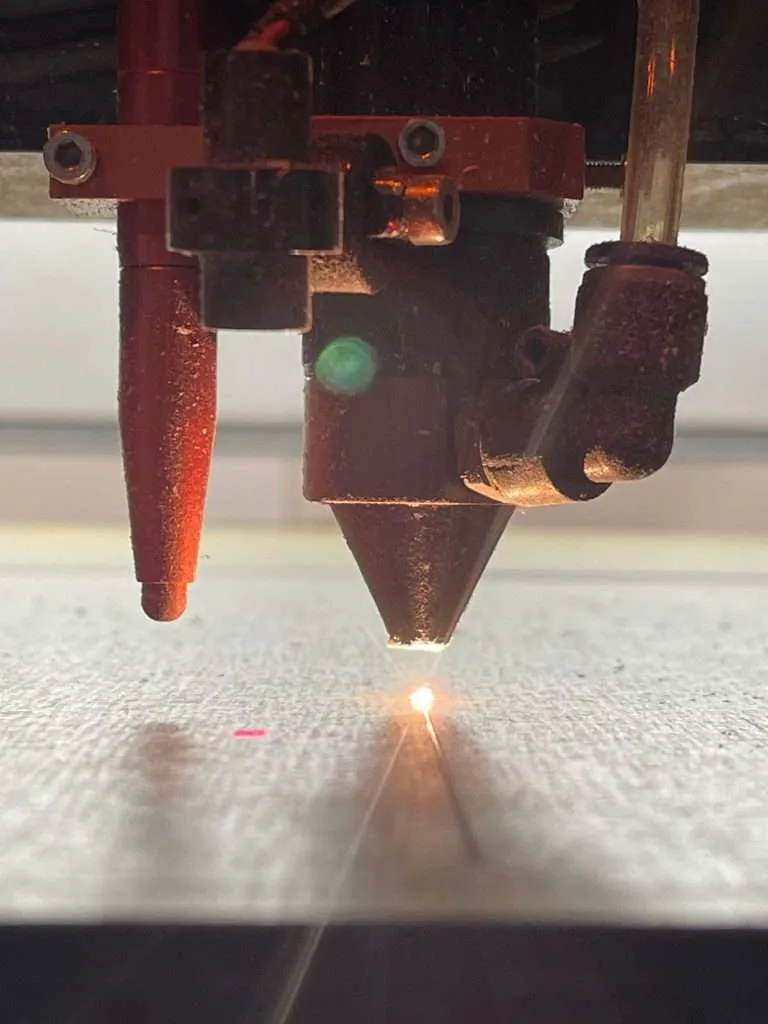
Where does that stress come from? From fabrication itself. Machining forces material away and leaves the surrounding structure strained. Laser cutting is more dramatic — the cut edge was briefly molten and re-solidified against cold surrounding material, freezing a stress gradient right at the surface. Forming and even aggressive polishing leave their own residues. The part holds these stresses silently; nothing about a stressed part looks wrong.
Why stress matters: the crazing mechanism
Stressed acrylic plus solvent equals crazing — networks of fine micro-cracks that bloom across a surface or edge, turning optical clarity into frost. The mechanism is a conspiracy between the two: internal stress is energy waiting for permission, and solvents (bonding cement, aggressive cleaners, some service chemistry) provide it by softening the surface enough for the stress to relieve itself as crack networks.
The classic case, and the one that convinces every skeptic eventually: the laser-cut edge. It leaves the machine looking glossy and perfect, sits in inventory looking perfect, and crazes within moments of solvent cement touching it during bonding — because that beautiful edge was carrying the highest locked-in stress on the whole part. The failure looks like bad cement or bad technique; it is neither. It is unannealed stress, cashing out. An annealing cycle between cutting and bonding is what prevents it.
When annealing is required — and when it isn’t
This is engineering judgment, not upsell, so here is the honest split.
Anneal before or when:
- Solvent-bonding cut edges — the canonical case above. If a laser edge is getting cement, it wants a stress-relief cycle first.
- Chemical exposure in service — parts headed for lab chemistry, cleaning regimes, or environments with solvent vapor. The crazing conspiracy works in service just as well as in the shop; a part that will meet chemistry should meet the oven first.
- Heavy machining, thick stock — deep pockets, aggressive material removal, and thick-stock work bank enough stress that later processes (polishing, bonding, service loads) can find it.
Genuinely unnecessary when: a part is saw-cut or gently machined, mechanically fastened rather than bonded, and living a dry indoor life away from chemistry — most simple display work, honestly. A brochure holder does not need an oven cycle, and a shop that anneals everything is billing caution, not engineering. The judgment is about what the part’s edges have been through and what its surfaces will meet.
The scheduling implication nobody sees
Annealing cycles are long, oven-bound events — the heat-up, the hold, and above all the slow cool are measured in hours, not minutes, and thick sections want longer than thin ones. Cooling too fast simply reinstalls the problem the cycle was meant to remove, so the step cannot be hurried without defeating it.
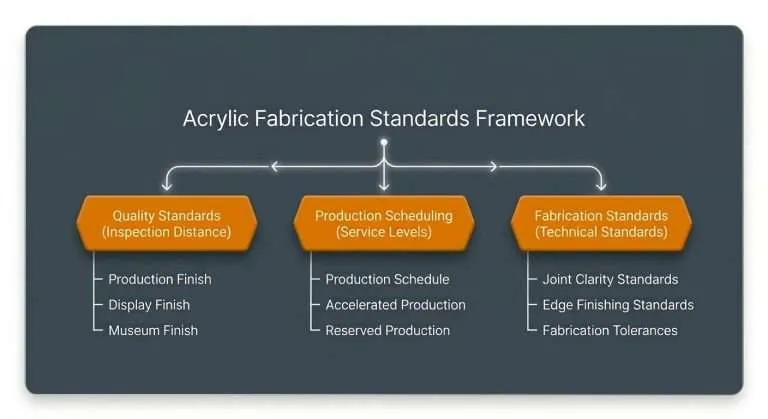
Inside a production plan, that means annealing is a real scheduling block between cutting and bonding — one of the quiet reasons a realistic lead time beats an optimistic one. A quote whose timeline includes the stress-relief cycle is describing a process that ends in a part that survives; in the vocabulary of our Production Scheduling standard, the cycle is simply part of the production span being scheduled, whichever service level the project runs under. The tier changes how capacity is allocated around the work; it never deletes the hours the oven needs.
How to spec it
For buyers, one drawing note does it. On parts that will be solvent-bonded, meet laboratory or cleaning chemistry, or carry heavy machining into a demanding service life, add: “Stress-relieve (anneal) prior to solvent bonding / prior to shipment.” On quoted work where you are unsure, ask the question directly — “does this part want an annealing cycle before bonding?” — and let the answer be engineering reasoning about your part’s edges and service, not a blanket yes.
And if you have ever received acrylic parts that crazed at the first cleaning, or watched a bonded corner frost over a season — now you know what was missing, and that it was preventable for the cost of oven time. It is a question worth asking of any shop quoting your quality-critical work; bring us the part that keeps cracking and we will tell you whether the fix is this simple.