Tilt the part toward the light and there it is: a network of fine surface cracks, silvery or frosted at an angle, often fanning out from an edge or a glued joint. That is crazing. It is not a scratch — nothing touched the surface hard enough. It is not a break — the part is still in one piece. Crazing is stress relieving itself at the surface, as a field of micro-cracks too fine to feel but impossible to unsee once the light catches them. If a search about spiderweb cracks in acrylic brought you here, this is the mechanism, the prevention, and the honest answer about repair.
The universal recipe
Crazing has one recipe: internal stress plus a chemical agent. Either ingredient alone is usually survivable — stressed acrylic can sit for years untroubled, and many chemicals touch relaxed acrylic without consequence. Together, they craze: the chemical attacks the surface exactly where stress is concentrated, and the surface opens along those lines. That single sentence explains every case that follows, which is why it is worth keeping even if nothing else here sticks.
The three common cases — and the prevention for each
Case one: cut edges meeting solvent cement. Laser cutting and machining both leave internal stress at the cut edge — the laser thermally, the cutter mechanically. Bring solvent cement to that stressed edge, and the solvent finds the stress: crazing blooms along the joint line. The prevention is annealing — a controlled heat cycle that relaxes the stress out of the part before any solvent touches it. This is why bonded work often carries an oven step most drawings don’t call out, and why skipping it shows up weeks later as a frosted seam.
Case two: flame-polished edges that later meet chemicals. Flame polishing melts the edge surface for clarity and leaves fresh stress behind — which is fine, on an edge that stays dry. Glue near it or wipe it with an aggressive cleaner, and case one repeats. The prevention is sequence and method choice: edges that will be bonded get a different finishing path than edges whose job is pure show, which is one of the quiet reasons the published edge finishing methods exist as distinct, specifiable choices rather than one “polished” blur.
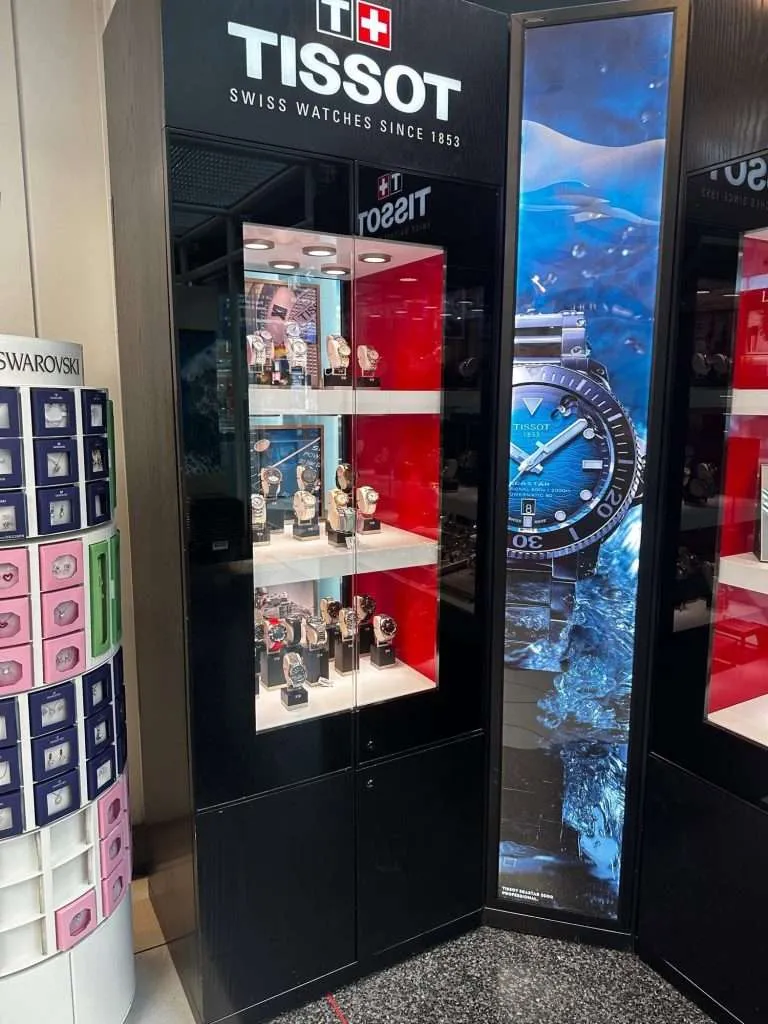
Case three: installed parts cleaned with the wrong products, for months. The slowest version. Ammonia- and alcohol-based cleaners — the default glass cleaners in most janitorial carts — are chemical agents to acrylic. One wipe does nothing visible; a cleaning schedule does. Months in, the display develops haze and micro-cracking concentrated where fabrication or installation left stress. The prevention is cleaning guidance that actually reaches the people holding the spray bottle — the acrylic cleaning protocol published here is written for them, and it applies to a retail display exactly as it does to a vitrine.
Load is an ingredient too
Stress doesn’t only come from fabrication. A part held in a strained state — fasteners over-torqued against the panel, a forced fit doing its forcing around the clock — carries standing stress that lowers the chemical exposure needed to craze. This is why fastening rules for acrylic (oversized clearance holes, hardware that holds without straining, no interference fits in brittle material) are also crazing prevention, even though they read like assembly advice. A panel mounted strain-free can shrug off an occasional bad cleaner; a panel installed under load crazes from the same bottle.
The honest repair answer
Crazing cannot be polished out. The cracks propagate from within the surface, so abrasive or flame work removes material around them without removing them — and the heat and stress of aggressive polishing can make the field worse. Once a surface has crazed, the choices are living with it or replacing the part. That is not the answer anyone wants, but it is the one that makes the rest of this article matter: prevention is the whole game. Annealing before bonding, finishing in the right sequence, and strain-free mounting are what a buyer is actually purchasing when they buy disciplined fabrication; the cleaning guidance is the part the buyer carries forward to whoever maintains the piece — and the absence of frosted seams months after delivery is a process outcome, not luck. Ask how the process handles stress before the parts are built; it is a much better conversation than the one about a crazed display.