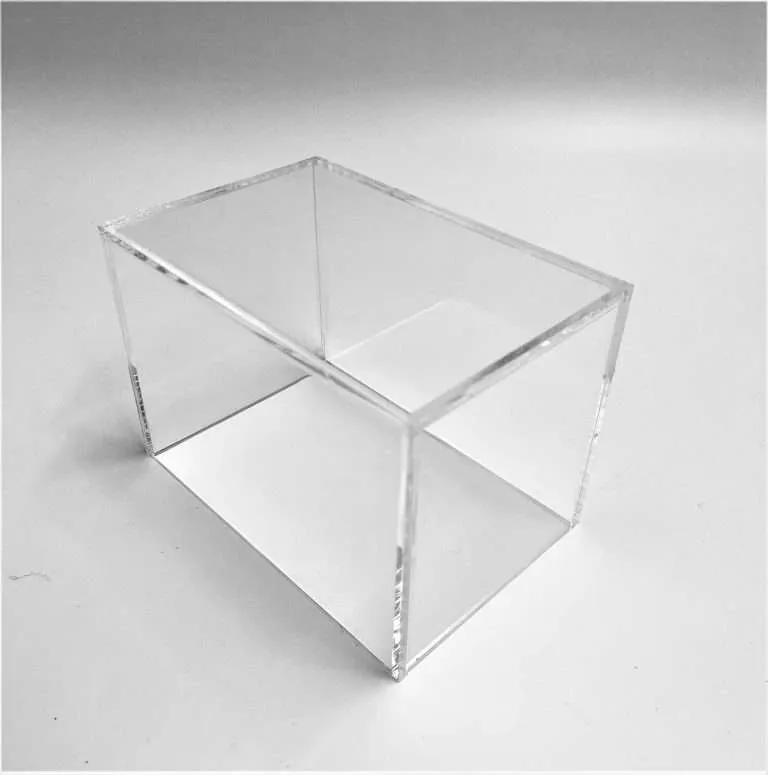
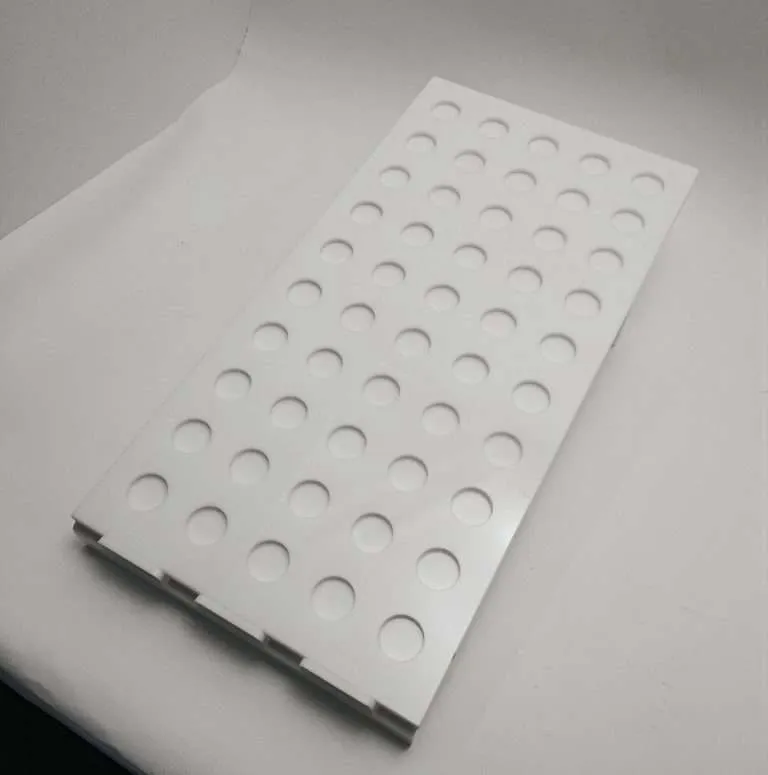
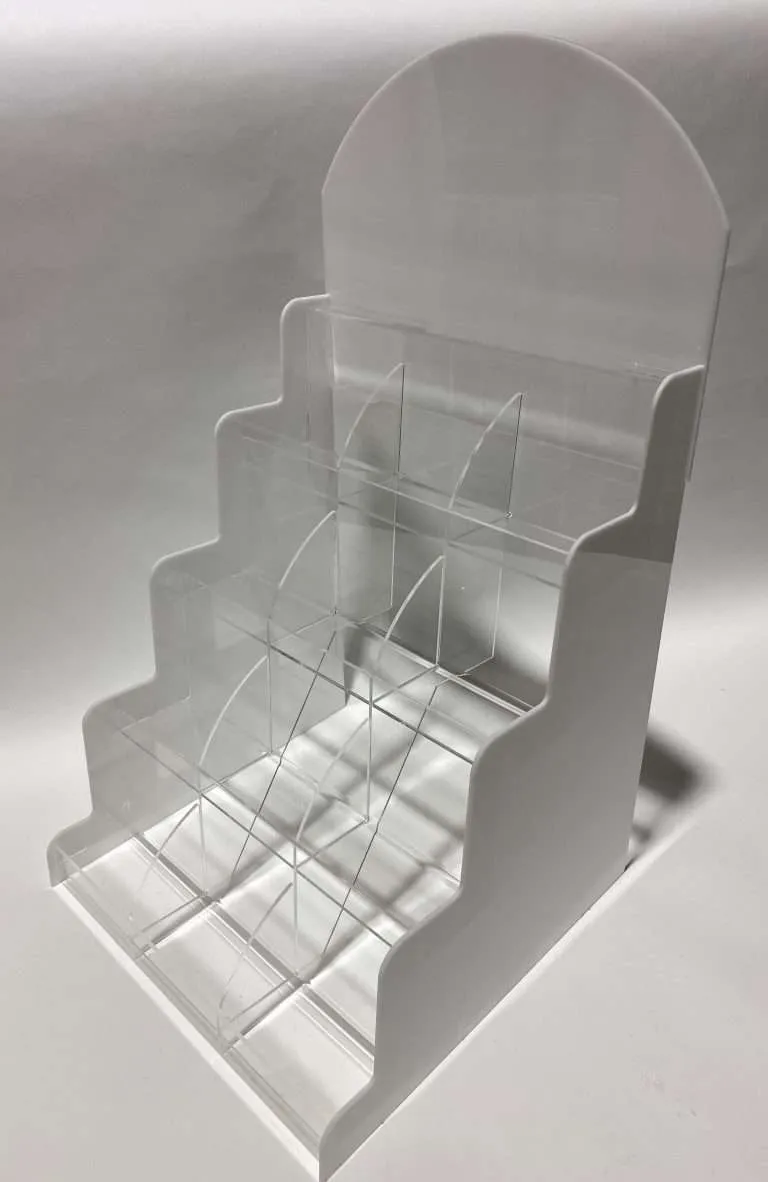
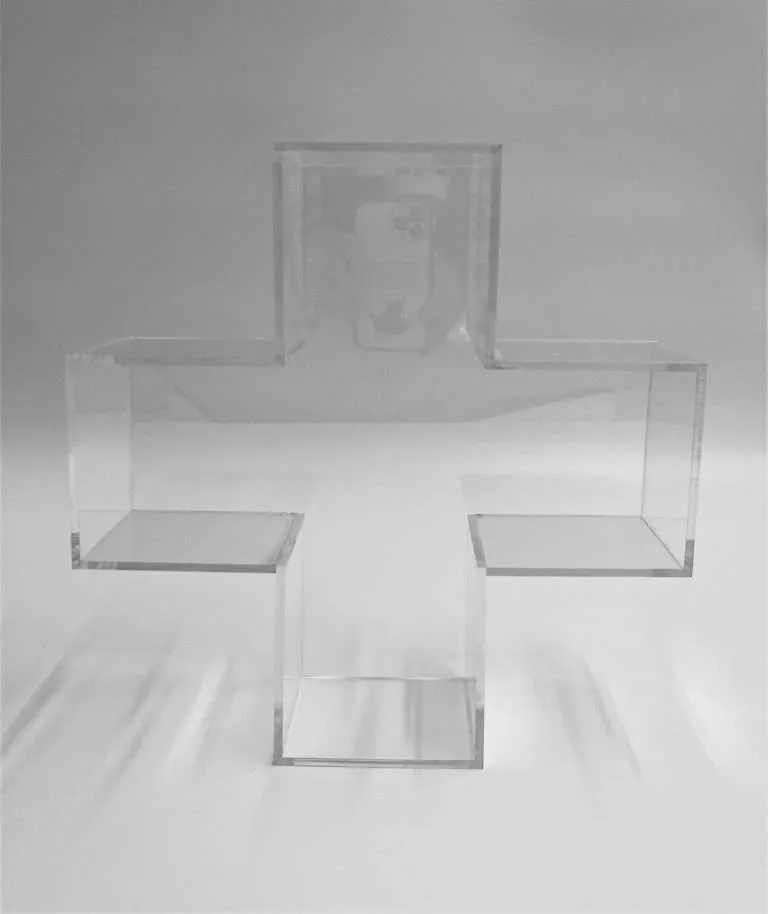
Every food-service operation runs on a set of clear fixtures so familiar they disappear: the curved front on the pastry case, the guard over the deli counter, the breath guards along the buffet line, the condiment organizers and the grab-and-go tiers and the menu holders at the register. This is a permanent commercial fixture category — specified by operators, kitchen designers, and millwork houses as part of how a food-service line is built — with its own fabrication logic. It deserves to be scoped by fixture, not by hygiene: bakery and pastry case fronts and risers, deli and service-counter guards, buffet and salad-bar breath guards, condiment and grab-and-go organizers, and menu and price-tag holders. Durable equipment, in other words — a different thing entirely from the disposable barrier wave, and specified to a different standard.
Why acrylic owns this niche
Three properties put acrylic behind most of the food line. First, optical clarity: the fixture’s entire job is selling the product behind it, and acrylic’s water-clear read is why the croissants look like the reason you walked in. Second, formed curves: the swept front of a bakery case or the angled profile of a service guard is a thermoformed shape glass cannot match affordably — heat, a mold, and one continuous curve with no seams to catch the eye or the crumbs. Third, field-replaceability: when a panel finally scratches out after years of daily wiping, it is a replacement part, not a demolition.
The honest counterpoint belongs in the same paragraph: acrylic scratches more readily than glass, and daily cleaning is exactly the exposure that finds that out. Whether a guard stays clear for its service life comes down mostly to cleaning practice: soft cloths and acrylic-safe cleaners, never the ammonia-based glass cleaners on the standard janitorial cart, which both scratch-swirl and chemically attack the surface over time. Point the cleaning crew at the published acrylic cleaning protocol as part of the fixture program.
Compliance framing, done right on the drawing
Food service is regulated territory, and the division of roles needs stating plainly: operators and their health codes drive the requirements. Food-contact-suitable material grades exist, and where a fixture surface will touch food, the customer’s spec names that requirement — the drawing callout is simple: identify the food-contact surfaces, state that material for those surfaces must be a food-contact-suitable grade, and request the manufacturer’s data sheet and documentation for the sheet batch in the submittal. The fabricator builds to that spec with the specified material. What never happens is the fixture builder deciding on the operator’s behalf what a health inspector will accept — that call belongs to the operator and their code, and a drawing written as above keeps every role where it belongs.
Fabrication details that matter in food service
Daily wipe-downs and health inspections are a design environment, and fixtures built for it share a detail vocabulary:
- Joints that don’t harbor debris. A bonded seam with voids is a crumb trap under a heat lamp. Joint quality on food-service work is specifiable against the Joint Clarity standards — continuous, well-formed seams are a cleanability feature here, not just a cosmetic one.
- Radiused inside corners. A cloth wipes a radius in one pass and skips a square corner every time. Radiused corners are also crack prevention in acrylic — the rare detail that serves daily wipe-down and the part’s service life at once.
- Formed one-piece guards versus bonded assemblies. A thermoformed guard profile has no joints to clean or to fail; a bonded assembly offers geometry forming can’t. The choice is a real design decision per fixture, made on cleanability, replacement logic, and shape.
- Hardware that survives cleaning. Mounting hardware lives in the same wet, chemical, wiped-down world as the panels — corrosion-appropriate hardware, mounted with the oversized-hole, strain-free discipline that keeps acrylic from cracking at its fastenings.
Who buys this, and how
Three paths bring food-service fixtures to a fabrication shop. Millwork houses and kitchen designers integrate fixtures into casework packages: drawings in, fixtures out, coordinated against counter dimensions through shop drawings. Multi-location operators standardize a fixture across sites: one approved design with drawings on file, then a reorder loop that keeps every location’s line matching — the program model that retail display programs run on, applied to the food line. And equipment dealers replace broken OEM panels: a broken case front measured, matched, and remade without the case. In all three, the fixture outlives trends because it was specified as equipment. Start with the fixture list and the counter drawings, and the food line gets the same program discipline as any display fleet.