Somewhere in every fixture program, a file goes to the fabricator with the logo placed on the front panel and no note about how it gets there. The default that comes back is usually print — not because print is right, but because nobody made the decision. Engraving and printing are genuinely different treatments: different aesthetics, different permanence, different behavior under light. The brand mark deserves the ten minutes it takes to choose deliberately.
The two reads
An engraved mark is dimensional. It is cut into the material — when we engrave acrylic, cast sheet is what we engrave, because it engraves cleaner, better, and sharper — and it is tonal rather than colored: the mark renders in texture and light, not pigment. It catches illumination, shifts as the viewer moves, and reads as crafted, the way etched glass does. Two variants extend it: two-tone engraving stock, a laminate whose cap layer engraves away to reveal a contrasting core color, and paint-filled engraving, where the engraved recess carries a filled color. We run both.
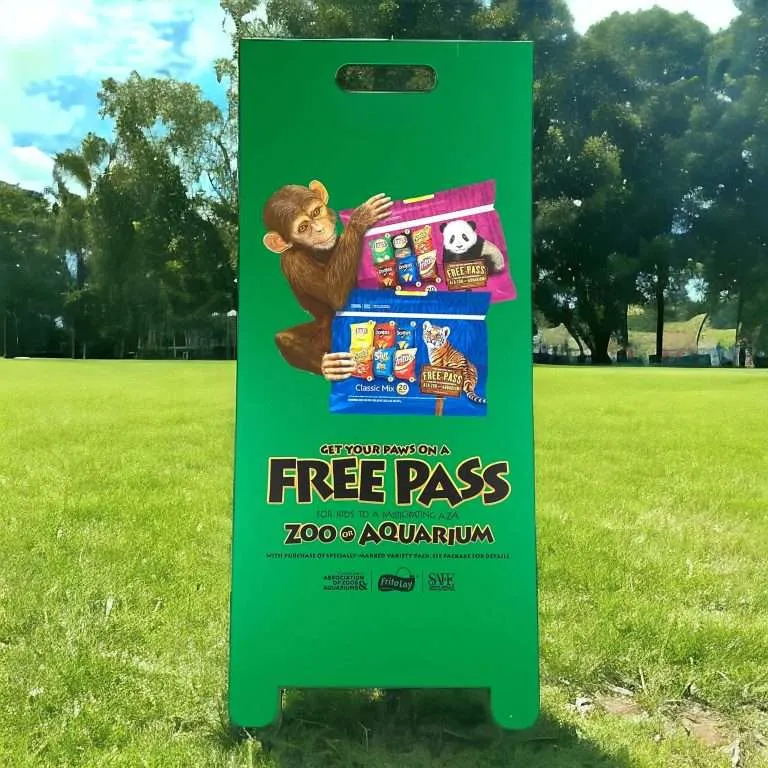
A printed mark is graphic and exact. Full brand color through color-managed CMYK matched to your brand references and proof-approved, sitting on the surface — or behind it, printed second-surface through clear material for a glossy, protected depth. Print is the only route to multi-color accuracy, gradients, and photographic elements.
Neither outranks the other; they are different sentences in the same language. The choice is aesthetic first, and the rest of this post is the vocabulary for making it on purpose.
Permanence, ranked plainly
- Engraving cannot wear off, ever. It is material removal — the mark and the part are the same object, so there is nothing applied for handling, cleaning, or restocking to take off.
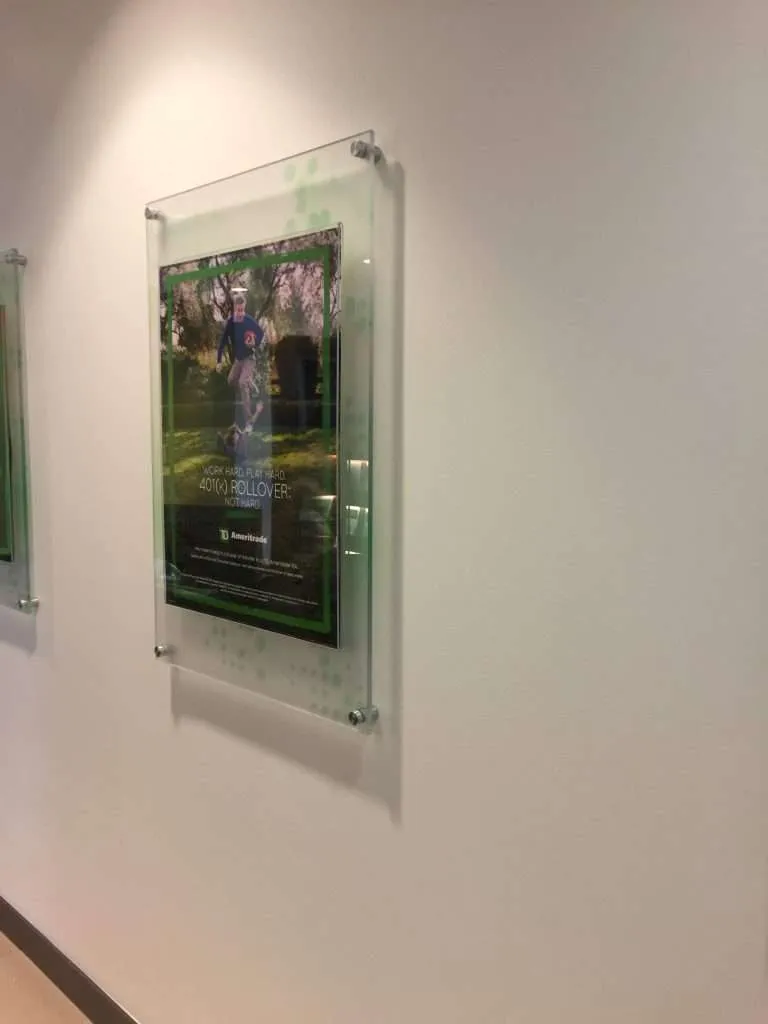
- Second-surface print is protected by the sheet itself. The graphic lives behind the material it is viewed through; the world touches acrylic, never ink. The mechanics are in second-surface UV printing.
- First-surface print is durable but exposed. On most fixture locations that is a non-issue. At genuine high-touch zones — a counter edge customers’ hands cross all day, a tester tray — location should inform the method.
Match the method to where the mark sits on the fixture and what the fixture’s life looks like. A logo on the kick panel of a floor unit and a logo on a handled tray are different durability problems wearing the same artwork.
Light decides many cases
Here is the mechanism that settles a surprising number of briefs: an engraved mark ignites under edge lighting. Light traveling inside an acrylic panel passes through clear faces and escapes where the surface is interrupted — which is exactly what an engraving is. Put LEDs on the panel edge and the engraved logo glows while the panel stays dark; it is the same physics behind edge-lit signage. So a lit fixture argues for engraving, and an unlit fixture whose mark must carry color argues for print. If the fixture program includes both lit and unlit units, deciding the mark treatment per unit type — rather than copying one spec across — is the detail that makes the lit units sing.
The single-color simplification
For a monochrome logo on clear material, engraving offers a quiet program advantage: zero color-management burden. No color proof cycle, no brand-reference matching, nothing to drift between reorders — the mark is geometry, and geometry repeats exactly. For programs whose brand mark is the only graphic on the fixture, that is a real simplification across every release. (Print earns its complexity back the moment the artwork needs a second color or an exact brand hue — then the color-managed, proof-approved route is precisely what you want, and the broader method map is in UV vs screen vs vinyl printing.)
Both at once is a legitimate spec
One part can carry both processes, specified per element on the drawing: an engraved primary mark with printed color accents is a common treatment on flagship fixtures — the crafted read where the brand name sits, exact color where the campaign graphics live. We have engraved, printed, and integrated lighting on the same panel; combining processes is ordinary work when the drawing says which element gets which. How finish grades frame the rest of the fixture’s quality is covered in finish grades for brand fixtures.
Decide the mark treatment when you decide the fixture, note it per element in the brief, and the quote comes back priced for the right processes the first time. The wider fixture-program context is in product presentation for brands and marketplace sellers, with the quality vocabulary anchored at our Acrylic Quality Standards.