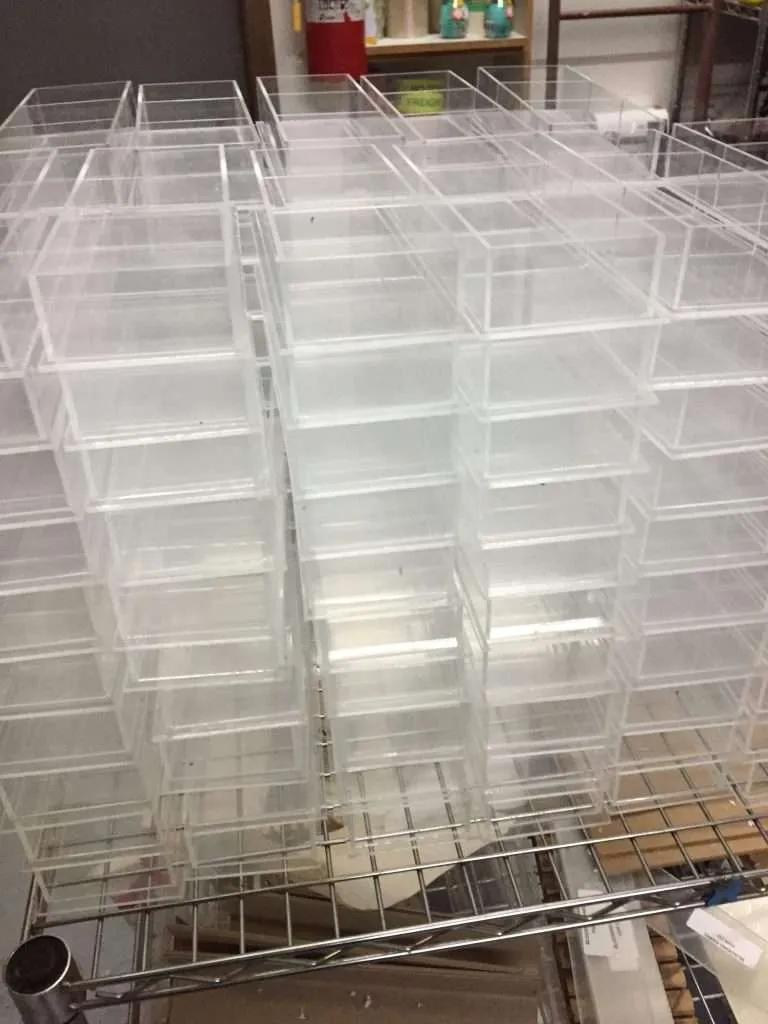
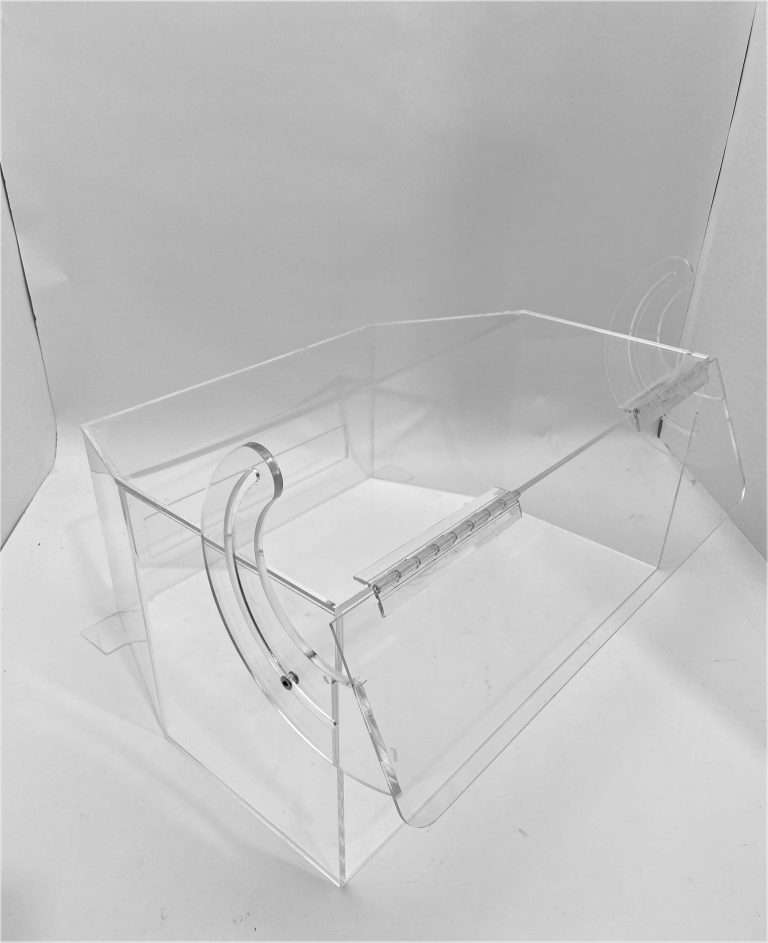
Every January, the same quiet audit happens on retail floors everywhere: the holiday displays come down. For a few days, the fixtures that spent two months being leaned on, restocked, bumped by carts, and wiped with whatever was handy are all off the floor at once, under back-room lighting, where every scratch, crack, and clouded panel is suddenly visible. Most programs treat this as cleanup. The better programs treat it as the fleet’s annual physical — because no other moment of the year puts the whole display program in your hands at the same time.
Triage, not tidying
The reset decision is per unit, and it sorts into three bins:
- Polishable wear. Light surface scuffing on acrylic can often be restored, and routine haze usually comes off with correct cleaning — the methods are in our guide to cleaning and maintaining acrylic. A unit in this bin goes back into service for another season.
- Replaceable panels. A cracked shelf or a worn front face on an otherwise sound fixture is a component order, not a fixture order — provided the design made the panel replaceable and the drawings still exist. This is where a retained program record pays for itself: the files on record turn “we need three more of that shelf” into a production release instead of a reverse-engineering project.
- Structural retirement. Crazing — the network of fine internal fractures that shows up around stressed holes and joints — is the honest end of the line: it is not polishable, and it signals stress meeting a chemical agent — a part carrying more load than it should, the wrong cleaner on a stressed surface, or both. Either way the fix lives in the next design and the cleaning protocol, and our post on what causes crazing explains both halves. A unit in this bin comes off the floor before it fails in front of a customer.
Being honest about the middle bin matters most. Maintenance recovers surfaces; it does not recover geometry, cracked joints, or stress damage. A triage that calls those what they are produces a clean reorder list instead of a floor full of half-tired fixtures.
The timing math is tighter than it looks
Spring programs floor in March and April. Count backward from a March floor date — production time, transit, distribution to stores — and the order decision for replacements and new units lands in exactly this window, while the teardown findings are still fresh. The annual order-deadline calendar runs this backward-planning arithmetic for every season; the January version is simply its most compressed case, because the wear report and the order deadline arrive in the same few weeks. Programs that ordered their spring sets back in the November–December window are already in the production queue; the January decision for everyone else is what the teardown findings change, and the full production-side picture is in our guide to planning fixtures around reset windows.
The wear report is design data
Here is the part most programs throw away: which units survived the season, and how the ones that didn’t fail, is the most specific design feedback a fixture program ever gets. Cracks radiating from fastener holes, joints that opened at the same corner on multiple units, shelves that bowed under the product load they were drawn for — each of these points at a drawing decision, and each has a known fix. The usual suspects are catalogued in our top ten design-for-fabrication mistakes; a January hour spent matching field failures to that list upgrades next year’s drawings for free. Thickness choices, edge details, and joint specs that failed in the field are not bad luck. They are the next revision’s requirements, written in evidence.
Reorders on a locked package move fastest
For fleets running a locked display package, the January conversation is a schedule event, not a design project: the drawing set, finish specification, and production record already exist, so a reorder goes to production as a release against the record. That is the difference between a reset that replenishes in weeks and one that re-derives the fixture from scratch. Work enters the production schedule as it is approved and paid, and where a program has a hard floor date that cannot move, Reserved Production is the tier that commits a guaranteed manufacturing completion date to it, when the schedule can support it — the broader planning context is in our production planning guide.
The reset season rewards the same habit every year: treat the teardown as an inspection, write down what you find, and let the findings drive both the reorder list and the next revision of the drawings. The programs that do this are the ones whose retail and POP displays look new in year three — not because they wore better, but because every January made the fleet slightly harder to wear out.