Here is the thesis, stated plainly so the rest of the guide can be practical: physical presentation is a product attribute. The same product sitting loose on a counter and seated in a fixture formed to its exact geometry are read as two different products — by shoppers, by retail buyers deciding whether to stock it, and by the category manager deciding where it sits. Not because anyone consciously admires the fixture, but because fit signals intention. A product that something was built for looks like a product somebody stands behind.
That makes fixtures brand infrastructure, not decoration — and like all infrastructure, the right amount to build depends entirely on where the brand is. So this guide runs on the brand’s growth arc rather than a display catalog, because that is how the problem actually arrives.
Stage one: the first custom fixture
The first fixture problem is almost always the same problem: the product is priced like a considered purchase and displayed like an impulse buy. A skincare line at a serious price point stacked in a cardboard tray, a small-batch spirits bottle standing unaided on a shelf, a hardware product loose in a bin — the presentation is arguing against the price tag.
The first fixture is usually modest: a stand, a riser, a tray with formed or machined wells that hold the product the way a case holds an instrument. What it must do is specific:
- Fit the real product. The well is machined or formed to the actual object — its true diameter, its center of gravity, the way it wants to lean. Visible slop between product and fixture reads as discount; a seated fit reads as designed.
- Disappear correctly. Clear acrylic exists so the product is the show. The fixture’s job is posture, height, and angle — putting the product at the eye line and attitude the brand would choose if it could stand there adjusting it all day.
- Survive its counter. Retail counters are cleaned with whatever is under the register. Material thickness, edge treatment, and print placement should assume real-world handling from day one.
Stage two: retail entry — fixtures a retailer will give space to
The moment a brand sells through someone else’s store, the fixture acquires a second customer: the retailer. Counter space is the most negotiated real estate in commerce, and a retailer’s questions about a display are operational, not aesthetic — what is its footprint, does it hold enough stock between restocks, can staff clean it, does it shed parts. A fixture that survives those questions earns placement; one that fails them goes to the stockroom no matter how good the brand looks on it.
Design consequences worth building in at this stage:
- Footprint discipline. Design to the negotiated inches, then inward. The retail-side constraint comes first, the product arrangement second.
- Capacity as a feature. A display that holds a sensible facing count between restocks is a display staff leave stocked. One that empties by noon trains the store to stop refilling it.
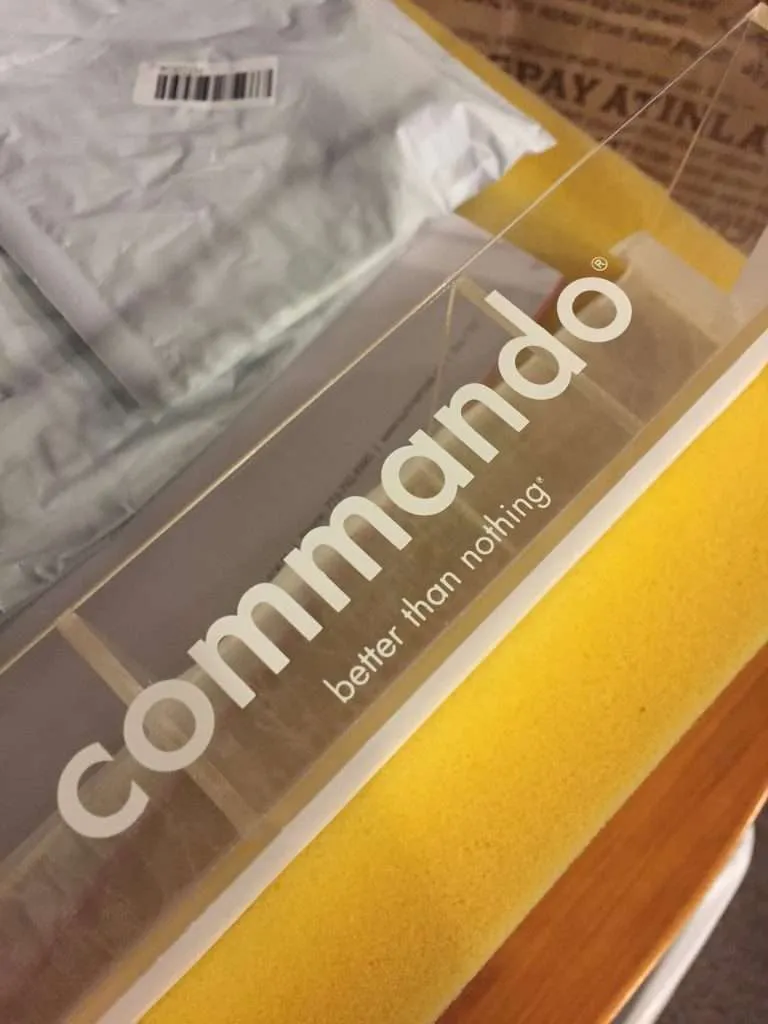
- Owned branding. A bare stock stand brands nobody — or worse, reads as the fixture vendor’s product. UV print, engraving, or second-surface graphics make the fixture part of the brand’s territory. Brand color is handled as color-managed CMYK printing matched to your brand references, proof-approved — which is what keeps door twelve’s fixture the same color as door one’s.
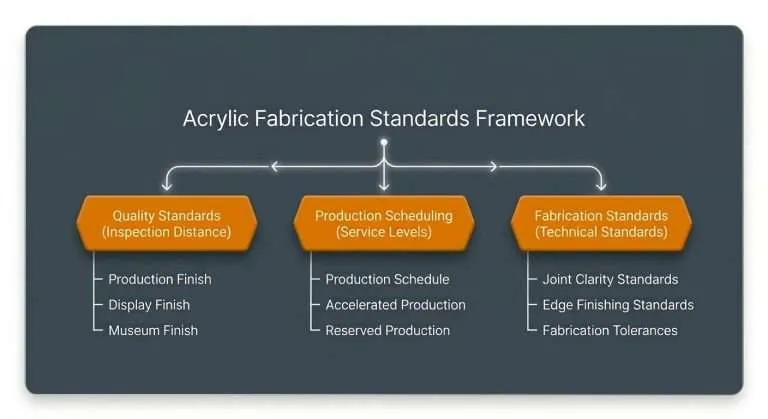
- Finish grade by placement. Our published Quality Standards define finish classifications by Inspection Distance: Production Finish judged at approximately 4 feet, Display Finish at approximately 2 feet, Museum Archival Finish at approximately 1 foot. A counter fixture lives at arm’s length — customer-facing surfaces are a Display Finish decision. A top-shelf unit viewed across a gondola run can carry Production Finish invisibly. Writing the grade into the spec is what makes three fabrication bids comparable.
Stage three: the multi-door program
Somewhere between the fifth store and the fiftieth, the fixture stops being a thing you order and becomes a program you run. The disciplines change accordingly:
- Consistency is the product. At program scale, the brand impression is built from repetition — the fixture in Austin must match the fixture in Portland. That is a specification problem: dimensions with tolerance callouts, named finish grades, print files under color management, all on record.
- Files on record. Once the spec, artwork, and proofs live in the fabricator’s records, a reorder is a purchase-order line, not a project. Programs that rebuild the spec every order pay for the same engineering repeatedly and drift visually while doing it.
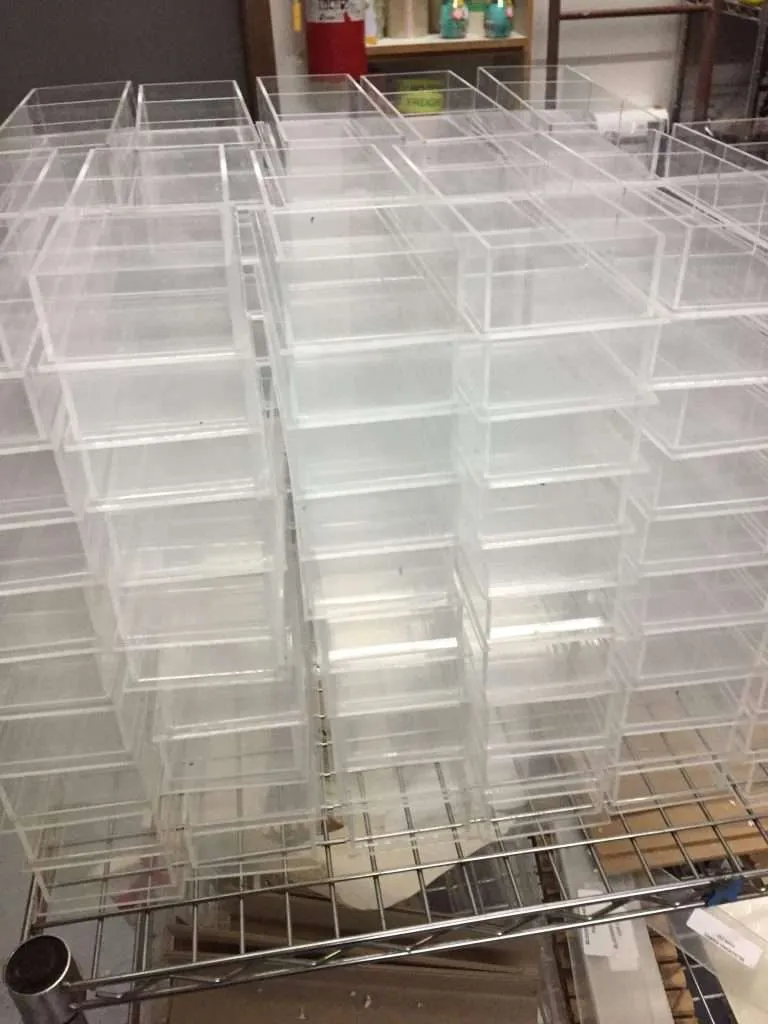
- Volume math. Quantity changes the fabrication math and opens process doors — forming tools amortize, nesting improves yield, runs schedule as runs. The design that was right for 10 units is rarely the most buildable design for 500; a program-stage design review with the fabricator routinely pays for itself.
- Rollout logistics. Programs ship, and the logistics are part of the fixture. Flat-pack versus assembled, carton design, and install instructions decide whether a 200-door rollout is an operation or a support-ticket generator.
The working method: prototype, pilot, program
Across all three stages, the path from idea to fleet has the same three gates, and each gate answers one question:
- Prototype answers is this the right object? Fit, posture, proportions, presence — validated with the real product in hand. Change anything here; changes are cheap.
- Pilot run answers is this the right production design? A small run through production methods surfaces what the one-off never shows: how the parts nest, where assembly time hides, what the carton needs to be. The design locks at the end of this gate.
- Program run answers can we have it again, identically, on schedule? From here changes are managed events, not tweaks — that discipline is what consistency is made of.
Brand deadlines, in honest scheduling language
Brand fixture deadlines come from launches, retailer commitments, and seasonal windows — dates with other people’s plans attached. The scheduling conversation should happen in the precise terms of our Production Scheduling standard. Production Schedule work is scheduled by available fabrication and assembly capacity and completed in sequence with other scheduled work — no guaranteed ship date. Accelerated Production moves a project forward in the schedule when available capacity allows — improved timing, still no guarantee. Reserved Production allocates dedicated fabrication capacity to guarantee a specific ship date, and it is the tier built for a retail launch with a set date — the standard’s own examples include retail product launches. A brand that knows which of its dates are hard, and buys the guarantee only for those, runs its program calmly at both ends.
Where to start
Wherever the brand is on the arc, the entry point is the same: the real product, the real placement, and the real date. From those three facts a fixture spec follows almost mechanically — well geometry from the product, footprint and grade from the placement, tier from the date. Send us the three facts and we will help translate them; the gallery shows how other brands’ answers turned out, and for the retail-side format landscape, our retail and POP display work is the adjacent map.