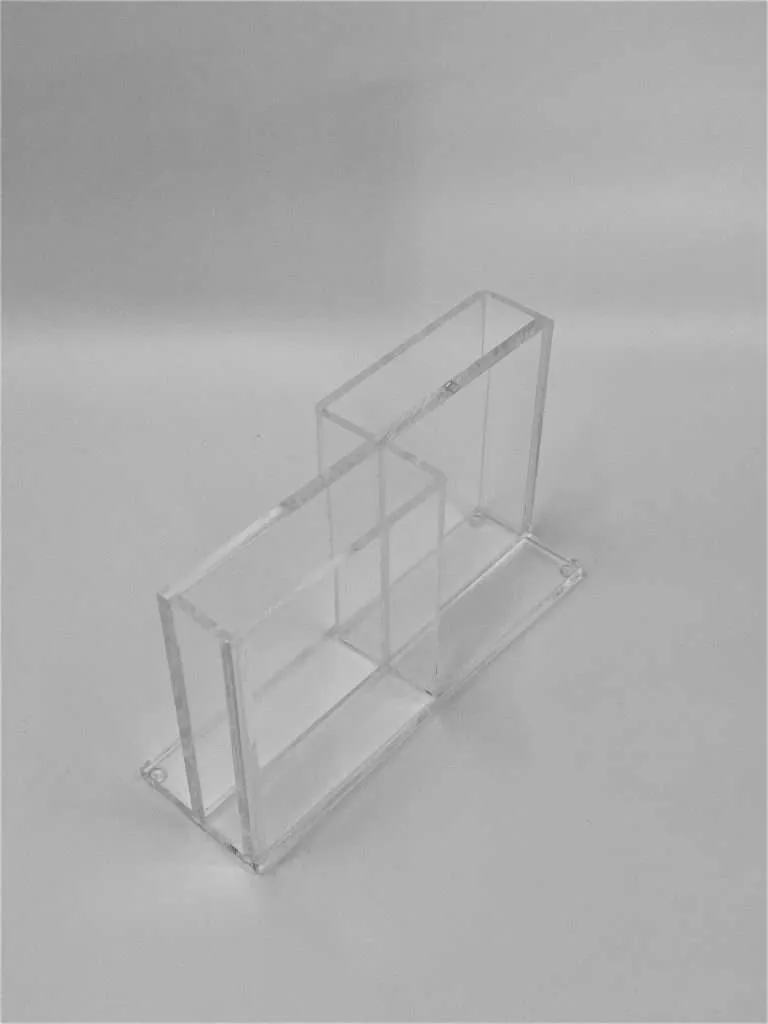
Mount making is its own trade. The people who do it — conservators, registrars, dedicated mountmakers — carry knowledge no fabrication shop should pretend to: what an object can bear, where it can be touched, what materials may sit against it for the next decade. So let’s draw the line honestly at the top: on a mount project, the mountmaker owns every object-contact decision, and the fabrication shop’s job is to deliver precision-cut, formed and polished components exactly to their drawings. This post is about doing that second half well.
The components a shop actually builds
Strip away the conservation layer and most acrylic mounts resolve into a small set of fabrications, each with real process content:
Line-bent easel backs. The workhorse book and document support: a flat blank, bent along a heated line to the drawn angle. The fabrication questions are bend placement, angle consistency across a set, and which edges are seen from the gallery side.
Thermoformed saddle cradles. A cradle formed over a shape so an object’s profile is carried along its length. This is forming work, and it behaves like forming work: the component takes its dimensions from the mold and the material’s movement, not from the flat sheet. The published Fabrication Tolerances put thermoformed components at approximately ±3% to ±5% of the formed dimension depending on geometry — which is exactly the number a mountmaker needs when deciding how much of the final fit lives in the form and how much in their own padding and adjustment layer.
CNC-cut ring mounts and profiles. Rings, yokes and contoured supports cut from flat sheet to a supplied profile — template, tracing or CAD. Machine-cut, repeatable, and the right place to hold a tight dimension, since CNC-routed components carry a far tighter published range than formed ones.
Drilled rod-and-collar assemblies. Posts, collars and bases that position an object in space. Mostly drilling and fitting work, where hole placement and square assembly decide whether the mount stands the way the drawing intended.
Working from the mountmaker’s profile
Mount work arrives as drawings, templates, tracings of an object, or CAD — and the handoff works best when the profile’s authority is explicit: the tracing is the spec, and the shop builds to it rather than interpreting the object it came from. What the shop adds is process counsel, offered at the quote: which features want the CNC’s range and which can live with a formed component’s range, where a bend will land relative to the drawn line, and when a two-piece construction will hold a profile that a single formed piece can’t. That’s the same drawing-to-buildable-spec conversation every custom project gets, pointed at an unusually exacting reader.
Finish grade: the mount should disappear
A mount succeeds when nobody looks at it. In practice that means the visible edges of gallery-facing components are specified to Display or Museum Archival Finish under the Quality Standards — these are close-inspection objects by definition — while surfaces that face the deck or hide behind the object stay machine-finished with no loss. Where a mount spec constrains how contact surfaces may be finished, the spec governs: we build those surfaces by the methods it allows, as drawn. What sits against the object, like what the object can bear, is the mountmaker’s call — the same division of labor that runs through conservation-safe case construction and the materials-screening conversation: the institution owns the standard, the shop builds to it.
Families, rotations and the case around them
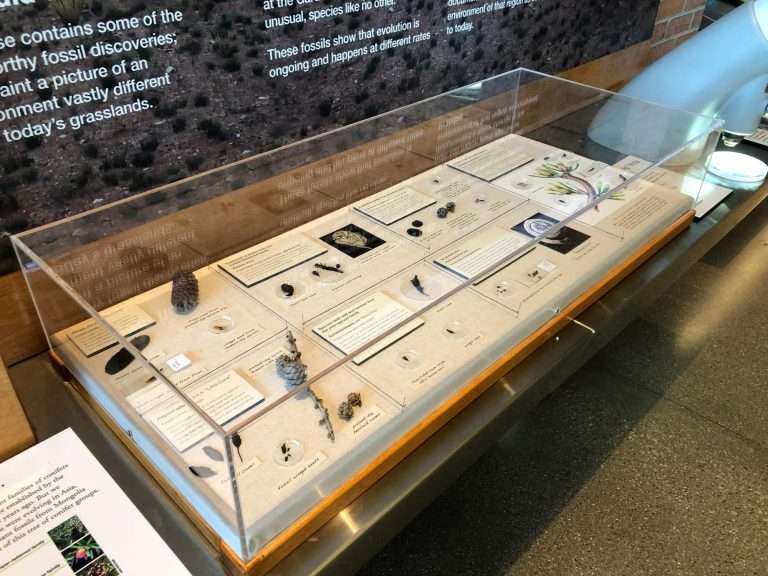
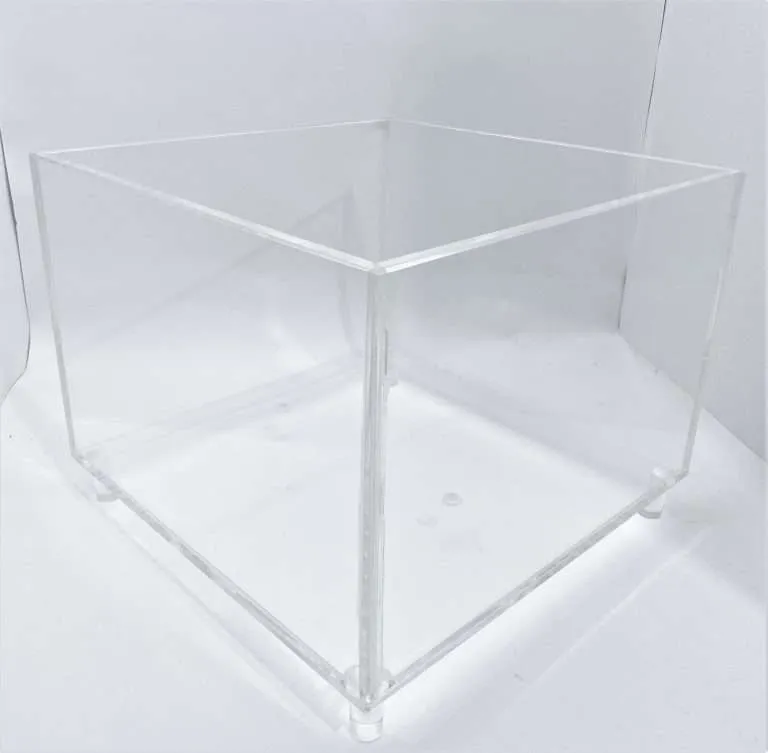
Mounts are rarely singular. A storage rotation needs a family of cradle sizes; a traveling show needs the same mount four times; a study collection needs forty supports in six profiles. Cutting a family in one run — one material pull, one setup per profile — is how a set comes out consistent, and it is cheaper per piece than forty separate requests. If the mounts live inside cases we’re also building, the two specifications travel together naturally; the vitrine specification guide and the museum display case guide cover that half of the project.
If you’re a mountmaker or registrar with drawings in hand, send them as they are — profiles, angles, and the finish and contact constraints that matter. The quote comes back in your terms: per component, per family, built to your spec.