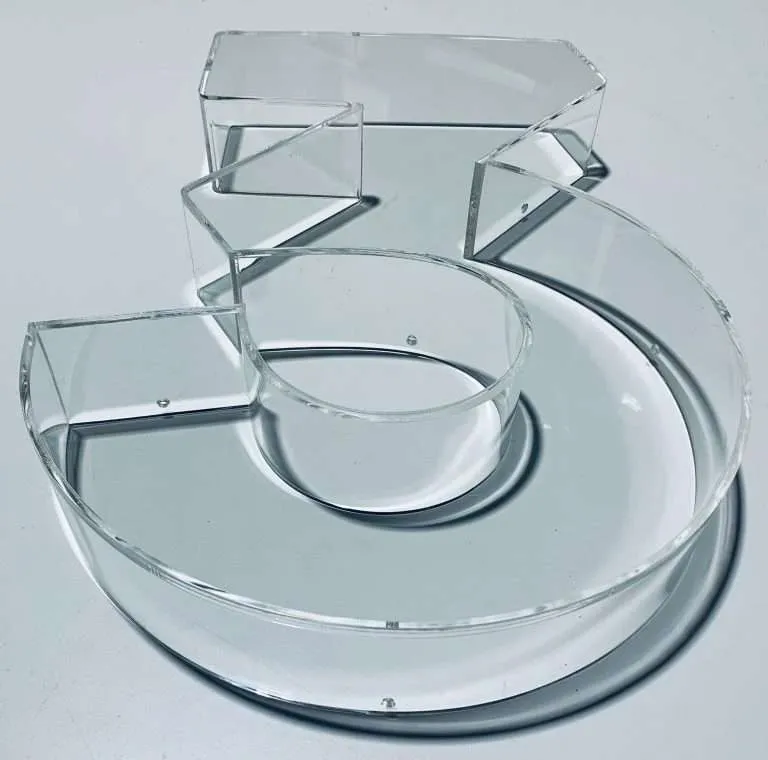
Every brand that fabricates a custom fixture does it for one of three reasons, and they arrive in a recognizable order as the brand grows. A brand at its first farmers-market table can commission a custom fixture and get real value from it — a single well-fit piece is a smaller project than most brands expect — and a brand entering its second retail chain is usually being taxed by stock hardware every day it stands. The question is never “is custom better?” It is “which stage is this brand at, and what is the economical way to build custom at that stage?” — so here are the stage markers, the framework for reading them, and how to spend well at each rung.
The three switching triggers
Three specific pressures push a brand across the line from stock to custom, and they arrive in a recognizable order.
1. Product fit
Stock trays fit nothing perfectly — they are dimensioned for a statistical product that doesn’t exist. Your bottle rattles in a well sized for the average bottle; your jar sits proud of a lip meant for a taller one. The tell is visible slop, and slop reads as discount: a product loosely occupying someone else’s geometry looks borrowed, and shoppers price it accordingly.
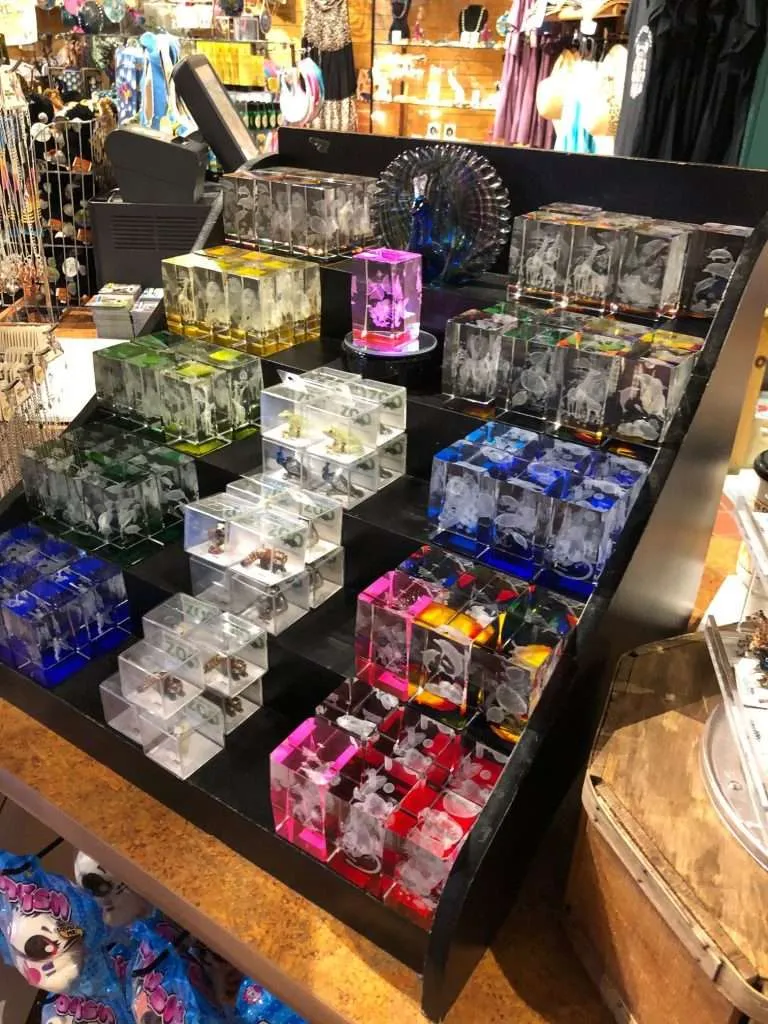
Custom fixtures are machined or formed to the real product — its true diameter, its center of gravity, its label window — and the seated, intentional fit is the single most legible difference between the two categories. When your product’s geometry is even mildly nonstandard, fit is usually the first trigger to fire.
2. Brand presence
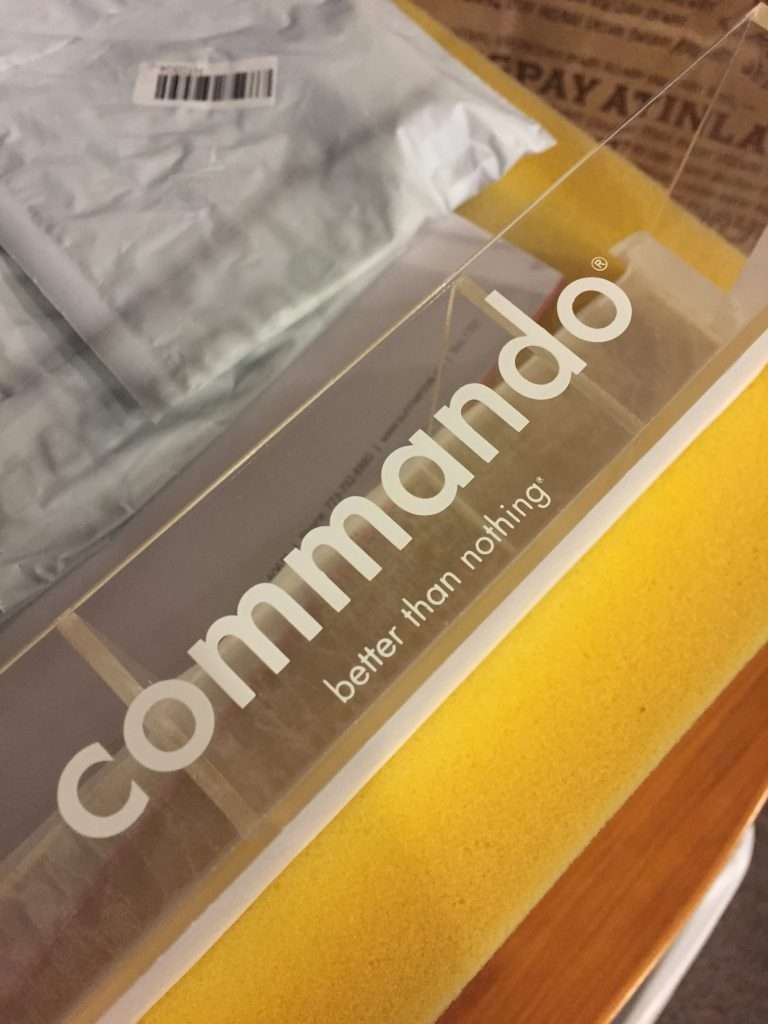
A naked stock stand brands the fixture vendor, not you — at best it is visually silent, at worst the same riser is holding a competitor’s product two doors down. Custom work flips the fixture into brand territory: UV-printed graphics and logos, engraved marks, color-managed CMYK printing matched to your brand references and proof-approved, so the fixture wears the brand as deliberately as the packaging does. The trigger fires when the brand starts investing in how it appears at the shelf — because a fixture is shelf real estate the brand already controls, and leaving it generic is leaving the last foot of the brand experience to a catalog.
3. Fleet consistency
The slowest trigger, and the one that ambushes multi-door brands: stock product lines change. The riser you standardized on gets discontinued, its replacement comes back dimensioned slightly differently, and your fleet is now visibly two generations of hardware. A custom specification on record has the opposite property — the drawing, the finish grades, the print files all sit in the fabricator’s records, and a fixture ordered years later matches the first one delivered. For a brand whose fixtures outnumber its employees, the spec-on-record is the difference between a fleet and a collection.
The cost comparison, done honestly
No figures — the numbers move with every project — but the structure of the comparison is stable and worth having straight:
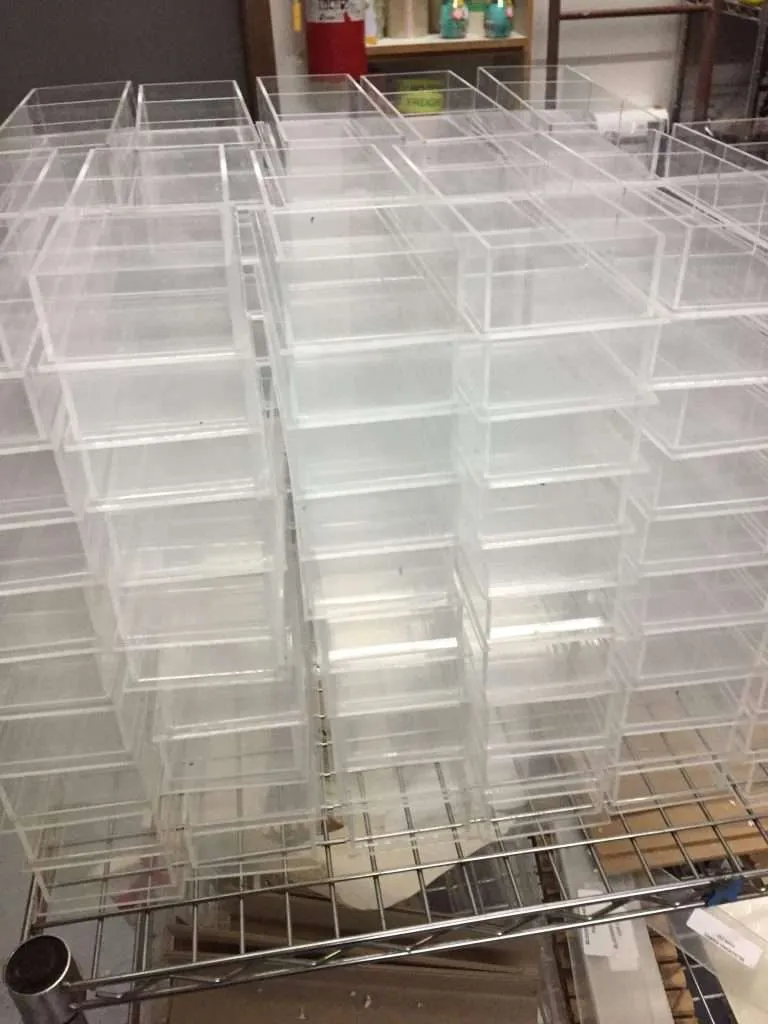
- Small quantities: stock hardware carries no design or setup cost, so on unit price alone it is cheapest for a handful of placements. Custom at this stage is bought for fit and brand presence rather than unit price — and it is bought economically by keeping the first fixture simple: one format, standard sheet thickness, geometry that nests well, a finish grade matched to where the viewer stands. Design for fabrication is what makes a small custom run affordable.
- Custom economics: design and setup are carried once, at the front; the per-unit economics then improve with quantity as parts nest efficiently across sheets and production schedules as a single run.
- The crossover: it moves. Three factors drag it toward custom earlier: quantity (the one-time costs amortize), branding needs (printing stock hardware is possible but awkward — you’re customizing someone else’s geometry), and product-geometry nonstandardness (the further your product is from average, the worse stock fits and the more fit-value custom returns). A brand scoring high on all three crosses over at surprisingly modest quantities; a brand scoring low may honestly never cross.
That is the whole framework — factors, not a fake universal answer. Anyone quoting you a universal crossover quantity is describing their sales target, not your economics.
The middle rung nobody advertises: semi-custom
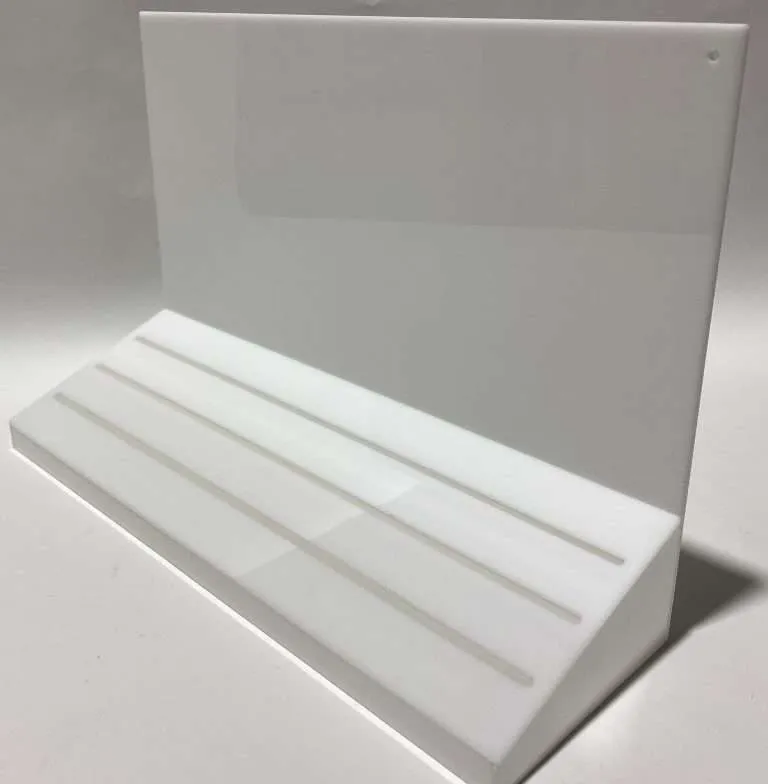
Between the catalog and the ground-up commission there is a legitimate middle stage, and many brands should live in it for a while: semi-custom. Proven, stock-inspired dimensions and formats — the countertop riser geometries that already work — carrying custom elements where the brand needs them: a machined insert fit to your product, printed branding on the header, your color on the base. The design investment is a fraction of ground-up work because the format is already solved; the fit and the branding, the two triggers that fire first, both get answered.
Treat it as a stage, not a compromise to apologize for. Brands often run semi-custom through their first retail chapter and commission fully custom when the fleet trigger fires — by which point they know exactly what their fixture needs to do, and the custom spec is written from evidence instead of guesses.
Reading your own stage
The one-line version of the whole decision: count doors, look at the fit, and ask who the fixture is branding. One door and a clean fit — stock is the economical default, and if you want custom anyway, keep it to one simple, well-fit format and it stays affordable. Growing doors, visible slop, or a silent fixture — semi-custom answers the two urgent triggers. A real fleet with retailer commitments — the spec-on-record economics of full custom start working for you, and there is one more argument that belongs to that stage: retail buyers read fixture quality as operational competence, a signal about whether the brand behind it will be easy to work with. When the stage markers say it is time, bring the product and the door count — the right first fixture is a smaller project than most brands expect, and the retail display work shows what the custom side of the line looks like.