The hard part of a multi-site sign program is not the design — that gets done once, approved once, and locked. The hard part is everything the word “times” hides in “one sign package × forty locations”: producing location 23 identical to location 1, a year and a half later, and getting its signs to the right site the week its crew is standing there with a lift. That is a production-program problem, and the brands that solve it all converge on the same structure.
Who this is, and what actually hurts
The buyer here is a brand, construction, or facilities manager running openings or refreshes on a rolling calendar — franchise systems, clinic networks, branch banks, fitness chains. Their pain is never “design us a sign.” It is the compounding versions of drift: color that wanders between batches, a dimension that shifted when a file got redrawn, a shipment that reached the wrong site, and nobody able to say which drawing revision location 9 was actually built from. Every element of the program structure below exists to close one of those gaps.
The program structure that works
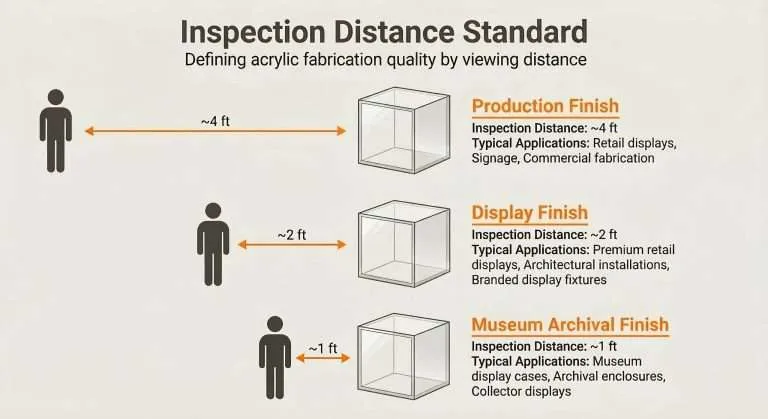
Locked drawings. One approved sign-package set on file defines every sign type in the package — dimensions, materials, mounting, finish specifications in the standard’s terms. It carries a revision level, and each release is ordered against a named revision. Changes enter as revisions with fresh approval, never as quiet redraws. What a well-run record makes possible over the life of a program is covered in reorders and the files on record.
Variable data. Per-location content handled as data: address numerals, suite copy, directory inserts, local-language panels — the parts that change per site are exactly the parts that should never be hand-edited into artwork forty times. They belong in a per-location data table that merges into the locked artwork, so location-specific content is a data entry, not a design event. Where local code imposes variants — dimensional requirements, tactile elements, mounting rules — the local requirement is the customer’s call to specify, and the package carries it as another data column; code compliance stays with the brand and its local professionals, and the signs are built to what they specify.
Batched releases. Producing in batches aligned to the next quarter’s openings keeps the program efficient and the schedule legible: each batch is a release against the record, entering the production schedule as it is approved and paid. The timeline anatomy of a single location’s package — survey to install — is laid out in the new-location signage package timeline.
Consistency mechanics: how location 40 matches location 1
Consistency over a multi-year program is held by artifacts, not vigilance. Printed color runs through color-managed CMYK matched to the brand’s references, and a proof — printed on the actual material where color has to be right — can anchor the original approval and stay in the program record, so a later release is held to the same reference rather than a fresh interpretation of the artwork file. Sheet is sourced consistently, and where color-critical panels will sit side by side, pieces cut from the same shipment of sheet; the lot mechanics are covered in colored sheet lots and color consistency. Dimensional consistency rides on the locked drawings and the published tolerance ranges, and where the program calls for it, a first-piece check against the file anchors a new batch before the batch runs. Families of related signs bring their own dimensional discipline — tolerances for sign families covers keeping shared dimensions truly shared — and the full color story is in brand color matching for signage.
Logistics is part of the product
A rollout program’s output is not “signs”; it is this location’s signs, together, where its crew is. Structuring shipments per location — every sign for one site packed as one labeled shipment, with its install templates and hardware riding along — means the site crew opens one delivery and starts work, instead of reconciling three boxes against a packing list. Shipments go direct to site or to the installer as the program prefers, tracking is emailed when each shipment goes out, and when a panel arrives damaged, the locked record is what makes the replacement a quick re-release rather than a custom project: the drawing, the approved reference, and the spec already exist, so the conversation is one email long.
Scheduling tiers, mapped to rollout reality
A real rollout program runs on mixed scheduling, and pretending otherwise is how programs end up buying urgency everywhere or nowhere. The steady pipeline — next quarter’s batch, known openings, normal sequence — runs on the Production Schedule, entering as approved and paid and completing in sequence. A compressed opening, where construction caught up faster than planned, is Accelerated Production: the project moves forward in the schedule as capacity allows, with no guaranteed date, which is usually exactly enough. And the contractual grand opening — the date on the invitations — is Reserved Production territory: dedicated capacity against a guaranteed manufacturing completion date, priced on the quote, when the schedule can support it. Completion is the day the work comes off the floor; the program plans transit from there. Treating the tier as a per-release decision rather than a program-wide setting is what keeps the urgent location fast and the routine locations economical.
Multi-site brands tend to arrive at this structure one painful lesson at a time. Arriving at it on purpose — locked package, variable data, batched releases, retained proofs, per-location shipments, mixed tiers — is cheaper. The wider production context is in our acrylic signage guide, with the retail-side sibling story in multi-store rollout planning and the system-design view in wayfinding sign system production.