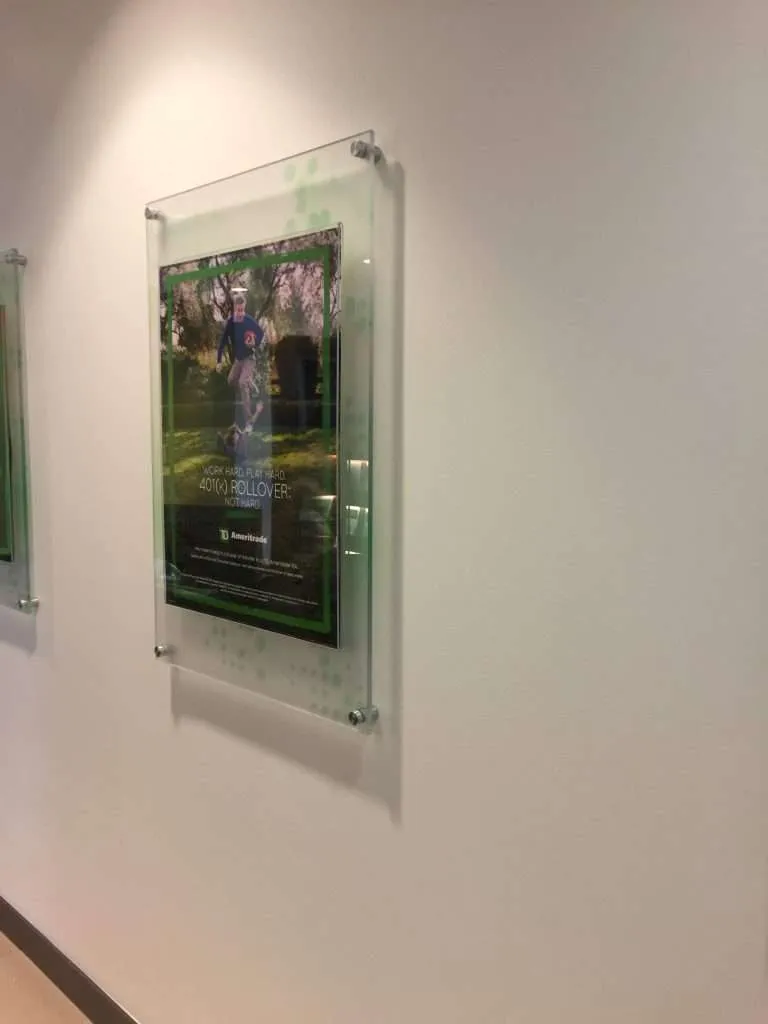
A one-off lobby sign has a forgiving life: it has to fit its own wall, once, with an installer present to make small adjustments. A sign system — the wayfinding family, the room-ID program, the franchise package rolled out across locations — lives under a much harsher rule: it has to fit itself. Every printed insert has to slide into every holder, this year’s replacement panel has to fit a frame installed two years ago, and every mounting pattern has to land on wall templates printed months earlier by someone who will never see the shop. On a single sign, dimensional variation is cosmetic. On a program, it decides whether the system works. That makes interchangeability a tolerance specification — something written down and held — not a byproduct of careful work.
Ground it in the published standard
The usable starting point is that fabrication processes have known, published precision — not adjectives, numbers. Our Acrylic Fabrication Tolerances standard puts typical ranges on each route: laser-cut components at approximately ±1/32″ to ±1/64″, CNC-routed components at approximately ±1/32″, saw-cut components at approximately ±1/16″ to ±1/8″. Read as a system designer, that table is a process-selection map: the components whose dimensions carry a fit — insert blanks, holder openings, hole patterns — belong on the laser or the CNC, while saw-range precision is fine for anything that never mates. Specifying “general tolerances per the published standard” also spares the drawing the metal-shop disease of tight callouts everywhere, which slows quoting and buys nothing on non-mating dimensions — the drawing discipline is in tolerance callouts on drawings.
The two fits that rule sign systems
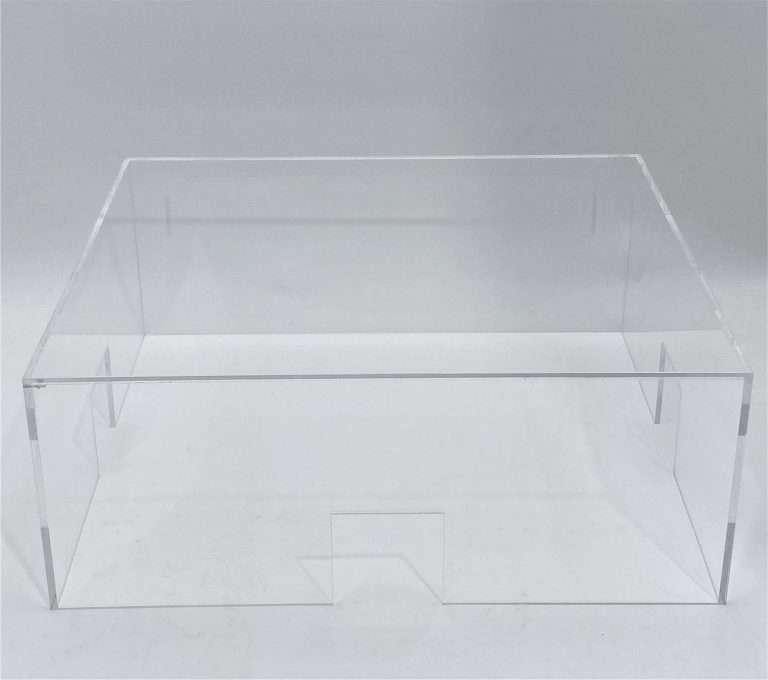
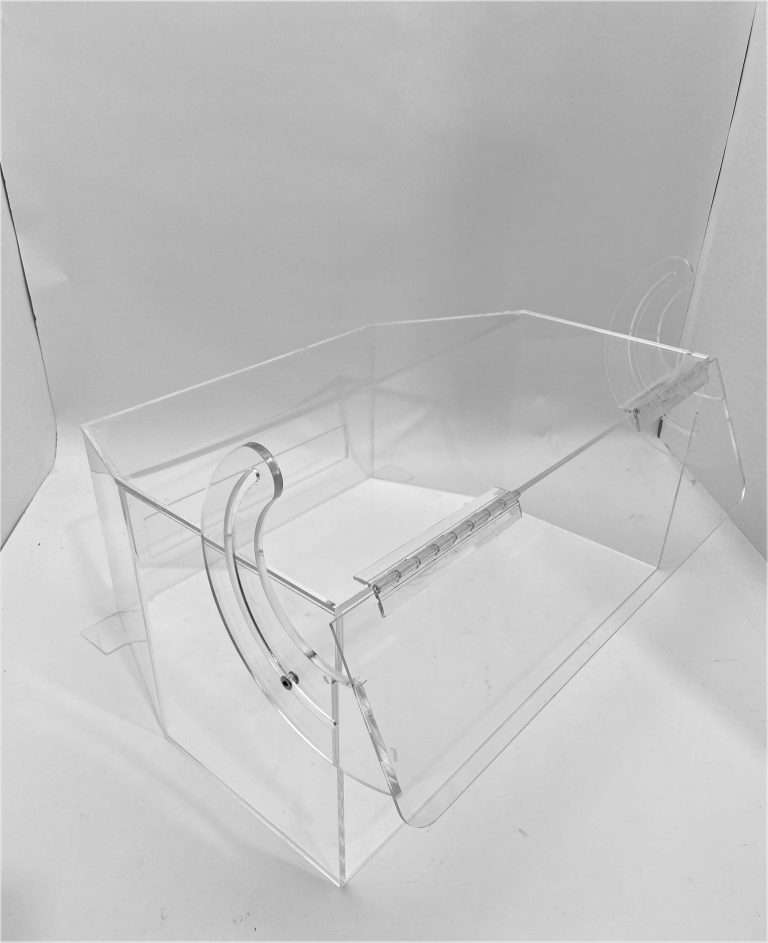
Insert-to-holder. The defining fit of changeable signage: the printed insert must slide into the holder without binding and sit without rattling — across every insert and every holder ever produced for the program, in any combination. That is a clearance specification: the insert is dimensioned deliberately under the opening, by enough to absorb the variation of both parts and still behave. The quiet trap is thickness: the insert stack (printed sheet, lamination, the acrylic itself) rides inside a slot whose designer remembered the nominal and forgot the range. Which leads to the least-known number in the standard —
Sheet thickness is a range, not a number. Acrylic sheet arrives from the mill at ±10% of nominal thickness, and the fabricator inherits that — it’s material reality, not shop variation (the full picture: sheet tolerance vs fabricated tolerance). A slot sized snugly to nominal 1/8″ will bind on a thick-end lot and rattle on a thin one. Design slots and channels for the thickness range, and the program stops caring which lot any given insert was cut from.
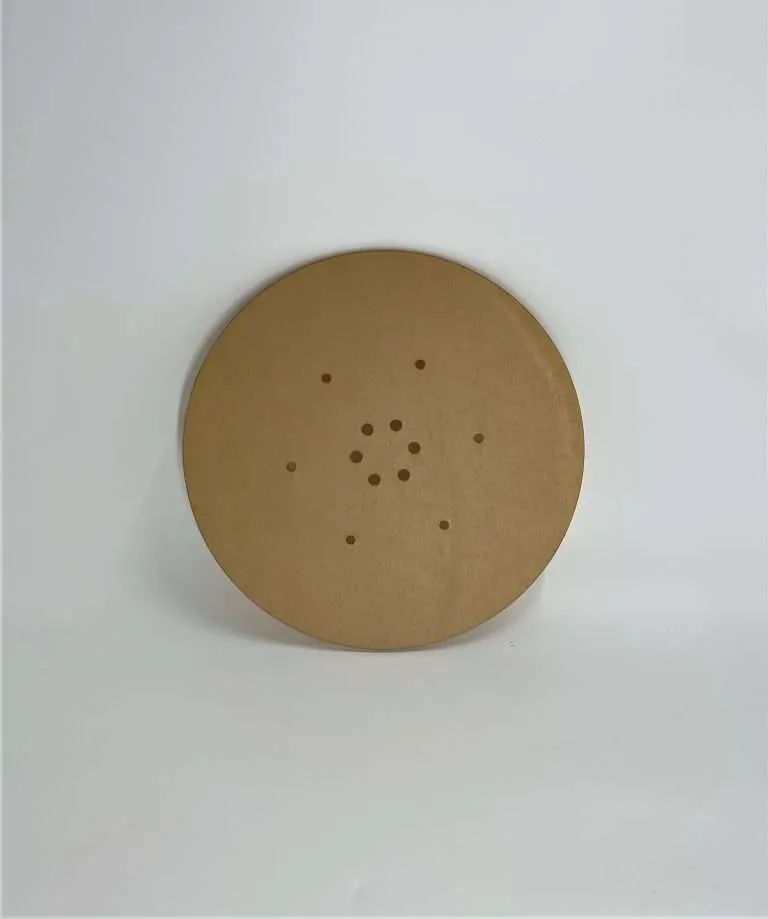
Pattern-to-pattern. The second ruling fit never touches another acrylic part: mounting holes have to match drilling templates, back-plates, and studs placed from drawings — often by trades who installed the template months before the sign existed. Here the tolerance that matters is hole-position across the whole pattern, so the spec names the pattern as the controlled feature and keeps it on a machined process. Oversized holes and slotted mounting features are the honest engineering response to wall reality, and standoff hardware has its own forgiving geometry — see standoff mounting systems.
Where variation actually comes from
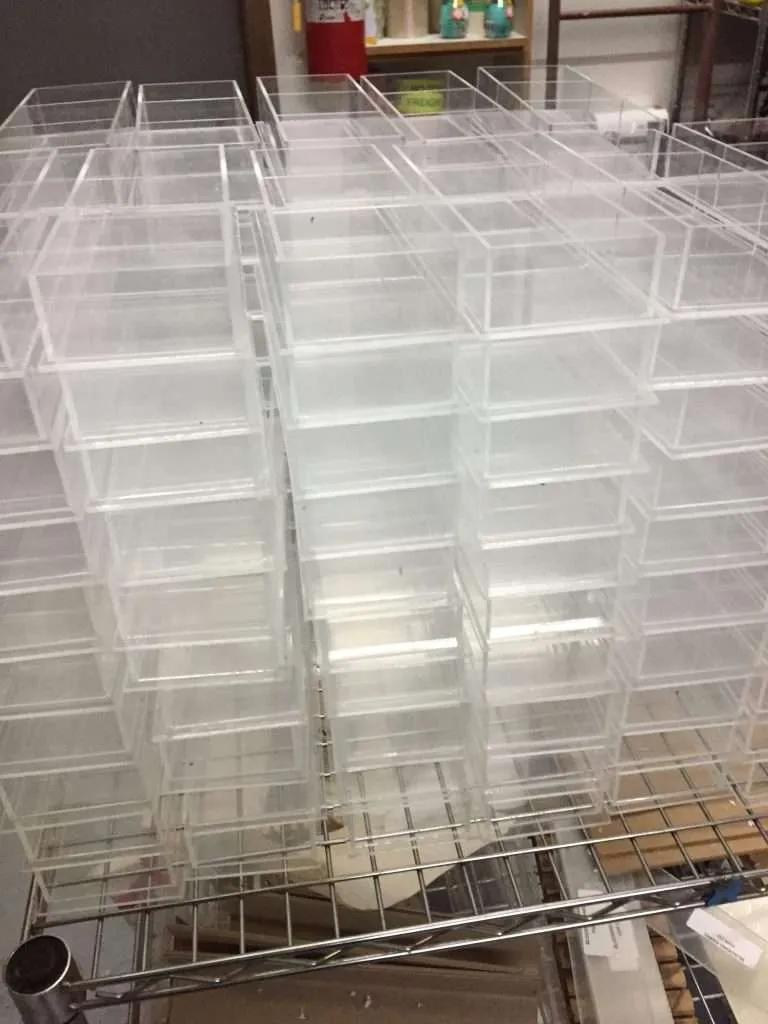
Program buyers imagine variation as sloppiness; in production it has specific, boring sources. The sheet itself, as above — thickness by lot, and length/width at approximately ±1/8″ as supplied, which is why finished parts are cut from the sheet rather than being the sheet. Long runs, where cutting consistency is a maintenance discipline across the run rather than a one-day event. And measurement conditions: acrylic moves with temperature, so parts are compared fairly when they’re measured in comparable states — a nuance that matters exactly when someone is standing in a cold warehouse deciding whether a panel is out of spec. None of these are exotic; all of them are why a program spec names ranges instead of assuming perfection. The system-production view of wayfinding families is covered in wayfinding sign system production, and how variation adds up across bonded parts in tolerance stacking.
The three-line spec note
Everything above compresses into a note a program buyer can paste into the drawing set:
- General tolerances per the Akrylix Acrylic Fabrication Tolerances standard — the published ranges govern every dimension not otherwise called out.
- Functional fits called out explicitly — insert-to-holder clearances and mounting patterns dimensioned and toleranced by name, as the controlled features.
- First-article approval on fit features before the run — ask for the first unit’s fits to be proven (insert in holder, pattern on template) before quantity production; on a reorder months later, the retained drawings and records are what make unit 300 match unit 1 (how that record works).
Three lines, and a 200-sign program becomes boring in the best way: inserts slide, replacements fit, templates line up, and nobody in a store back room ever thinks about tolerances at all — which is the entire point. For programs with a hard rollout date attached, the scheduling half of boring lives at Production Scheduling.