An exhibit is specified as one thing and fabricated as many. The hero case, the demo fixtures, the counter shells, the printed panels, the literature pieces — each has its own material logic, its own process, and its own finish expectations, and flattening them into one spec (“clear acrylic, polished”) overbuilds half the booth and underbuilds the half attendees actually touch. This guide walks the components one at a time, and — more useful — shows the reasoning pattern, so you can spec the component your booth has that this list doesn’t.
The logic, stated up front
Three questions sort every part in the booth:
- Touch. If visitors handle it, impact behavior and scratch resistance lead the material decision, and edges must be finished for hands, not just eyes.
- Photograph. If visitors photograph it or lean close to it, optical clarity and joint appearance lead, and the finish grade climbs — this is where our Quality Standards vocabulary earns its keep, with Display Finish (judged at approximately 2 feet) as the working grade for parts met at conversation distance.
- Staff-only. If only staff ever see it, Production Finish (judged at approximately 4 feet) and efficient edge treatments are the honest spec, and the finishing effort saved there funds the surfaces that get photographed.
Touch, photograph, staff-only. Run each component through those three and most of the spec writes itself.
The component walkthrough
Hero product case
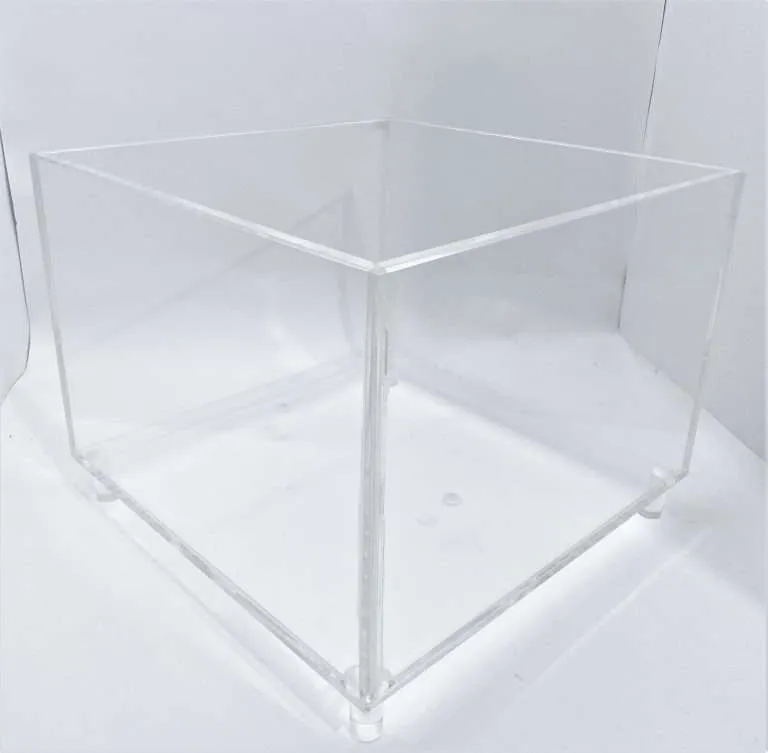
The bonded clear enclosure over the product the whole booth is built around. Material: acrylic, no contest — this is the clarity-and-polished-edge application. Construction: bonded, with joints that will be inspected at nose distance by people holding cameras. Finish: Display Finish on all public faces; the sight edges and front joints are where the booth’s perceived quality concentrates, so this is the one component where finishing generosity pays for itself in photographs. Thickness follows the case’s own span rules — a big hero case is a small vitrine, and bows like one if under-specified.
Demo fixtures
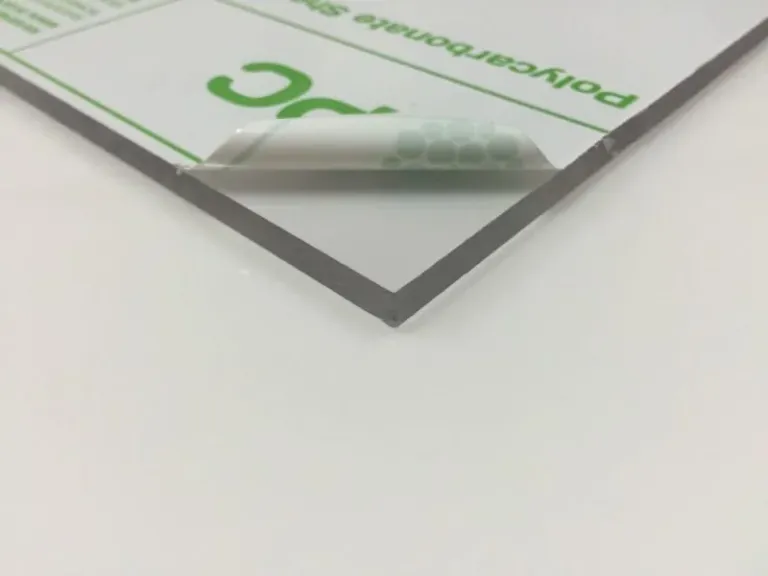
The stands, cradles, and holders visitors handle — which makes them the booth’s hybrid zone. Where hands land: polycarbonate’s impact behavior buys survival, accepting that it scratches more readily and won’t take acrylic’s polished edge. Where eyes land but hands don’t: acrylic keeps the presentation. Many good demo fixtures are literally both — an acrylic presentation body with polycarbonate at the contact and pivot points. Finish: Display where photographed, Production where merely used.
Counters, podiums, and lead stations
Larger bonded assemblies doing structural work, usually incorporating other materials as the design requires — metal frames inside, wood substrates behind, hardware throughout. The public faces carry the brand (and the finish grade); the internals are Production Finish territory, pure structure. The spec discipline here is the split: name which faces are public, and let the rest be built efficiently.
Printed panels
Edge-lit, back-lit, or ambient-lit acrylic carrying the graphics. The fabrication is straightforward; the schedule risk is the artwork pipeline — color-managed CMYK matched to brand references, proof-approved, and the proof cycle sits on the critical path in a way the cutting never does. Material note: panels that install and strike show after show take their damage at the edges and corners during handling, not in use — radiused corners and protected edges are cheap insurance specified at CAD.
Literature and small pieces
Brochure holders, card drops, giveaway trays. Ordered in quantity, seen up close, handled constantly, and famously the last parts to surface in any booth plan. Acrylic or PETG depending on quantity and duty; Production Finish is honest for most of them. The real spec advice is calendar advice: put them on the same order as the big parts, because a quantity run scheduled as an afterthought competes for the same production window everything else is in.
Formed elements
Curved faces, domes, and formed trays where flat stock can’t make the shape — thermoformed work, with its tooling commitment and its own tolerance behavior. The exhibit-specific note: formed parts are often the most damage-vulnerable shapes in the crate (proud curves meet forklifts first), so pack-out design around them is part of their spec, and a spare from the same forming run is dramatically cheaper than a lone remake in show week.
Thickness by structural role
Booth parts want thickness assigned by job, not by habit: structural shells and load-bearing counters at the heavy end; unsupported panels and case walls sized to their spans (the bow rules don’t pause for trade shows); handled parts thick enough to feel substantial in the hand, because attendees judge build quality by flex; small presentation pieces at the light end where nothing is asked of them structurally. The honest general rule is that exhibit duty runs a step heavier than identical showroom work — nothing in a booth part’s life is harder on it than the truck, and thickness bought for handling is rarely regretted. Where a specific span or load makes the choice genuinely uncertain, state the span and the load in the RFQ and let it come back as engineering.
The reuse test — apply it to every component
The last question is the one that reorganizes budgets: how many shows must this part survive? A one-show activation and a two-year exhibit fleet are different fabrication briefs wearing the same booth design. One show: efficient construction, Production Finish wherever cameras don’t reach, and money saved deliberately. A fleet: heavier construction at the handling points, edge treatments chosen for repeated crating, spares fabricated with the primaries, and a spec on record so replacements match. Put the show count in the RFQ — it is one number, and it moves more spec decisions than any other single fact except the date itself.
Speaking of the date: every component above shares one, and the scheduling conversation for date-locked show work belongs in the precise tier terms of our Production Scheduling standard — the trade-show pillar covers that end-to-end. For the components themselves, send the booth drawing and the show count, and the component-by-component spec comes back with the reasoning attached — the same reasoning this guide just handed you.