Research labs are among the most interesting customers a fabrication shop has, for a simple reason: almost nothing a lab orders exists in a catalog. The instrument is one of a handful in the world, the bench layout is unique to the room, the experiment was designed last month. What labs need is a shop that can take a dimensioned sketch and return a precise transparent object — repeatedly, on a purchase order, sometimes against a grant deadline. This guide maps what that relationship actually covers.
One thing to establish before the map, because it governs several sections below: the responsibility split. Akrylix fabricates to the customer’s specification. Performance requirements — shielding, containment, pressure, chemical resistance in service — are specified and verified by the customer, typically by the lab’s own safety officers and engineers. We bring fabrication experience, including long experience building for radiation-exposed environments; the ratings, testing, and certification of what a device must do belong to the institution. Labs already run on exactly this division — it is the same line between the lab’s safety officer who writes the spec and the shop that machines to it — and every section of this guide that touches safety equipment assumes it.
The lab order book
Instrument enclosures and equipment covers
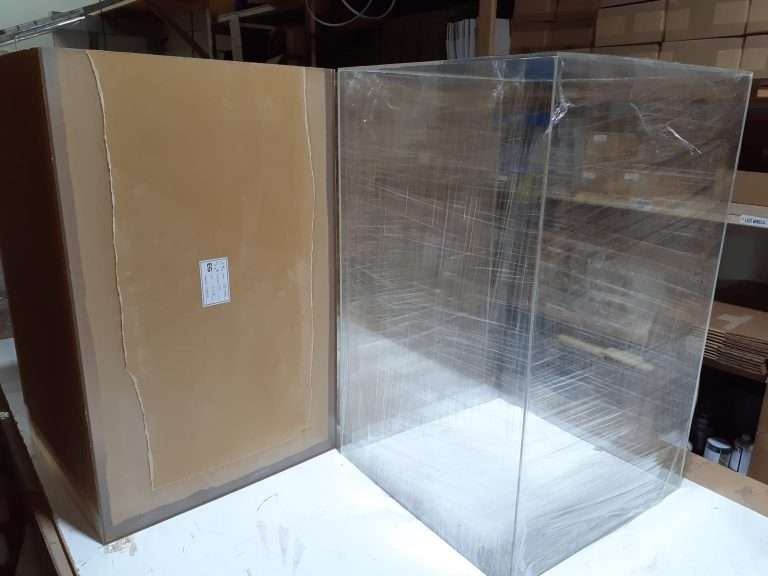
The workhorse order: a transparent box around something valuable. Dust covers for instruments between runs, draft shields around balances and sensitive optics, guards over moving stages. The design questions are access (lids, hinged panels, port holes for cables), clearance around the instrument’s own service envelope, and how the enclosure meets the bench. The measurements to take before requesting a quote: the instrument’s true footprint including cable exits, the tallest excursion of any moving part, and the reach-in tasks the enclosure must permit.
Shields and barriers
Beta shields and bench barriers for radiological work are a standing category of lab fabrication. Here the responsibility split does the most work: the lab’s safety officer specifies material and thickness; the fabricator’s contribution is executing that spec precisely and building a shield people will actually use — stable footing, sightlines that don’t force awkward posture, edges finished for daily handling. Fabrication experience for radiation-exposed environments is a fact of our history; shielding performance claims are not something a fabricator should ever be the source of, and a shop that offers them is volunteering for a job that belongs to your physics.
Tanks, chambers, and flow channels
Transparent tanks for observation studies, flow visualization, media baths, and calibration work — ordered precisely because the walls must be seen through. Bonded construction, machined penetrations for fittings, and the customer’s own fill-test acceptance as the verification step. This category gets its own deep dive in the tanks and chambers guide publishing alongside this one.
Jigs, fixtures, and experimental apparatus
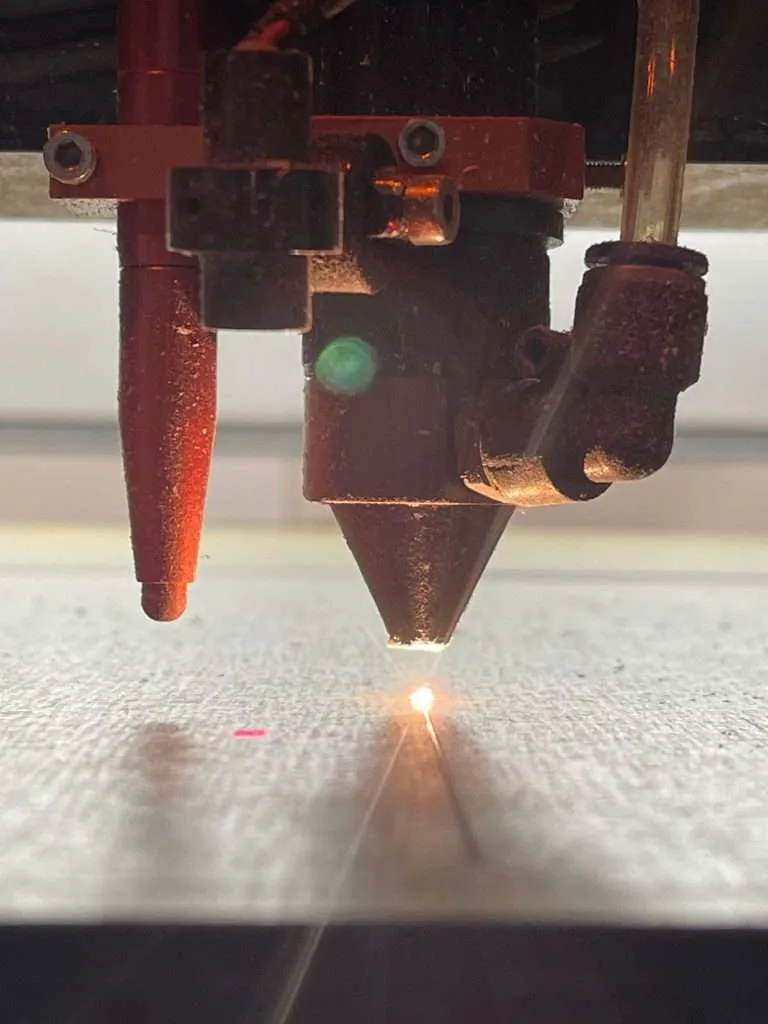
The quiet category: alignment jigs, sample holders, positioning fixtures, custom trays for automation. Usually CNC-machined from flat stock, usually needed in ones and twos, and usually wanted quickly because the experiment is waiting. Dimensional precision matters more than cosmetics here — a fixture lives at Production Finish and earns its keep by hitting the drawing, with typical machining capability published in our Fabrication Tolerances standard.
Demonstration and teaching models
Cutaways, flow demonstrators, anatomy and physics teaching pieces — objects whose entire function is being seen clearly, handled by hundreds of students, and surviving both. Clarity and edge quality move up the priority list; so does hardware that tolerates being carried between rooms for a decade.
The one-off replacement part
Every lab eventually has the instrument whose manufacturer is gone — a cracked sample-chamber window, a yellowed cover, a broken carriage part. Fabricating a replacement from the broken original or a measured sketch is routine work with an outsized payoff: it returns an instrument nobody can replace to service for the cost of a machined part.
Material selection for lab conditions
Most lab work is acrylic, and most of the rest is polycarbonate; the choice runs on four axes:
- Optical clarity. Acrylic is the clarity choice — it is why observation tanks and demonstration models default to it, and it takes a polished edge polycarbonate cannot match.
- Machinability and bonding. Acrylic machines crisply and solvent-bonds into genuinely transparent joints, which is what makes bonded tanks and enclosures practical.
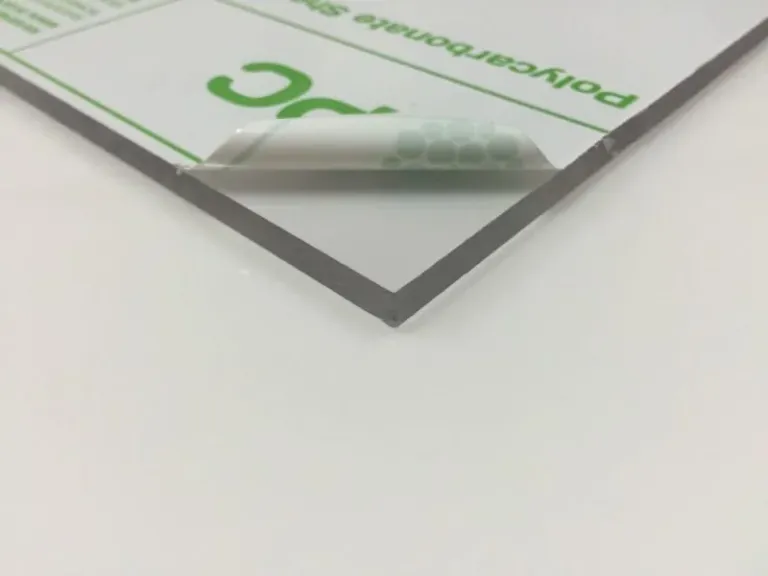
- Impact behavior. Polycarbonate’s toughness earns it the applications where the part will take hits — guards on student-facing equipment, covers in high-traffic aisles — accepting that it scratches more readily.
- Chemical exposure. The honest guidance: check the resin manufacturer’s chemical compatibility chart against the specific reagents and concentrations in use, before material is ordered. Lab chemistry is too varied for a fabricator’s blanket assurance to mean anything, and the compatibility chart is the document your EHS office will want cited anyway.
Where a build wants other materials — PETG, HDPE, PVC in wet or chemical-adjacent service, or metal hardware and framing — they are incorporated as the project requires.
How labs buy, and how scheduling maps onto it
Lab procurement has its own physics: purchase orders through institutional purchasing, grant-funded money with expiration behavior, and fiscal-year-end windows when unspent budgets must become equipment. Fabrication scheduling should be discussed in the precise terms of our Production Scheduling standard: Production Schedule work is scheduled by available capacity and completed in sequence with other work, with no guaranteed ship date — the right home for most fixture and enclosure orders. Accelerated Production moves work forward when capacity allows, still without a guarantee. Reserved Production allocates dedicated capacity to guarantee a specific ship date — the tier that exists for the date-certain cases: an experiment slotted against beam time, equipment that must be received and paid on this year’s grant, a lab commissioning tied to a semester. If the money or the science has a real deadline, say so at the quote and buy the guarantee for exactly that order.
What to send for a quote
Labs sometimes delay contacting a shop because there is no formal drawing. Don’t wait for one. A quotable lab request is: a dimensioned sketch or CAD file (PDF preferred, DXF/DWG accepted), the instrument or apparatus it must fit — model numbers genuinely help — and the environment it will live in (reagents, radiation, students). A full drawing package is welcome; a clear sketch with real dimensions starts the same conversation. The work described throughout this guide is the daily business of our lab practice — fabrication for university departments and research institutions across the country, including work for Argonne, Lawrence Livermore, Oak Ridge, and Sandia National Laboratories. Send the sketch, and tell us what the date really is.