Mirrored acrylic looks like a different material, and it is priced and specified like one — but it is ordinary acrylic sheet wearing a very thin, very fragile achievement: a metallized reflective layer on the back face, protected by a back-coat. The acrylic itself cuts and machines like any acrylic. Every special rule in this post — and there are real ones — traces to that backing. Understand the backing and you understand the material; treat it like glass mirror, or like plain acrylic, and it will teach you the difference at your expense.
The construction, in one paragraph
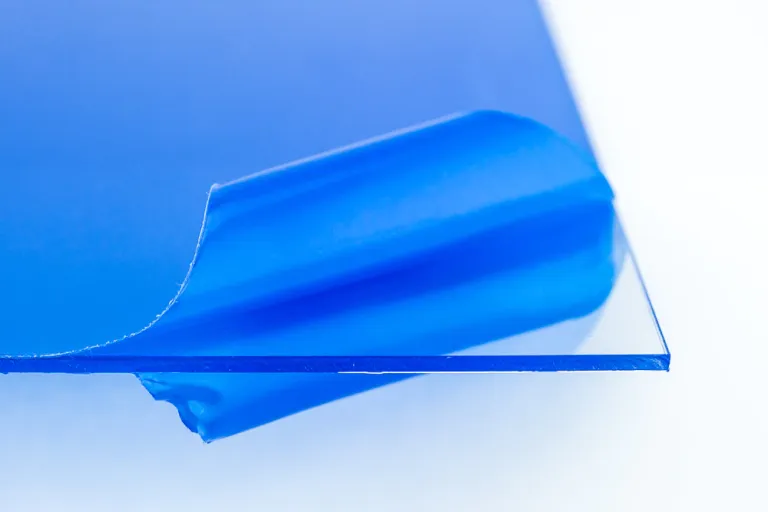
Start with standard acrylic sheet. The back face carries a vacuum-metallized reflective layer — the mirror — and over that, a protective coating whose entire job is to keep the metallization intact. You look through the acrylic at the reflective layer behind it, which is why the face of acrylic mirror has the depth and gloss of the material itself. The front face is as durable as any acrylic face. The back is where the mirror lives, and the back is what every fabrication and mounting decision has to protect.
Cutting, machining and edges
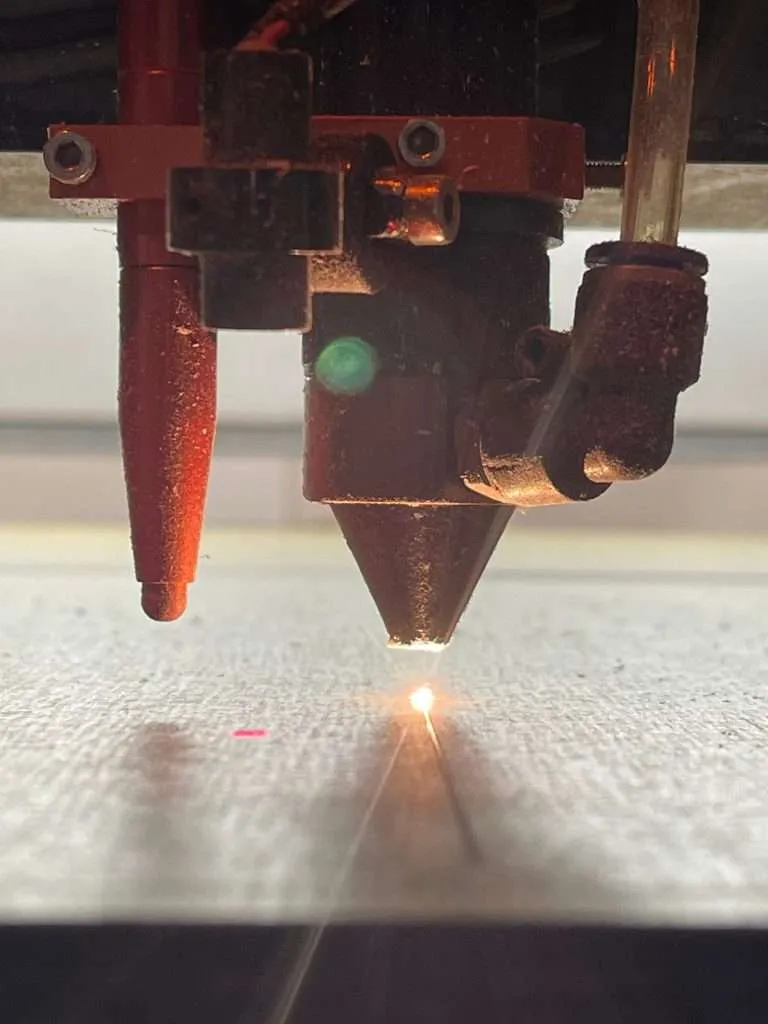
In cutting and machining, the working question is always the same: what is happening to the backing? The sheet has a durable side and a fragile side, and process planning accounts for that — the shop’s side of it. What the specifier owns is the edge question. A cut edge exposes the sandwich — acrylic, metallization, back-coat — in cross-section, and the exposed edge of the reflective layer is where trouble starts if it is going to: moisture, cleaners and handling all attack the mirror from its exposed edge, never through its protected faces. For parts whose edges are captured in a frame, a channel or an assembly, the edge is protected by the design and the question answers itself. For parts whose edges show — floating panels, open shelves, decorative shapes — say so on the drawing, and the edge treatment gets settled at design review for that part and that exposure.
The flatness truth buyers need early
Here is the conversation worth having before anything is cut: acrylic mirror shows what it is mounted to. A thin reflective panel follows the surface behind it, and every deviation reads twice — funhouse distortion is the mirror faithfully reporting an unflat substrate or an unsupported span. Glass mirror hides this with stiffness; acrylic mirror does not. The remedy is not a better sheet, it is a design decision: full-contact mounting on a genuinely flat substrate, treated as part of the design rather than an install nicety. Where full contact is not possible, thickness and span have to be chosen together so the panel holds its own flatness — the same span thinking covered in choosing acrylic thickness. A mirror wall that will be glanced at across a room forgives more than a mirror panel someone stands in front of; say which one you are building.
Fastening and mounting: protect the back
The backing changes the mounting rules more than any other property. Aggressive adhesives and solvent-based products can attack the back-coat and eat the mirror from behind — the failure shows up as spots and creep in the reflection, long after install, with nothing visible from the front until it is far too late. So mounting is specified backing-first: adhesive systems are chosen for compatibility with the back-coat and confirmed for the job at the quote, not grabbed from the install crew’s van; mechanical fastening works with the same care any acrylic deserves at a hole — load spread, clearance, no stress concentrated at a cutout — plus protection where hardware meets the back face. The general fastening logic is in fastening vs bonding; with mirror, every one of those decisions just carries the extra clause “…and what does it do to the backing?”
Where acrylic mirror wins — and what it asks in return
Against glass mirror, the case is strong and specific: a fraction of the weight, shatter-safe behavior in environments where broken glass is a genuine liability, and cuttability — acrylic mirror laser-cuts and machines into shapes, patterns and pierced designs that are impractical in glass. Retail fixtures, event environments, fitting areas, anything that travels: these are acrylic mirror’s home turf, and the broader comparison runs the same way as acrylic vs glass generally.
What it asks in return is the flatness discipline above, and a specifier who respects the backing. That is the honest trade, and it is a good one for most display and interior work. Bring the application — what it mounts to, what shows, what it is near — to the quote conversation, and the backing rules get engineered in rather than discovered later.