Every exhibit designer, registrar, and preparator eventually runs this comparison, usually under deadline: the new gallery needs casework, the budget meeting is Thursday, and somebody asks whether the vitrines should be glass or acrylic. The honest answer is that each material wins real categories, and the deciding factors are knowable in advance — object, span, touch exposure, and geometry. Here is the comparison as a fabricator of acrylic casework would give it to a colleague, concessions included, because a recommendation that concedes nothing isn’t a recommendation.
Weight and safety
Acrylic is substantially lighter than glass at equal thickness — a difference large enough to change how casework is handled, not just how it ships. A five-sided acrylic bonnet that two preparators lift off for object rotation might, in glass, be an equipment-and-scheduling event. That handling difference — large enough to change how many people an install takes — compounds over a case’s life: every deinstall, every rotation, every cleaning behind the case is easier and safer with the lighter cover, and mounts, decks, and pedestals carry less dead load.
Break behavior separates the materials even more sharply. Glass fails by shattering; laminated and tempered constructions manage the consequences, but management is the operative word. Acrylic under impact resists breaking outright far better, and when it does fail it does not produce the shower of fragments that puts objects and visitors at risk. For visitor-contact surfaces — casework in reach of the public, school-group galleries, anything a crowd can be pushed against — and for seismic-conscious institutions asking what falls and what it does when it lands, this behavior is often the deciding line before aesthetics enter the room. The weight question interacts with seismic thinking too: lighter covers put less demand on the anchorage that restrains them.
Optical character
Standard glass carries a visible green cast, most obvious at the edges and in thick sections; low-iron glass buys most of that back at added cost over standard glass. Cast acrylic is water-clear in the thicknesses casework uses, with high light transmission and no inherent tint — and its edge story is different in kind: a diamond-polished edge — the top of the Edge Finishing Standards ladder — is itself an optical feature, clear enough to disappear, which is part of why bonded acrylic vitrines can read as a single transparent volume rather than an assembly of panels.
Where glass wins optically is over time, and the win is real: its surface is far harder, tolerates decades of cleaning with ordinary practice, and keeps its as-installed surface condition in a way acrylic will not match in high-traffic, frequently-cleaned settings. Which brings us to the concession that matters.
The real trade-off: surface hardness and cleaning practice
Acrylic scratches more easily than glass. Not catastrophically, not unmanageably — but genuinely, and an institution choosing acrylic casework is choosing a cleaning discipline along with it: soft cloths, acrylic-appropriate cleaners, never dry-wiping grit across a surface, never ammonia-based glass products. Glass forgives abrasive contact that acrylic remembers. In practice this sorts by exposure: casework the public leans on and staff clean daily accumulates surface history fastest, while casework above touch height keeps its surface for years. The full care regimen — products, technique, and what’s recoverable when a surface does wear — is its own post in our museum series; the decision-stage summary is that scratch behavior is a maintenance commitment, not a disqualification, and institutions run acrylic casework for decades on exactly that commitment.
Fabrication freedom: the axis that usually decides
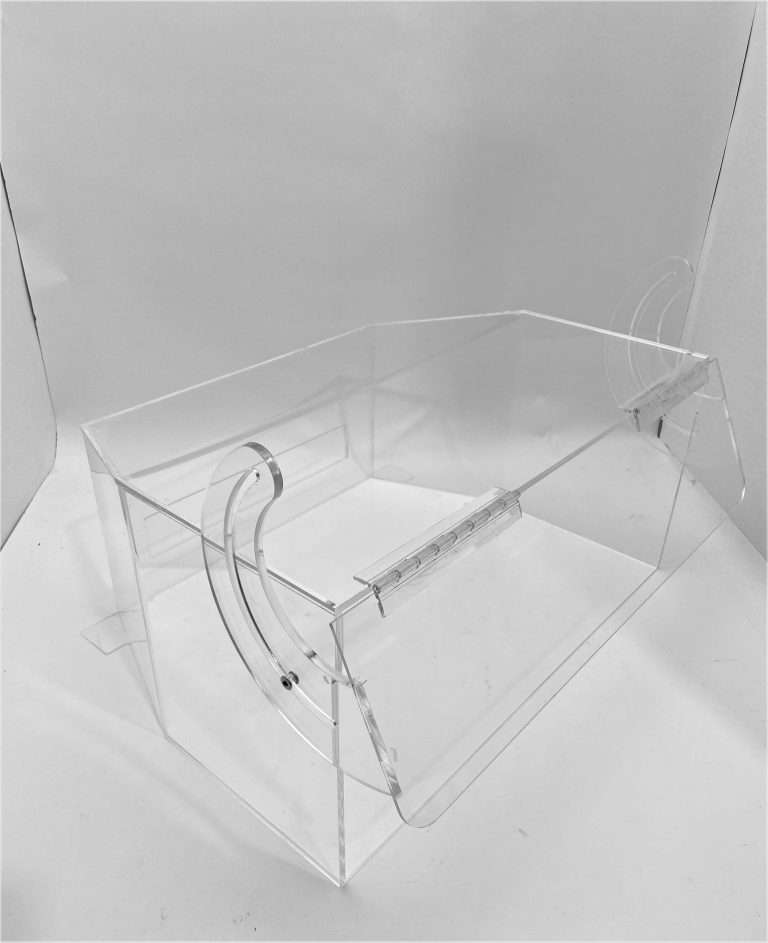
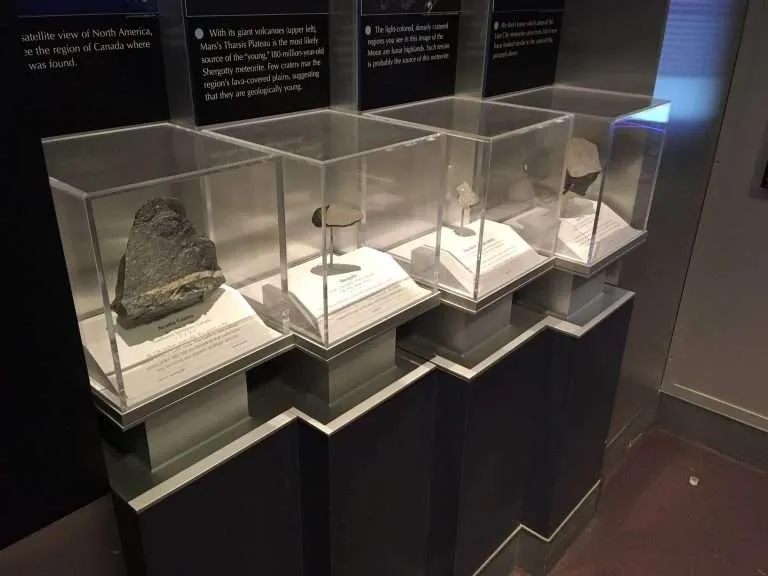
The deepest difference is not a property of the sheet — it is what fabrication can do with it. Acrylic solvent-bonds into structural, near-invisible joints, machines precisely, and thermoforms into curves. That yields case forms that have no practical glass equivalent at comparable lead time: five-sided bonded bonnets with no frame at all, tall narrow covers for single objects, curved and radiused covers, casework with integrated object mounts, cradles, and deck details machined from the same material family. Glass casework is an assembly of flat panels in a frame system; acrylic casework is a fabricated object. When a design wants the case to disappear around the object — or wants geometry a frame system can’t draw — the material decision has usually already been made by the design.
This is also where quality is specifiable rather than adjectival: bonded casework is built to a stated finish grade under the Acrylic Quality Standards, and museum work is the natural home of the Museum Archival grade — the framework’s tightest inspection criteria, defined for exactly the close-viewing conditions a vitrine lives under.
Static and dust
Acrylic holds a static charge and glass largely doesn’t — worth saying plainly because every registrar has watched a freshly cleaned acrylic case find lint. It is a manageable property, not a secret: anti-static acrylic cleaners neutralize the charge as part of routine care, and good sealing design keeps the dust path out in the first place. Institutions that run acrylic casework fold anti-static practice into the same cleaning discipline the scratch question already required. It belongs on the maintenance page, not the decision page.
The decision matrix
Run the choice through four questions:
- Object. Light-sensitive, irreplaceable, or high-value objects push toward whichever construction serves the conservation spec best — and frequently toward acrylic’s break behavior and mount integration.
- Span and geometry. Large unsupported spans, frameless forms, curves, and tall covers favor acrylic structurally and fabrication-wise. Flat panels in a framed wall system are territory where glass competes well.
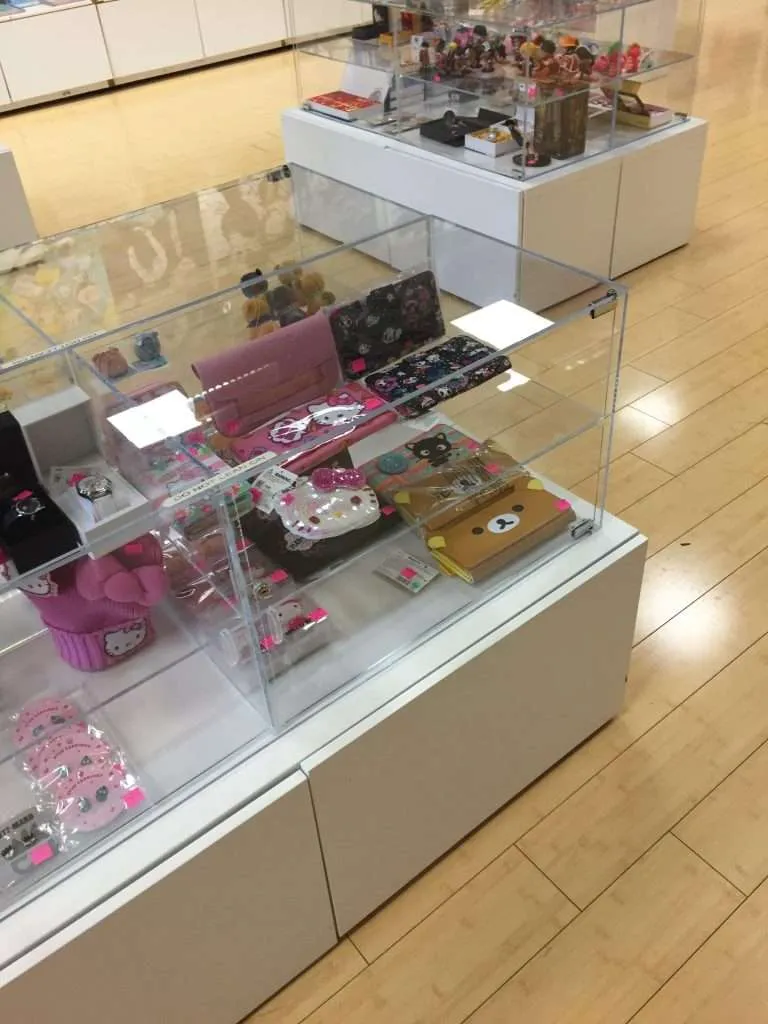
- Touch exposure. Heavy public contact with frequent cleaning argues for glass’s surface hardness — or for acrylic with the cleaning discipline honestly budgeted. Above touch height, the scratch question mostly evaporates.
- Budget factors. Not figures, but factors: acrylic’s advantages compound in fabrication-heavy scopes (bonded forms, integrated mounts, oversize covers), while its weight advantage cuts install and handling effort on every scope. Glass constructions carry framing systems and handling requirements as their own cost drivers. Which direction the total moves depends on the design — which is the honest answer.
Most institutions end up with both materials in the building, chosen case by case — which is the comparison working as intended. If you’re specifying casework now, our guide to museum display cases covers the full specification path, and for the bonded-acrylic side of the ledger, the gallery shows what the fabrication-freedom argument looks like standing in a gallery. For a specific case list with objects, spans, and sightlines in hand, send it over — we’ll tell you which cases make acrylic’s argument and, just as usefully, which ones don’t.