A fabricated acrylic piece spends weeks being measured, machined, bonded and inspected — and then rides a truck with freight nobody vetted, handled by people who have never heard of polished edges. The truck is the one stage of the project neither you nor the shop controls. What both parties do control is everything around it: how the work is packed, what the receiving dock does in the first ten minutes, and whether the delivery plan matched the building it arrived at.
How finished acrylic is actually packed
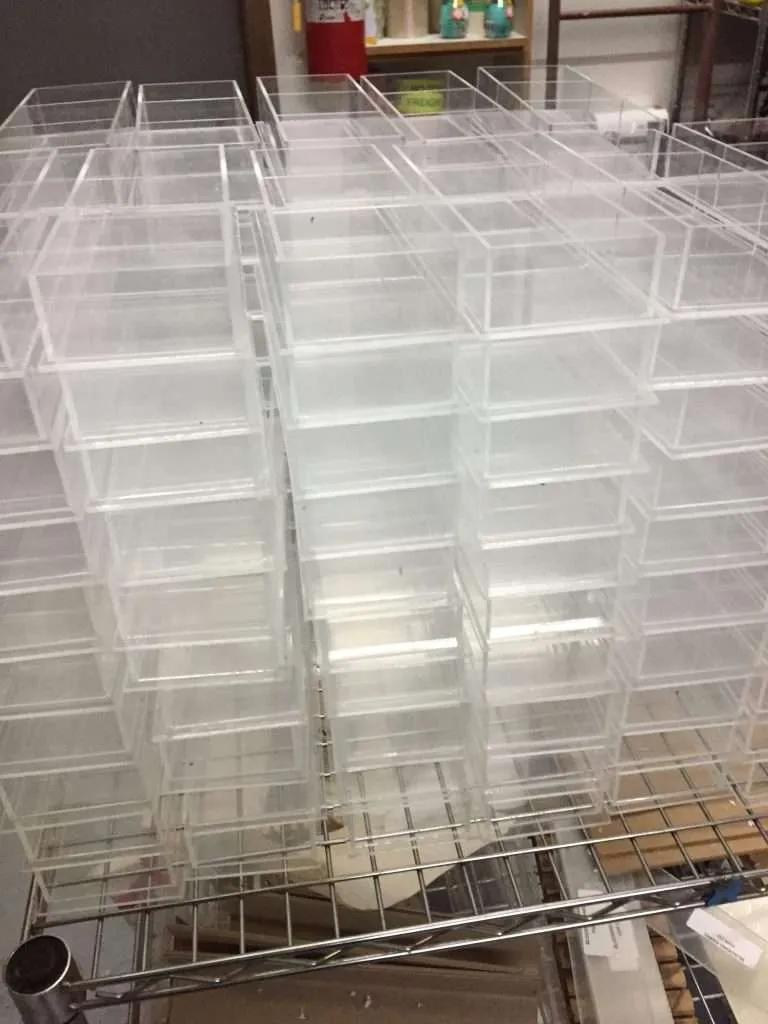
Packing is sized to the piece, not applied as a default. Many projects ship palletized — parts interleaved with soft material, strapped and protected with cardboard and foam, with no part resting on another and extra attention to polished edges, because an edge that took a finishing operation to produce deserves better than to ride against a neighbor. Pieces that need more protection than a pallet can give get a crate, built in-house and built for that piece — so the crate, not the work, takes the handling and the punishment from adjacent freight.
Protective masking stays on through fabrication wherever the work allows, and it ships that way. Masking is the last line of defense through transit, receiving and staging — so build the unmasking step into the install plan, not the receiving dock. A masked panel can lean in a staging corridor for a week while trades finish around it; an unmasked one cannot.
The receiving protocol that preserves a claim
Freight claims are won or lost at the dock, in minutes, by whoever signs. Put this protocol in the hands of the person receiving, before ship day:
- Photograph before opening. The crate or pallet as it came off the truck, from enough angles to show its condition. Thirty seconds of photos is the difference between evidence and recollection.
- Note anything visible on the delivery receipt before signing. A clean signature tells the carrier the shipment arrived fine. If the crate is punctured, crushed at a corner, or the strapping is loose or cut, write it on the receipt first — “subject to inspection” and a one-line description cost nothing and preserve everything.
- Unpack and inspect promptly. Concealed-damage claims run on short clocks, and the window is the carrier’s, defined in its own terms. Do not let a crate sit sealed in a corner until install day a month out; inspect within the claim window even if the piece stages until later.
Tracking is emailed when the shipment goes out, so receiving knows what is coming and when to watch for it. What no one should promise — not the shop, not the schedule — is the day the truck arrives: transit belongs to the carrier. The completion side of that boundary, and what can actually be guaranteed, is covered in packaging and freight for finished acrylic.
Site realities: the questions that burn install dates
Most freight surprises are not damage — they are a truck that cannot physically deliver. Before the work ships, someone has to answer: Does the destination have a dock, or does the driver need a liftgate? Is there a forklift or pallet jack on site? Does the piece fit the freight elevator, the corridor turns, the door openings between dock and install point? Does the carrier need to deliver inside, or will site staff move it? Is there staging space where a large crate can sit without being in a trade’s way?
Liftgate, inside delivery and limited-access needs change the freight arrangement and belong in the order details up front — discovered at the curb, they cost the install date, not just the delivery. For a piece on a hard schedule, this one-paragraph delivery plan is as load-bearing as any fabrication decision; the wider planning context is in our production planning guide and the Production Scheduling standard.
Reusable crates for recurring programs
For work that ships repeatedly — scheduled program releases, displays that move venue to venue — a crate built to be returned and reused is a program-level decision worth making once. A reusable crate or case costs more than a one-way box and repays it every cycle: the piece always travels in protection engineered for it, receiving handles a known object the same way every time, and the recurring scramble for adequate packaging disappears. Say so at the quote; a crate designed alongside the piece beats one improvised after it. Teams running multi-venue work will find the full logistics picture in exhibit crating and shipping, and the calendar side — why freight time is part of the deadline math, especially in peak season — in holiday freight cutoffs.
The work is finished to its specified standard and protected for the road. What happens between dock doors is the carrier’s; what happens at yours is the ten minutes that decide whether a rare bad outcome costs you anything. Plan both, and the truck stops being the risk it is usually allowed to be.