The question usually arrives after the second quote. The first quote priced a part at one size. The buyer adjusted a dimension by a fraction of an inch — up or down, for a reason that seemed cosmetic — and the second quote moved by more than a fraction of an inch’s worth of material. Nothing about the part got harder to make. What changed is where the part fits on a sheet. This post explains the mechanism, because a buyer who understands it can often move the price back in the other direction with an equally small change.
Sheet is bought in sizes, and parts are cut from them
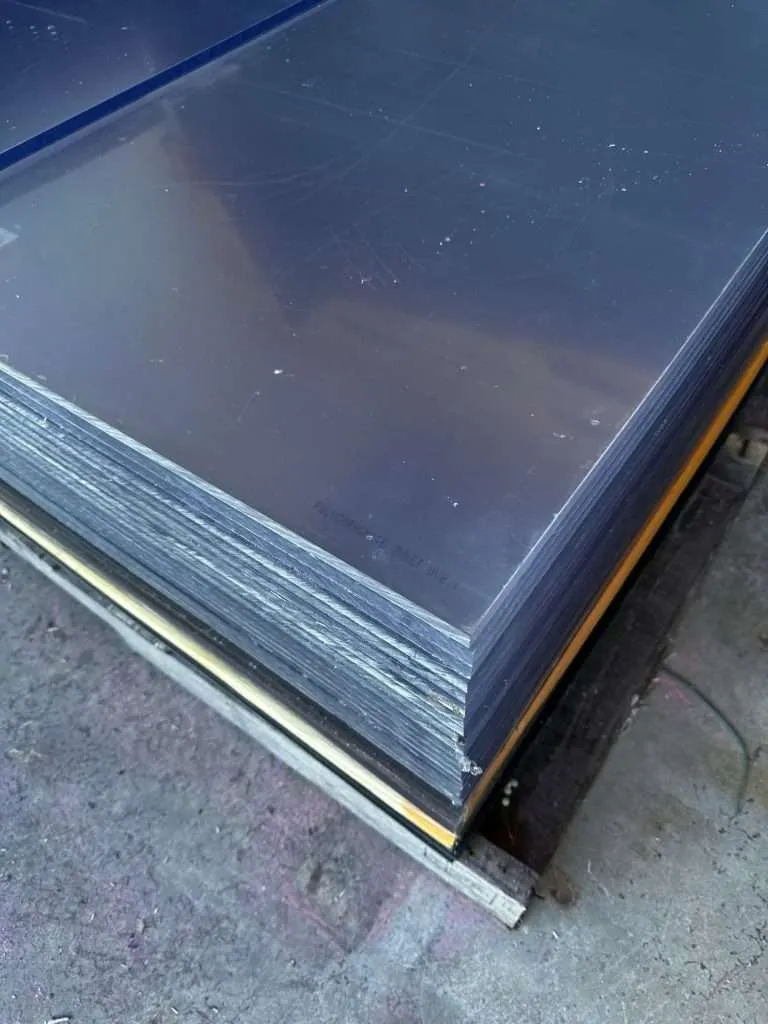
Acrylic sheet arrives in standard sizes that sheet suppliers stock as a matter of course, and in larger sizes that are available but carry different availability, handling and cost. “Oversize” is a supply category: a sheet beyond the common stocked dimensions, which may be ordered rather than pulled from stock, ships and handles differently because of its size, and is priced as the larger piece of material it is. The exact boundary between standard and oversize depends on the supplier and the material, which is why the quote desk, not the buyer, is where the question gets answered for a given job.
Every part on a drawing is nested onto one of those sheets, and the yield — how much of the sheet becomes parts and how much becomes offcut — is one of the quiet cost factors in all of custom fabrication. A dimension that divides a standard sheet cleanly uses the material it pays for. A dimension slightly over a clean division strands a strip too narrow to use. And a dimension that exceeds the standard sheet in either direction moves the whole job to oversize sheet, which is the step that surprises buyers most.
How the yield conversation runs at the quote desk
Every RFQ gets a file review, process planning, and a material and yield check — how the parts nest on the sheet sizes available. The yield check is where the conversation this post is about actually happens, and it runs in a specific form: as specified, the sheets available (standard or oversize) give yield X; adjust this dimension slightly and the yield becomes Y, saving Z. We tell the customer proactively when a small change cuts cost. It is the yield check working in the buyer’s favor, and it is why a quote sometimes comes back with a question attached: is this dimension flexible?
Here is the shape of it, in a purely illustrative example with round numbers. Suppose a standard sheet is a 48-by-96-inch rectangle and the drawing calls for a 25-by-25-inch panel: one fits across the 48-inch dimension, three along the 96, three panels per sheet — and at a shade under 24 by 24 it becomes two across and four along, eight per sheet, which is the within-sheet version of this arithmetic that the designing for sheet yield post walks through. Now suppose instead that the panel is 49 by 25. It no longer fits across the 48-inch sheet at all, and the quote moves to an oversize sheet — larger, ordered rather than pulled from stock, and priced as the larger piece of material it is — for a part that grew by one inch. Bring that dimension to 47 and it nests on the standard sheet again. That one-inch step, not any change in the work, is the second-quote surprise this post is about. The sheet and part sizes are chosen for the arithmetic, not taken from any job or from what any supplier stocks; the quote desk runs the same check with the sheet sizes actually available for the material and the kerf allowances the cutting process needs — the radius and kerf allowances post covers why nesting is never quite as simple as division.
Which dimensions to hold, and which to let float
The useful question for a buyer, then, is where the design intent actually lives. Some dimensions are fixed by something real: a part that mates with customer hardware, a display that must fit a retailer’s shelf, a panel that fills an opening. Those are held, and the yield adapts around them. Other dimensions were picked because they looked right on a screen, or because a round number was convenient, or because the first sketch had them. Those can float, and a buyer who marks them as flexible on the drawing — “25 nominal, may reduce to 24” — has handed the quote desk permission to find the better nest without a round-trip email.
The same logic applies to quantity structure on a volume run. A run sized to a whole number of sheets at the better nest costs less per part than a run that uses a fraction of the last sheet. A buyer whose quantity is flexible can say so, and the yield check can land the run on a sheet boundary. The cost factors for producers post places yield among the other drivers.
When oversize is simply the right answer
Oversize sheet is often simply the right material. A large single-piece panel, a long shelf, a vitrine with an unbroken face — these are oversize-sheet parts by nature, and splitting them to fit standard stock would mean a seam the design does not want. The point is that the move to oversize should be a decision, made knowingly, rather than a surprise on the second quote. When a part lands just over the standard sheet, the quote desk says so and asks whether the dimension can come in; when the part needs to be that size, the oversize sheet is the correct material and the quote reflects it. The design for fabrication guide places the sheet question alongside the other decisions that set a part’s cost before it is ever cut.
Have a drawing where some dimensions could move? Mark the flexible ones and send it — the yield check comes back with the quote, and with the better nest if there is one.