Every interior project with a transparent element runs this comparison, usually quickly and usually on habit: glass because it’s the default, or acrylic because someone remembers it’s lighter. The decision deserves better than habit, because the two materials win on different properties — and the honest version of the comparison, including where glass is simply the required answer, is more useful to a design team than advocacy. Here it is, property by property.
Weight — and everything weight cascades into
Acrylic is substantially lighter than glass at equal thickness, and the number itself is the least of it; the manufacturer’s data sheets carry the exact densities, and the comparison holds at any thickness a wall panel or partition would use. What matters to a project is the cascade. A lighter panel changes the structural support it needs, the anchors and hardware that hold it, the size of the crew that installs it, and the freight that delivers it. A large transparent element in glass is a lifting-equipment conversation; the same element in acrylic is often a two-installer conversation. On upper floors, in retrofit buildings, and on any wall that wasn’t engineered for dead load, weight is frequently the property that decides the material before any other is discussed.
Formability — the design moves glass barely has
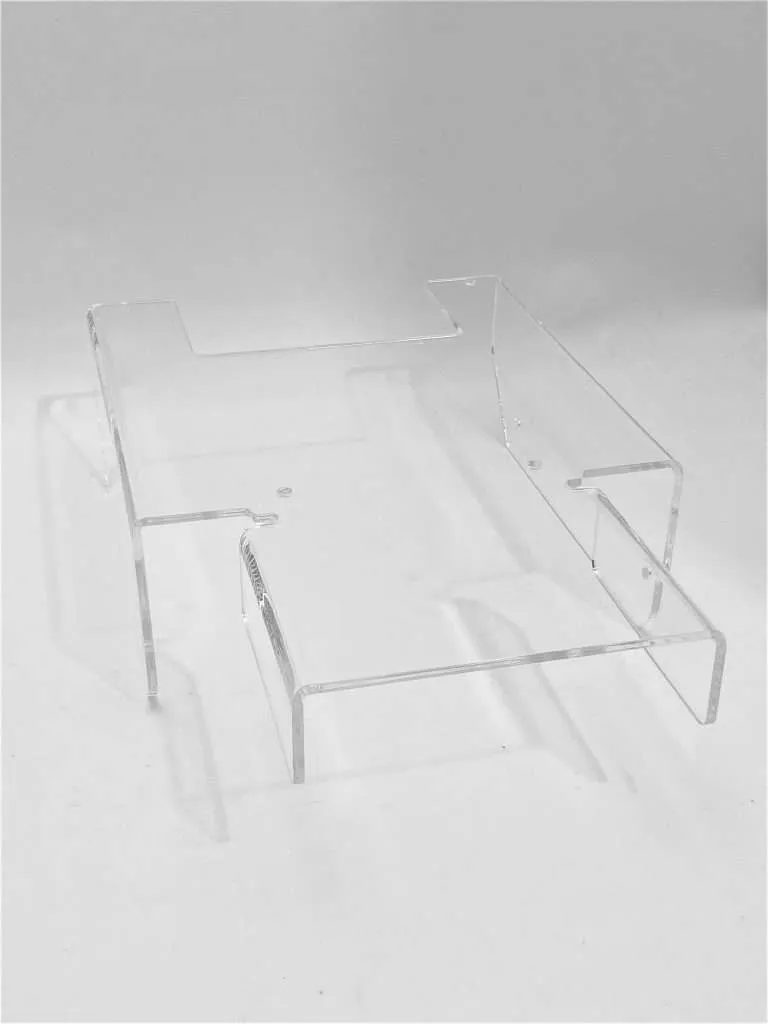
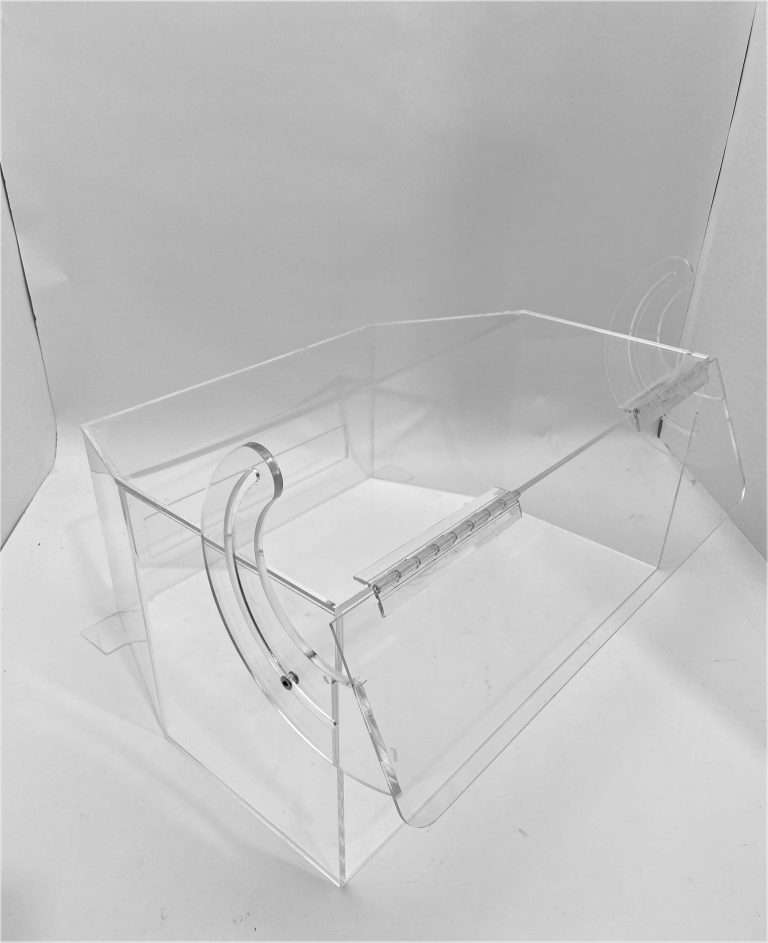
Acrylic is a thermoformable, machinable, bondable sheet material. Curves formed by heat, three-dimensional bonded assemblies, machined integral features — slots, standoff details, captured fixings cut into the panel itself — are ordinary acrylic fabrication. Glass can approximate some of these, at the cost and lead time of specialty processing. When the design intent involves shape rather than plane, acrylic is usually not the alternative but the enabler: the element gets designed around what the material can do, and a look through fabricated work shows how much of that territory is routine.
Where glass wins — said plainly
Three properties go to glass, and pretending otherwise would cost this comparison its usefulness:
- Surface hardness. Glass resists scratching better. In touch zones — handrail glazing, counters, high-traffic partitions at hand height — that difference is real and should be weighed honestly, alongside maintenance practice (acrylic has its own cleaning protocol, and following it is most of the battle).
- Fire-rating pathways. Where an assembly must carry a fire rating, glass products with established fire-rated pathways exist. In rated assemblies, glass is often simply the required answer, and the right move is to say so early.
- Specifier familiarity. Glazing details, hardware ecosystems, and trade familiarity all run deeper for glass. That is inertia rather than physics, but inertia is real on a construction schedule.
The code question, answered the right way
Interior acrylic raises a flammability-classification question, and it belongs to the design team: code compliance is the customer’s responsibility, because no fabricator can know every code in every jurisdiction. The classification data comes from the sheet manufacturer’s documentation — ask for the data sheet in the spec — and whether that material is acceptable in a given location is the local code official’s reading of the applicable code. Once the design team has established what the element needs, specify it — the sheet product, the rating, the assembly — and it is built to that spec. Treat it as the submittal item it is, early, and it is paperwork; treat it as an afterthought and it is a site meeting.
Optics and aging
Look through the edge of a thick glass panel and it reads green — the material’s iron content, visible wherever an edge or a deep view is part of the design. Low-iron glass answers that, at specialty cost. Acrylic is water-clear as standard, and its edges can themselves be finished as features: the Acrylic Edge Finishing Standards run from sanded matte through buff-polished to diamond-polished edges used precisely where the edge becomes a visual element, which is a design lane glass does not really offer. Indoors, modern acrylic holds its clarity well over service life. Which optical character wins — the cool green read of glass or the colorless read of acrylic — is design intent, not a defect in either direction.
The application table
How the properties usually net out, application by application:
- Partitions and room dividers — acrylic, on weight and mounting simplicity; glass where a rated assembly is involved.
- Feature wall panels — acrylic, on weight and the back-painted/back-printed design options; the anchor engineering thanks you.
- Railing and guardrail infill — the railing system’s spec decides; these are engineered assemblies and the infill follows the system’s documentation.
- Formed and sculptural elements — acrylic, on formability; this is the category glass mostly can’t enter.
- Display and vitrine work — acrylic, on clarity, bondability, and the finish-grade system built for it.
- Touch-zone glazing in rated assemblies — glass, on hardness and rating pathway, and saying so is what earns trust on the rest of this list.
If the element on your drawings is still a question mark, the fastest way to settle it is to put the real constraints — location, mounting, viewing distance, the code requirements your project has already established — against the properties above. Send the detail, and the answer comes back with the reasoning attached, including when the answer is glass.