Construction project managers schedule drywall, paint and millwork by habit — the sequences are known, the lead times are tribal knowledge. Fabricated acrylic elements keep surprising those same schedules, and the surprise has a specific shape: the work installs late in the sequence but cannot be started until late in the sequence, so all of its fabrication time lands in the most compressed part of the calendar. Plan for exactly that shape and acrylic behaves like any other trade. Discover it in the field and it becomes the item holding up substantial completion.
Where acrylic sits in the trade sequence
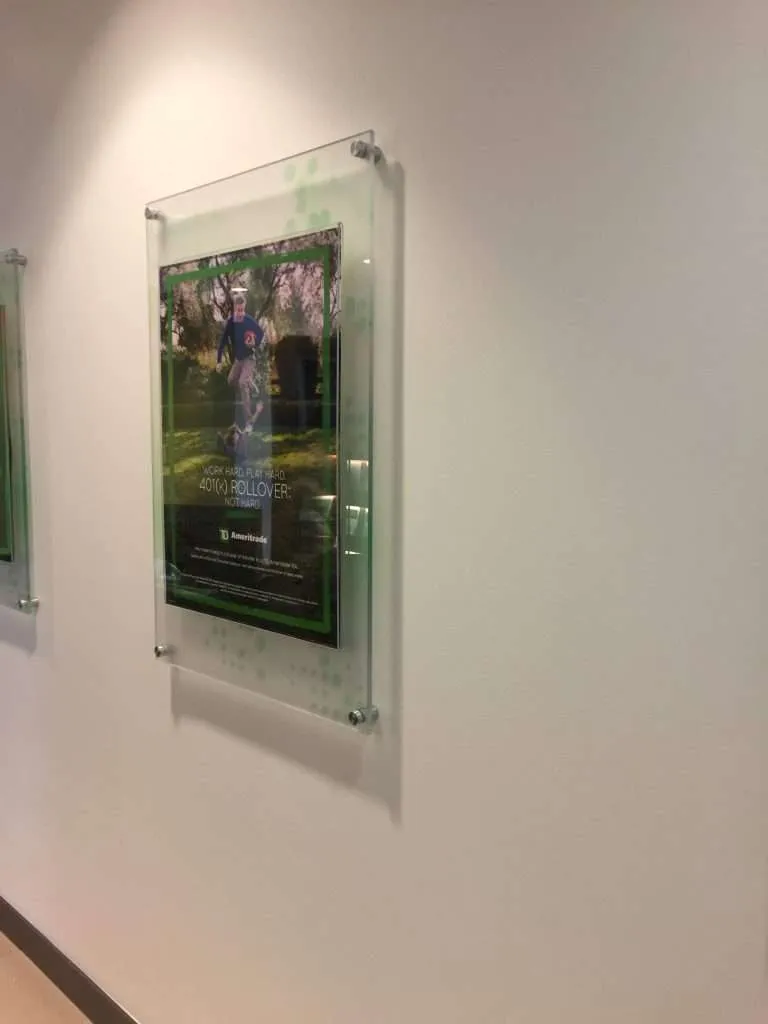
Most fabricated elements — feature panels, partitions, reception elements, display niches, glazing-like infills — install after finishes, because they meet painted walls and finished floors and nobody wants trades working around them. At the same time, the field dimensions that let fabrication start often cannot be taken until framing or finishes close: the opening has to exist before anyone can measure it. The fabrication window is therefore compressed between measure and install, with the project’s least forgiving dates on both sides. A PM who draws that window explicitly — measure date, fabrication duration, delivery, install — has a plan. One who draws “acrylic panels” as a single bar discovers the window when it is already shut. Field dimensions, note, come from the contractor or the customer’s team; getting them right is its own discipline, covered in site dimensions and tolerances for architecture.
The float-eaters nobody draws
Three schedule entries consume float on fabricated elements, and none of them is fabrication time:
- Submittal review cycles. Shop drawings go to the design team and come back — and each round-trip is design-team turnaround, not shop time. A submittal sitting in an architect’s inbox burns the same calendar as a machine breakdown, invisibly. Draw the review cycles as real activities with owners and durations; the collaboration mechanics are in shop drawings and submittals.
- Field-dimension access windows. The measure needs the space framed, finished enough, and accessible — which means another trade’s completion is a predecessor to your fabrication start. If the drywall slips, the acrylic slips, and no one scheduled that dependency.
- Sample and proof approvals. Where color, finish grade or a printed element will be approved against a physical sample — and a proof is available where the print has to be right — draw that approval as its own entry. It sits on the critical path exactly like a submittal.
The tiers, translated into construction language
Our Production Scheduling standard has three tiers, and they map cleanly onto decisions a GC already makes about long-lead and milestone-critical buyouts:
- Production Schedule — the standard tier: the schedule is built in the order projects come in and are paid for, and the work completes in sequence with the shop’s booked capacity. No guaranteed completion date — treat it like any lead-time trade: fine wherever the install has float, wrong wherever it does not.
- Accelerated Production — moves a project forward in the schedule where capacity allows; the date is still not guaranteed. The right tool for compressing a window, not for anchoring a milestone.
- Reserved Production — the project buys dedicated fabrication capacity for a guaranteed manufacturing completion date, counted from payment — priced as its own line on the quote, when the schedule can support it. This is the fabrication equivalent of a milestone-critical buyout, and it is the only tier that guarantees a date. One boundary a construction schedule must respect: the guarantee is the date the work is complete at the shop. Transit is the carrier’s, so the install plan works back from completion plus freight, never from a promised delivery day.
How the tiers behave in practice — and when a job actually enters the schedule — is laid out in the tiers explained and when your job enters the schedule.
The two-release pattern that de-risks a compressed schedule
The strongest move available on a tight project is to stop treating the acrylic scope as one release. Split it by what each piece actually depends on:
Release one — early, on the standard tier: everything that is not site-dependent. Components built to the drawings rather than to field conditions — freestanding elements, repeated parts, anything dimensioned from design documents — can enter the schedule while the building is still studs and dust, consuming none of the compressed window.
Release two — late, on Reserved: the site-dependent panels that must wait for field dimensions. These are exactly the pieces whose fabrication window is squeezed between measure and install, so these are the pieces worth anchoring with a guaranteed completion date. The sequence runs: finishes close → field dimensions in → Reserved window runs → completion on the guaranteed date → freight → install. Every link is explicit, and the only guaranteed link is the one you paid to guarantee.
The pattern costs a second release’s coordination and buys the schedule certainty exactly where the schedule is fragile — which is the trade a PM makes on long-lead steel without blinking.
The delivery paragraph that saves install days
Before ship: confirm site access and elevator dimensions against the largest panel, name the staging space where crated work waits, and — the one that burns the most install days — keep protective masking on until adjacent trades are done working near the acrylic. A masked panel survives a painter; an unmasked one becomes a punch-list item. Agree those items in one paragraph with the fabricator before the work ships, hold tolerances to the published ranges in Fabrication Tolerances rather than to hope, and the acrylic scope lands the way the schedule drew it.