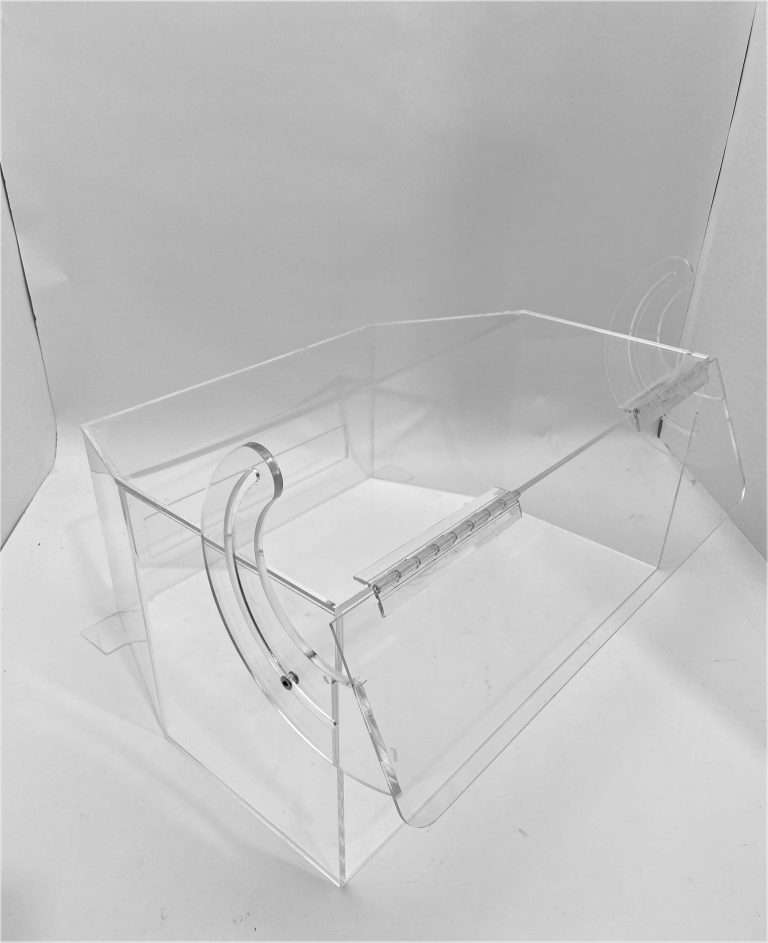
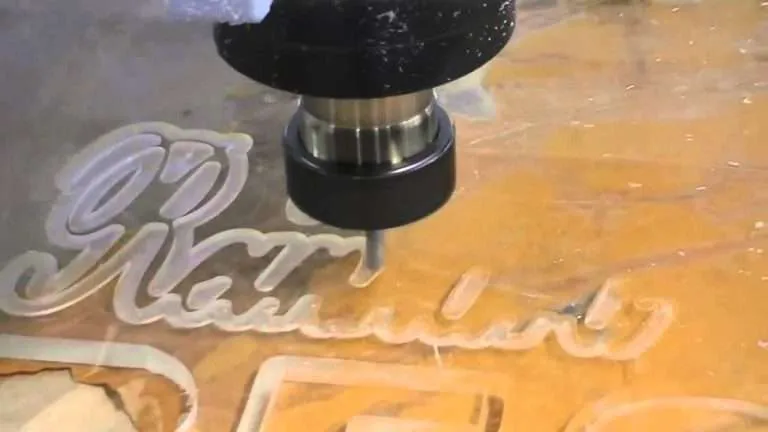
Every machine with a process worth watching has one: a clear panel set into sheet metal so an operator can see the work without opening the door. Sight windows and viewing ports are the smallest clear parts on an OEM machine, a test fixture or a control cabinet — and they punch far above their size in annoyance when they’re specified as an afterthought, because the window is the part the operator actually uses, every shift, for the life of the equipment.
This one is for the engineers drawing those panels: the material call, the mounting styles, and the handful of callouts that make a window drawing quotable.
Material: decide by what the window faces
The window’s job is to be looked through while something happens on the other side of it, so the material question is what that something is.
Impact exposure points to polycarbonate. Where the process can throw anything — chips, a failed part, a loose tool — polycarbonate is the common default on the guarding side of industry, for the same reason it dominates machine guards generally. Treat that as a default the design confirms, not a law; the full trade-off is laid out in polycarbonate vs acrylic for machine guarding, and any formal guarding requirement is the equipment builder’s to state — we fabricate to the stated spec.
Scratch and clarity demands — and some chemical environments — favor acrylic. Acrylic holds its clarity under wiping and handling better than uncoated polycarbonate, which matters on a window that gets cleaned daily; it is also the better optical part where the operator is reading detail (gauging a level, watching a seam). Wash-down chemistry cuts both ways by material — the sheet manufacturer’s compatibility chart, not a general rule, settles it.
Four ways a window mounts — and what each asks of the drawing
- Gasketed frame. The window sits in a frame with a compressible gasket — the forgiving option for sealing and thermal movement. The drawing needs the frame’s published window size and the gasket’s compression allowance, not a dimension scaled from the cutout.
- Bolted with a bezel. Through-bolted directly to the panel, with the window’s hole pattern matching the panel’s. The drawing needs the hole pattern located from a stated datum, and hole diameter and edge distance per the sheet manufacturer’s published fabrication guidance — plastics want oversized holes and generous edge margins, and the manufacturer’s numbers, not a metals habit, are the reference.
- Bonded-in. The window is adhered to the panel or a sub-frame — clean-looking, permanent, and a choice to make deliberately since replacement means more than four bolts. Specify which faces receive adhesive so the visible area stays visible.
- Captured in a channel. The window slides or drops into a retaining channel — the easy-replacement option, common on access panels. The drawing needs the channel’s panel allowance and which edges are captured; captured edges take an economical machine finish, and money spent polishing them is spent on nothing.
Tolerance the fit, not the window
Two features on a window drawing earn real callouts: the window-to-cutout fit (or frame allowance), and the hole pattern if it bolts. Everything else — the outside profile of a gasketed window, corner radii, the overall size of a captured panel — does its job inside the published Fabrication Tolerances, and tightening those numbers slows the quote without improving the machine. The general discipline, with examples, is in tolerance callouts on drawings, and the wider drawing-for-plastics mindset is the subject of the design for fabrication guide.
The real story: windows are a repeat part
Here is what distinguishes sight windows from most custom clear parts: they ship with every machine you build. Unit 1’s window and unit 300’s window should be the same part, and two things make that true in practice. First, the drawing on file — for parts built to repeat, we keep the fuller record (drawings, setups, notes), so a reorder is a release, not a re-engineering exercise; how that works is covered in reorders and files on record. Second, material discipline: what the drawing and quote say the window is made of is exactly what it is made of, every release — no silent substitution between orders. For OEM volumes worth planning around, the blanket-order pattern in the contract manufacturing guide is built for exactly this part.
Send the panel drawing (or the window drawing with its mounting style and datum), the material and thickness, and what the window faces — impact, chemistry, heat, cleaning — through the RFQ form, and the quote comes back with the fit questions already answered. A sight window done right is the cheapest part on the machine to get right and the most visible one to get wrong: the operator looks through it all day, and so does everyone you demo the machine to.