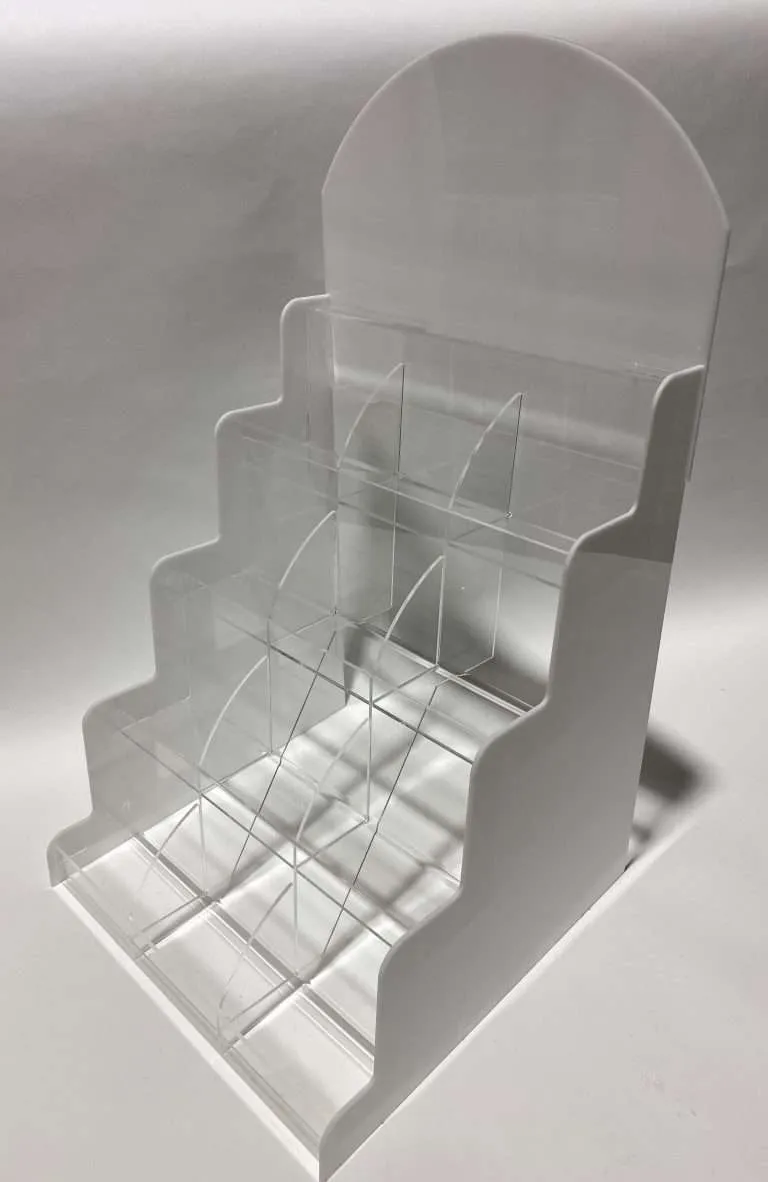
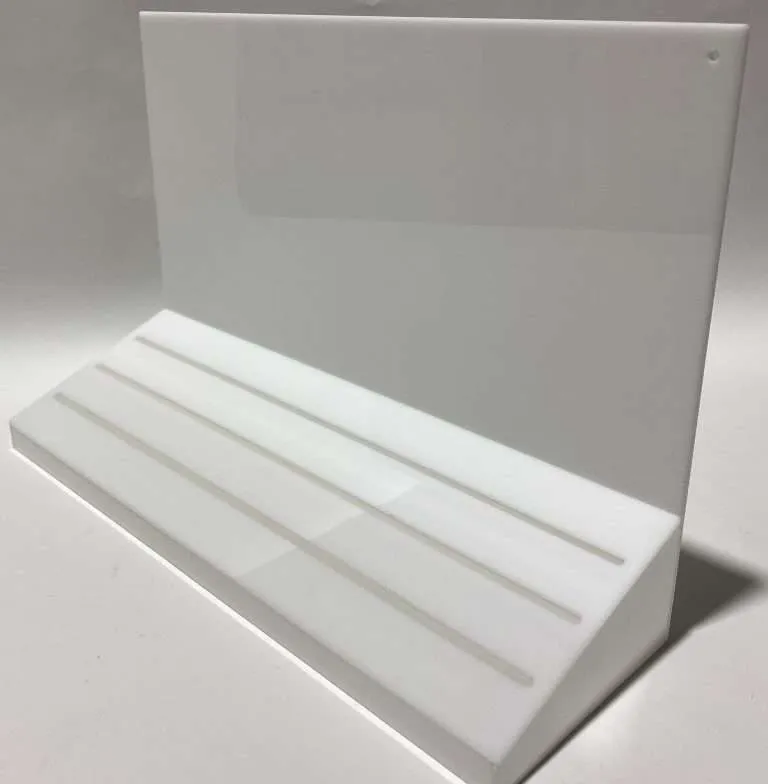
Somewhere in every agency there is a folder named FINAL_v3_revised_USE-THIS-ONE, and somewhere in every fabrication shop there is a project manager trying to figure out whether the file inside it is supposed to be cut or printed. The handoff between design and fabrication fails in predictable ways, and most of the failures trace to one root cause: treating two different file streams as one. A fabrication project carries geometry files — the information that gets cut, machined, and formed — and artwork files — the information that gets printed. They have different formats, different owners inside the agency, and different failure modes. Structure the handoff as two checklists and most of the chaos never happens.
Stream one: geometry
Geometry answers the question what shape is this object, and how is it built? The receiving standard:
- PDF drawings, preferred. A dimensioned PDF drawing is the document our quoting desk works from: material, thickness, finish grade, and edge methods called out; overall and governing dimensions stated; assembly relationships shown. A drawing a human can read is also the document a quote is built against and an approval is measured against — which is why it outranks raw CAD as the primary artifact.
- DXF/DWG accepted. Vector cut paths for parts headed to laser or CNC ride alongside the PDF. They complement the dimensioned drawing; they don’t replace it.
- Units and scale. State them, and say which dimensions govern. A file with no declared units is a guess; a drawing whose printed dimensions disagree with its vector geometry is a coin flip. One line in the title block — units, scale, “dimensions govern over geometry” or the reverse — removes both.
The classic geometry failures, all of them regulars: artwork masquerading as geometry — a beautiful illustration of the object with no dimensions, exported from a design tool at whatever scale it was drawn; decorative CAD — real CAD files with no governing dimensions, where every measurement is “whatever the vector happens to be”; and scale ambiguity discovered at quote time — the part that might be 12 inches or 12 centimeters, resolved by a clarification round that costs days. Each one converts fabrication time into detective time.
Stream two: artwork
Artwork answers what image goes on the object? Its standard is a print-production standard:
- Vector first: AI, EPS, SVG. Logos, type, and linework as vectors — scalable, editable, crisp at any output size.
- Raster: PNG, JPG. Photographic content at the resolution the printed size requires — a file that looked sharp on a screen does not become sharper when scaled onto a 30-inch panel.
- Fonts outlined. The missing-font substitution is the oldest failure in print production and it still ships. Outline type before handoff, keep the editable master at the agency.
- Print areas dimensioned. Where the art lands on the object is geometry-stream information — a dimensioned print zone on the drawing, not “centered-ish” in an email.
- Color intent. Supply the brand’s color standards and references, not on-screen values alone. Production runs as color-managed CMYK matched to those references and approved against a proof — the proof, not a monitor, is where color is agreed.
Why clean files are schedule protection
Here is the incentive, stated as the process it produces. A clean handoff — dimensioned PDF, cut files, outlined artwork, declared units, named print zones — quotes fast and goes straight to proof: the shop’s first hours are spent pricing and planning, and the first thing the agency sees back is progress. A dirty handoff bounces: a clarification round for the missing thickness, another for the governing dimension, a third when the placed logo turns out to be screen-resolution raster. Each round costs days, and they are exactly the days the agency’s client is watching, because handoff happens at the moment the timeline was promised. Nothing about the fabrication got harder — the calendar was spent on questions the files should have answered. File discipline isn’t bureaucracy; it is the cheapest schedule insurance the agency controls, and it also determines how much of the production schedule is left for the part when the date is tight.
Version control across revision rounds
Projects revise — that’s design. What protects fabrication is knowing which revision is real. The minimum discipline that works: one current file set, so “the files” always means one authoritative package rather than an archaeology of attachments; dated revisions, so the sequence is reconstructable when a question arises; and a declared freeze at design lock — a stated moment after which the file set is the file set, and any change is a flagged, acknowledged event on both sides rather than a quietly re-exported file with the same name. The wrong-version part is always discovered after fabrication, because before fabrication both versions look like a file and afterward only one of them looks like the object the client approved. The freeze is what makes that discovery impossible instead of merely unlikely; the full change-control mechanics live in our proofing and revision-discipline posts.
Sketch-stage conversations are welcome — as conversations
None of this means a project must arrive fully drawn. Description-and-sketch quoting exists and is genuinely useful early: a marked-up photo, a napkin section, a paragraph of intent will get a real conversation about approach and rough feasibility going. But position it honestly — it is a starting point, and a real file set must follow before anything is fabricated. The sketch starts the collaboration; the dimensioned drawing is what the parts get built to. Agencies that treat the sketch stage as the moment to start the two checklists above, rather than a way to defer them, get the best of both: early fabricator input on display concepts while the design is still cheap to change, and a handoff that doesn’t burn the calendar when it counts. When your next project reaches either stage — napkin or full package — send it over and we’ll tell you exactly what’s missing before the clock starts, not after.