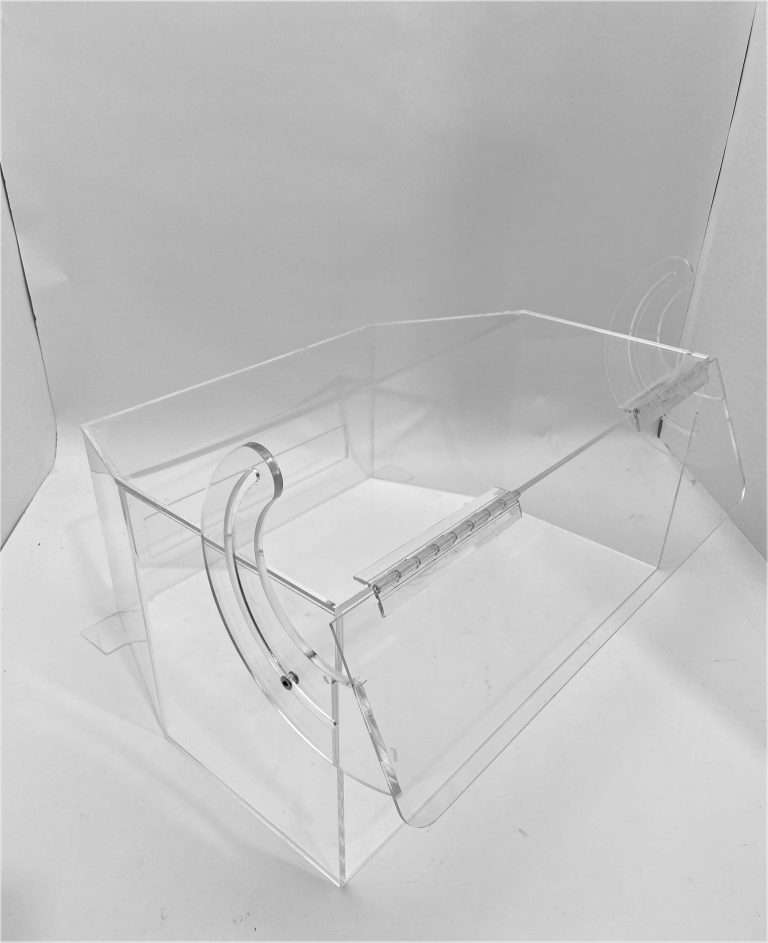
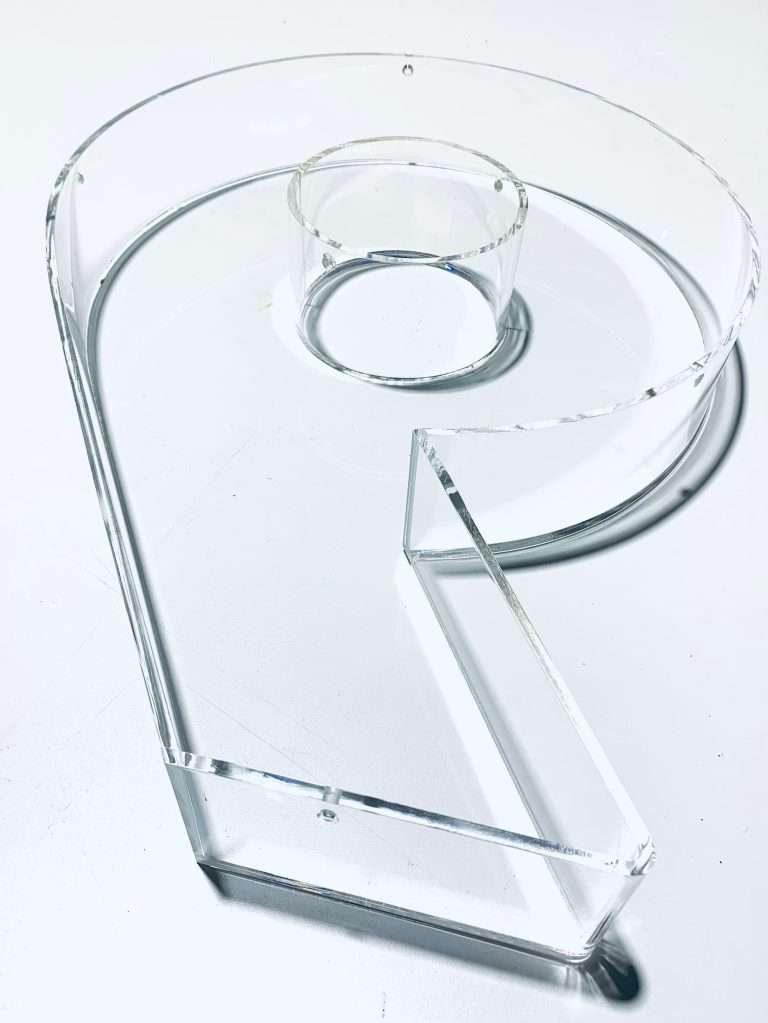
Every plant has the machine: still productive, long paid for, and orphaned — the OEM merged, obsoleted the line, or quotes replacement parts like it hopes you will go away. Meanwhile its guards live a hard life. They crack at mounting holes, yellow and craze under plant lighting and cleaners, get removed for maintenance and never quite return. And an unguarded machine is a stopped machine, whatever the production schedule thought it was. The good news is that a guard is not actually an OEM part. It is a fabricated plastic component with a mounting pattern — and anything with a mounting pattern can be measured, drawn and made.
The replacement path that doesn’t involve the OEM
The path runs: capture the geometry from the surviving guard — or from the machine itself when the guard is long gone — produce a dimensioned drawing, and fabricate to it. The middle step is the one that matters: the drawing is the real deliverable, because it outlives any single guard. The first replacement takes the measurement effort; every one after it is a purchase order against a drawing on file. That is the difference between solving a guard and solving a guard problem. The broader category of this work — guards, sash, shields and the windows machines look through — is covered in machine guards and sash replacements.
What the measurement has to capture
Plant maintenance teams can capture everything a flat or formed guard needs, with the machine locked out and a careful hour. The checklist:
- The mounting pattern, taken off the hardware. Hole positions, slot lengths and the fastener sizes actually in the machine — measured from the machine’s mounting points, not from a cracked guard whose holes may have elongated as it failed.
- Panel thickness and material. Thickness measured directly; material identified honestly (the clear sheet on an older machine could be acrylic or polycarbonate, and they are different answers — the comparison explains why it matters).
- Formed profiles, traced. A bent or formed guard needs its profile captured — a traced template of the curve beats a list of guessed radii. Formed replacements are a thermoforming job, and the profile is the tooling input.
- Interlock and hardware cutouts, positioned. Switch cutouts, handle clearances, viewing zones — located from the same datum as the mounting pattern so everything lands together.
- Photos of everything, with something for scale. Photos resolve the ambiguities the numbers miss, and we can sanity-check a quote from them — for some projects, on-site measurement can be arranged, but a plant’s own capture against this list is the normal path and the faster one.
The program angle: one drawing, every identical machine
For a multi-machine plant, the economics turn a maintenance headache into a program. One drawing covers every identical machine on the floor — measure once, and the replacement for machine 14 fits machines 2 through 30. A guard survey (walk the floor, list the machines, note which guards are cracked, crazed, missing or modified) converts into a drawings-on-file library machine family by machine family, and from then on guards behave like consumables with a part number: a replacement is a reorder, not a project. For guards that fail on a rhythm — high-abuse positions, aggressive washdown areas — recurring supply is a conversation worth having at the program level rather than guard by guard. We keep the records that make reorders straightforward; how that works from the buyer’s side is covered in reorders and files on record, and the production relationship it grows into in our contract manufacturing guide.
Replacement time is upgrade time
A guard being replaced is a guard being reconsidered, at zero additional process cost — the drawing is being made anyway. The options worth weighing, framed as the plant engineer’s choices:
- Thicker panel where the old one flexed or cracked in service — with the mounting and clearance implications drawn in, not discovered at install.
- Polycarbonate in place of a shattered acrylic original where impact is the real exposure: the standard trade of impact toughness for acrylic’s clarity and scratch resistance. (Polycarbonate is cut by saw and CNC — a material fact that changes nothing about the finished guard and everything about who fabricates it well.)
- Abrasion-resistant coated polycarbonate where cleaning killed the last guard — hazing from daily washdown is a surface failure, and a coated sheet is the option built for that exposure.
- Same-as-original, which is often right: if the old guard served for years and failed of old age, its specification already passed the only test that counts.
Design guidance for new-build guards — edge margins at mounting holes, the geometry that prevents the crack that killed the original — is in the machine guard design guide.
The role split, stated plainly
One boundary keeps this whole arrangement honest: the employer owns guarding adequacy; the fabricator executes the specified form, material and fit. What the machine-guarding rules actually ask of a material is laid out in our reading of OSHA 1910.212 — but whether a guard, as positioned and dimensioned, adequately protects the point of operation is the plant’s determination, made by the people who know the machine and the task. We build to that specification, hold it to the published ranges in Fabrication Tolerances, and keep the drawing for next time. The fastest way to start is a photo, the measurements above, and the machine’s story sent through the project intake. The machine goes back to work; the drawing goes on file; the problem stays solved.