Two very different buyers arrive at the same component. A lighting designer or fixture builder needs diffusers, lenses, and formed shades as fabricated parts of a product they are creating. A facilities manager needs one specific diffuser panel for a discontinued fixture whose lens cracked — and the manufacturer stopped answering years ago. Both are buying custom acrylic lighting components; the briefs just start from opposite ends.
The component families
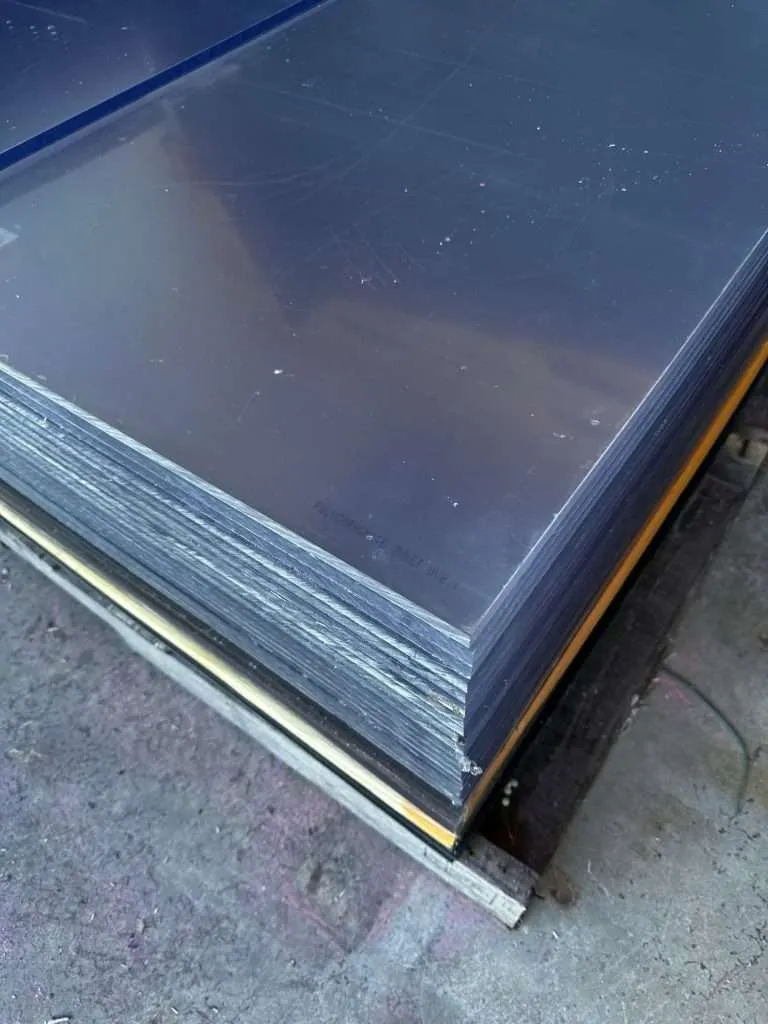
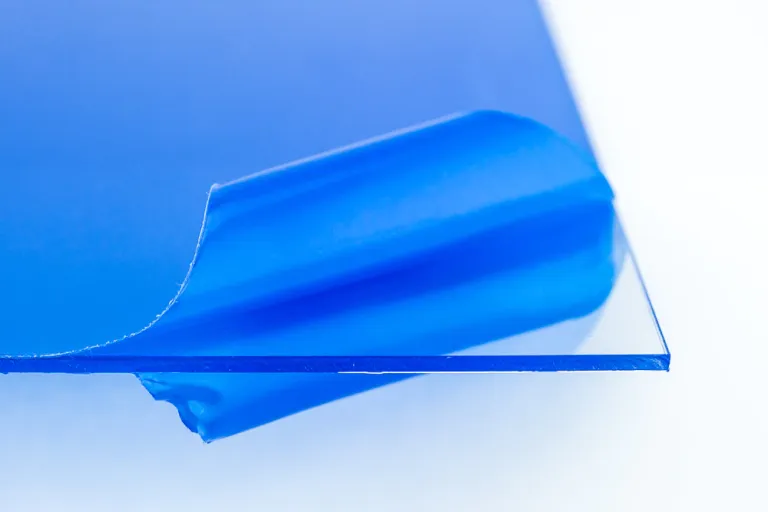
Flat diffuser panels are the volume case: frost or opal sheet cut to the fixture’s dimensions — drop-in lens panels, luminous-ceiling panels, under-cabinet lenses. Flat work rewards precision more than it looks like it would: a lens that drops into a frame has a slip fit to hold, and a panel grid across a ceiling has to read as one plane. The dimensional side of that is ordinary fabrication discipline, held to the published ranges in our Fabrication Tolerances standard.
Thermoformed shades and lens profiles — curved lenses, wrapped shades, domed and cylindrical forms. These are formed parts, which means tooling, and tooling means the economics change with quantity: the first article carries the setup, the hundredth rides it. A fixture builder planning a product line should say so at the quote stage, because the forming approach for one shade and for a recurring run are different decisions.
Laser-cut screens and decorative elements that shape light rather than diffuse it — patterned panels, baffles, apertures. Laser cutting handles the fine, repeated geometry these designs want, and the pattern itself usually arrives as the designer’s artwork, translated into a cuttable file.
Edge-lit panels. Light enters the sheet edge and leaves where the face is interrupted — the mechanism behind edge-lit signage. We build edge-lit signs and displays and integrate LEDs into that work; bring the lighting layout and the panel is built to it.
Diffusion is a material selection, not an effect
A common specification error in this category is treating “frosted” as a finish you request, like a paint color. Diffusion lives in the sheet itself: opal and frost grades are distinct materials, each trading light transmission against source-hiding. More diffusion hides the LED array behind the panel but passes less light; less diffusion is brighter but lets the panel read as a row of dots instead of a glowing surface.
Which grade wins is not a fabrication decision — it depends on the fixture’s LED spacing, the distance between source and lens, and how bright the surface must be. The honest way to specify it: get the transmission data for the candidate grades from the sheet manufacturer’s published literature, and evaluate them against your fixture’s actual geometry. Where the choice is close, a sample panel of each candidate grade — sourced from the sheet supplier and tried in the real fixture — settles it faster than any data sheet. What we bring to that conversation is the fabrication consequence of each candidate — how it cuts, forms, and finishes — not a substitute for the photometric judgment.
The replacement lane: when the fixture outlives its maker
Facilities teams carry a quiet inventory problem: buildings full of fixtures whose manufacturers have discontinued them, merged, or vanished — and lenses that yellow, craze, or crack on their own schedule. Replacing the whole fixture because one acrylic part failed is the expensive answer. The fabrication answer is replication: send the old part, or bring it in, and the replacement is built from it — profile traced, dimensions taken from the physical piece, diffusion compared against available grades.
We can quote from a photo or a sample, and for this work the sample is the one to send: a cracked lens still carries its exact profile, its thickness, and its diffusion character, which is everything a photograph flattens. One honest caveat belongs in the conversation — an exact-match diffusion grade may no longer exist if the original was proprietary, so a close match from current sheet is sometimes the real outcome, and it is worth confirming that read before a building-wide replacement run. The spec-from-what-exists workflow is the same one described in quoting from a photo or reference piece.
Heat, distance, and who owns what
Acrylic lighting components live near light sources, and the design question that raises — how close, at what temperature, with what ventilation — belongs to the fixture’s designer. Fixture thermal design is the fixture designer’s engineering: the designer sets the clearances and operating conditions, and the acrylic component is fabricated to that spec, in the material and geometry it calls for. If a spec looks off, we say so — but the design call stays with the designer. What we own is the part: its dimensions, its edges, its finish grade, and its consistency.
Production components for fixture builders
For a lighting product line, the lens or diffuser is a recurring component, not a one-off — the same part, ordered against the same drawing, across production runs that may be months apart. That is where keeping the record pays: drawings, material specification, and setup notes on file make the reorder a repeat of the first run rather than a reinvention of it, with dimensional consistency held to the same published tolerance ranges run after run. How that record works is covered in reorders and files on record.
Two buyers, then, and one discipline. The designer’s brief starts from photometrics and ends in a fabrication drawing; the facilities brief starts from a broken part and ends in its twin. Both land well when the material carries the optical job, the dimensions are held to a published standard, and — for the product line — the date the components must ship is named early enough to schedule honestly. For the wider context of acrylic in buildings, start with the architectural and interior acrylic guide.