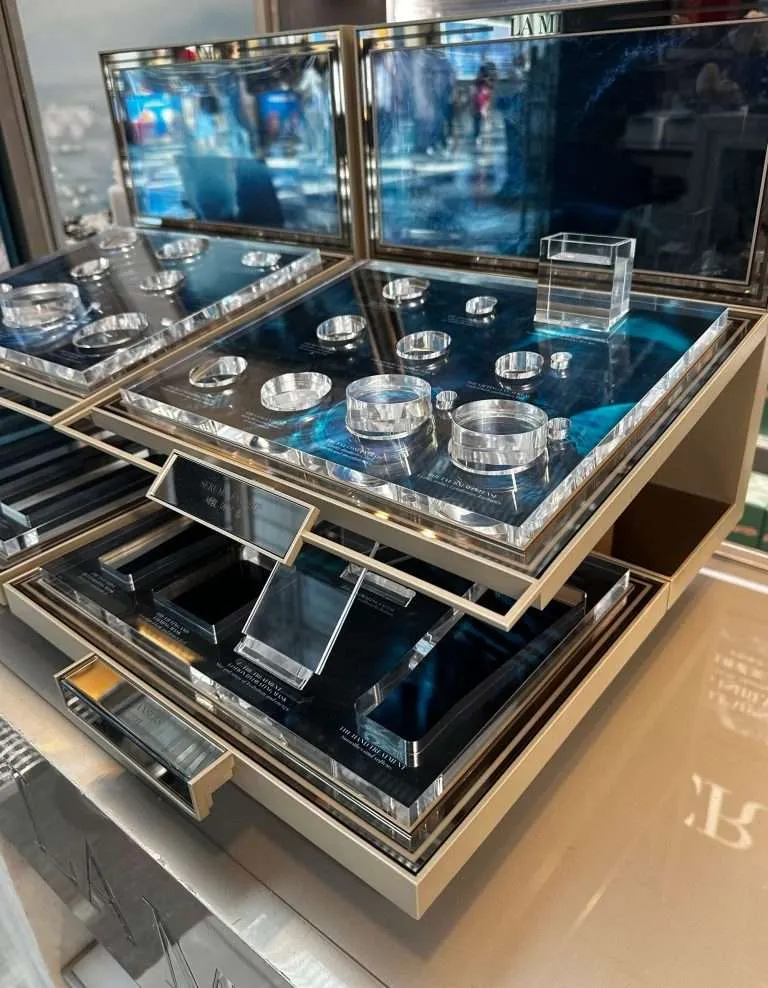
Retail theft pushes product into locked cases; locked cases push shoppers away from product. That tension is the whole design problem of a security display, and it cannot be resolved by hardware alone — it is resolved by a case designed so the lock protects the product while the acrylic keeps selling it. Done well, a locking display reads as presentation first and security second. Done badly, it reads as a warning label around your own merchandise.
One honest sentence before the design talk: a display case is a deterrent, not a safe. Its job is to stop casual, opportunistic theft and slow everything else down enough to matter — while keeping the product visible, lit and desirable. A buyer who needs vault-grade protection needs a different category of fixture; a buyer who needs to merchandise high-value product in the open needs exactly this.
Hardware integration is the fabrication problem
Cam locks, plunger locks and sliding-door tracks are all solved hardware. What is not solved by the catalog is the panel they mount in. Every lock means a cutout, and every cutout concentrates stress in a material that cares about stress concentration: a lock torqued into thin sheet, or a cutout placed tight to a panel edge, is how security cases crack at precisely their most-handled point. The fabrication answers are unglamorous and decisive — adequate material thickness around the hardware, cutout placement with real distance to edges, and machined openings with clean, low-stress perimeters rather than field-drilled holes. How much material a given lock and panel need is settled at design review against the actual hardware, not guessed from a catalog drawing. The underlying mechanics — why fixtures crack at holes and what geometry prevents it — are covered in why retail fixtures crack at holes.
Specify hardware early. A case designed around its lock carries reinforcement where the lock lives; a lock added to a finished design is a hole punched in someone’s stress assumptions.
The material call: acrylic or polycarbonate
For most secured retail cases, acrylic is the right panel: it is the clarity-first material, it polishes, and it presents product the way a counter case must. Where the threat model includes real prying or impact — unattended floor fixtures, high-theft categories, after-hours exposure — polycarbonate earns its place on toughness, at the cost of acrylic’s optical polish. That is a property decision, not a loyalty decision, and the comparison runs the same way it does for industrial applications in polycarbonate vs acrylic for machine guarding.
And the honest note that belongs in every spec conversation: on most locking cases, the panel is not the weak point — the lock, hinge and track line is. Upgrading the sheet while leaving light-duty hardware is spending the security budget on the wrong component. Specify the hardware to the threat, then the panel to the hardware.
Access pattern drives the design
Before any drawing, name who opens the case and how often, because the two common patterns are different builds:
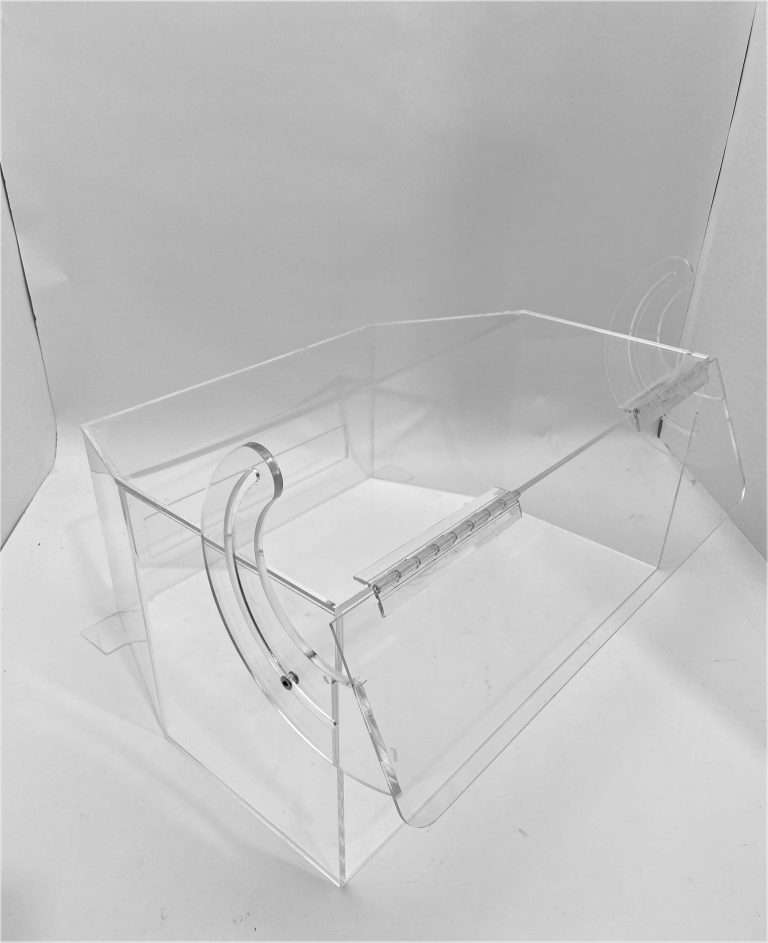
- Staff-opened-per-sale. The counter case with rear sliding doors: the shopper faces uninterrupted acrylic, staff access is fast and repeated all day, and the lock secures the service side. Track wear, door overlap and smooth one-hand operation are the design priorities, because this case opens hundreds of times a week. The broader spec checklist for this format lives in the countertop display spec guide.
- Customer-request access. Locked pegs, pushers or front doors opened by staff on request: fewer cycles, more deterrence, and a design priority on making the locked state look intentional rather than hostile — clean hardware lines, no retrofit look.
Name the pattern in the RFQ and the design follows. Leave it unstated and you get a case optimized for the wrong verb. The same logic applies at service counters generally — transaction windows and security barriers covers the adjacent family.
Bonded corners are the more secure detail
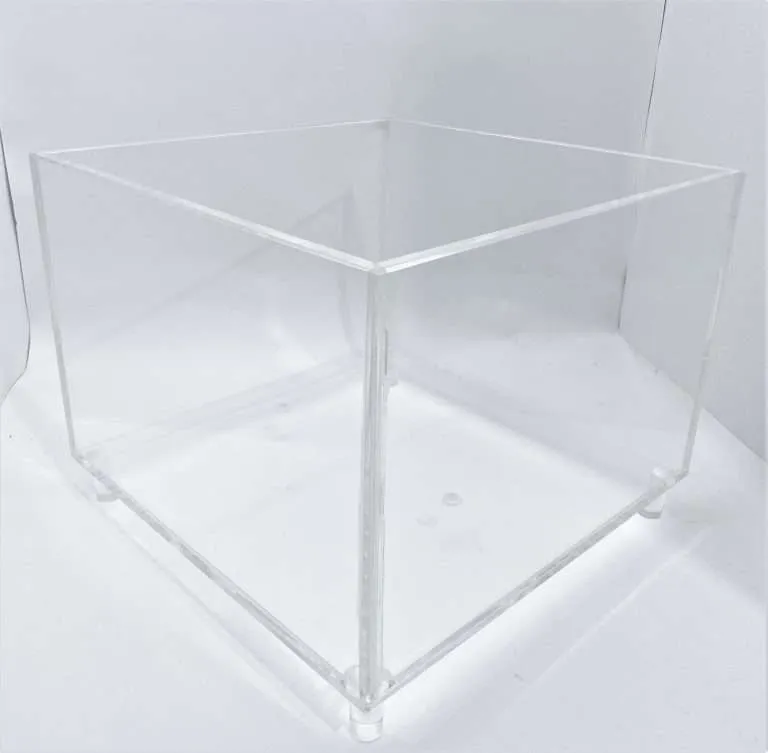
Mechanical assembly puts fasteners on the sales floor, and fasteners on the sales floor can be backed out by anyone with a pocket tool and a quiet aisle. Bonded construction removes that invitation: solvent-bonded corners make the case body a single piece with nothing external to attack, and they are also the cleaner detail — which is the rare case of the more secure choice and the better-looking choice being the same choice. Specify the bond to our Joint Clarity standard — what a good bonded joint looks like, and how to inspect one, is the subject of joint clarity on clear displays, with the formal grades in our published standards.
A locking display is a custom fixture with more decisions riding on it than most — hardware, material, access pattern, assembly method — and every one of them is cheaper to make at the spec stage than at the repair stage. Bring the product, the threat you are actually designing against, and the opening pattern to the retail display conversation, and the case that comes back will sell as well as it protects.