Rigid PVC is the sheet plastic nobody puts in a rendering. It is rarely clear, rarely glamorous, and almost never the face of a project — and yet it keeps showing up on fabrication drawings, because for a particular band of work it is simply the right answer. This guide covers what that band is, how PVC is actually fabricated, where expanded PVC fits, and the one process rule that surprises people who know acrylic first: PVC never goes on the laser.
What fabricated PVC is for
PVC earns its place on chemical duty and on cost-effective opacity. The recurring applications:
- Chemical-handling parts. Rigid PVC stands up to a wide range of acids, bases, and salt solutions that attack other clear and semi-clear plastics — which is why it is a default in plating lines, wet benches, and wash-down environments. The governing reference is always the sheet manufacturer’s chemical compatibility data for the specific reagent and concentration, checked at spec stage rather than assumed.
- Splash guards and covers. Where a guard needs to shed liquid rather than survive impact, and where see-through isn’t required, PVC does the job without spending the budget a transparent material costs. When the part must be clear or must take a hit, the selection logic changes — that fork is mapped in when acrylic is the wrong answer and the process-by-material matrix.
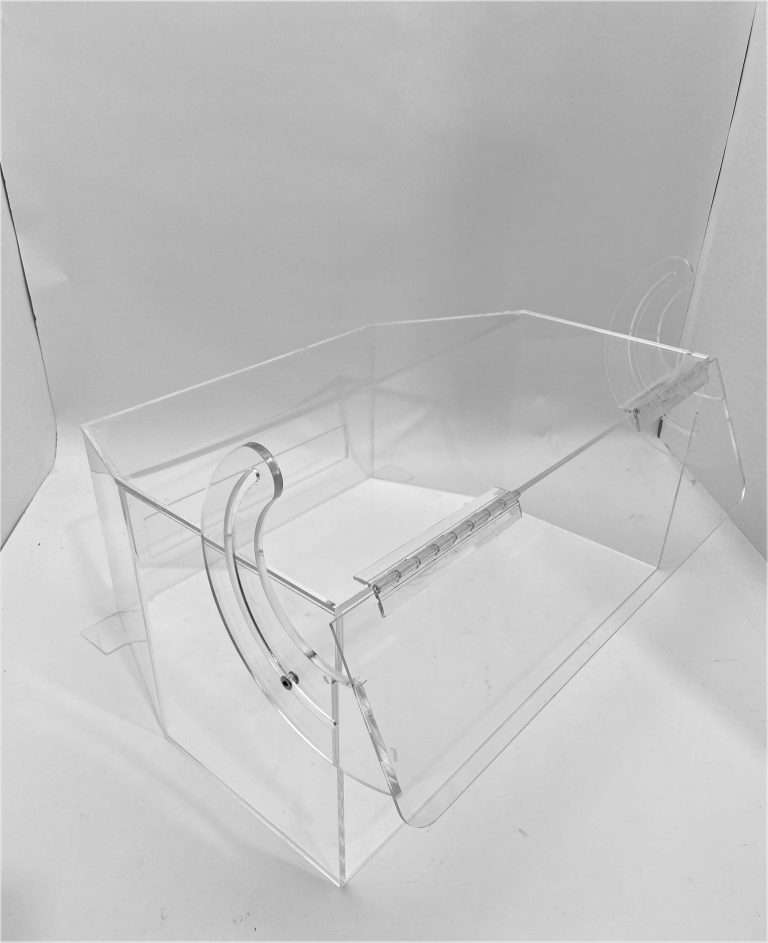
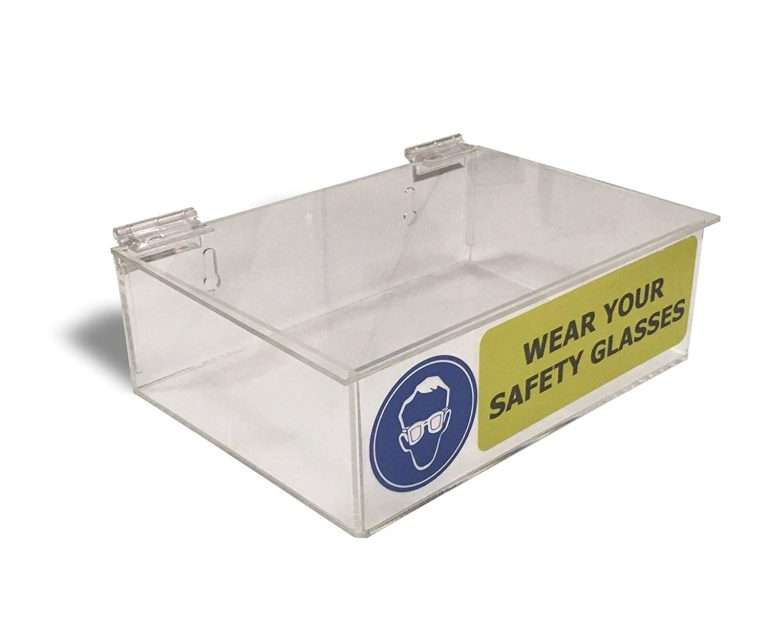
- Opaque fixtures and display structure. This is mostly expanded PVC territory — the lightweight foamed sheet sold under names like Sintra. We fabricate display and fixture work from expanded PVC regularly: graphic backers, headers, structural panels inside units whose visible faces are acrylic. (We procure the sheet and fabricate it; we don’t make the material.) It takes graphics well and keeps weight and cost down where clarity buys nothing.
Cutting: mechanical routes only
PVC is cut and machined by mechanical methods. Cut edges machine cleanly, typically hold the ranges in our Fabrication Tolerances standard for the process used, and take the finishing a given part calls for. What PVC never sees is the laser.
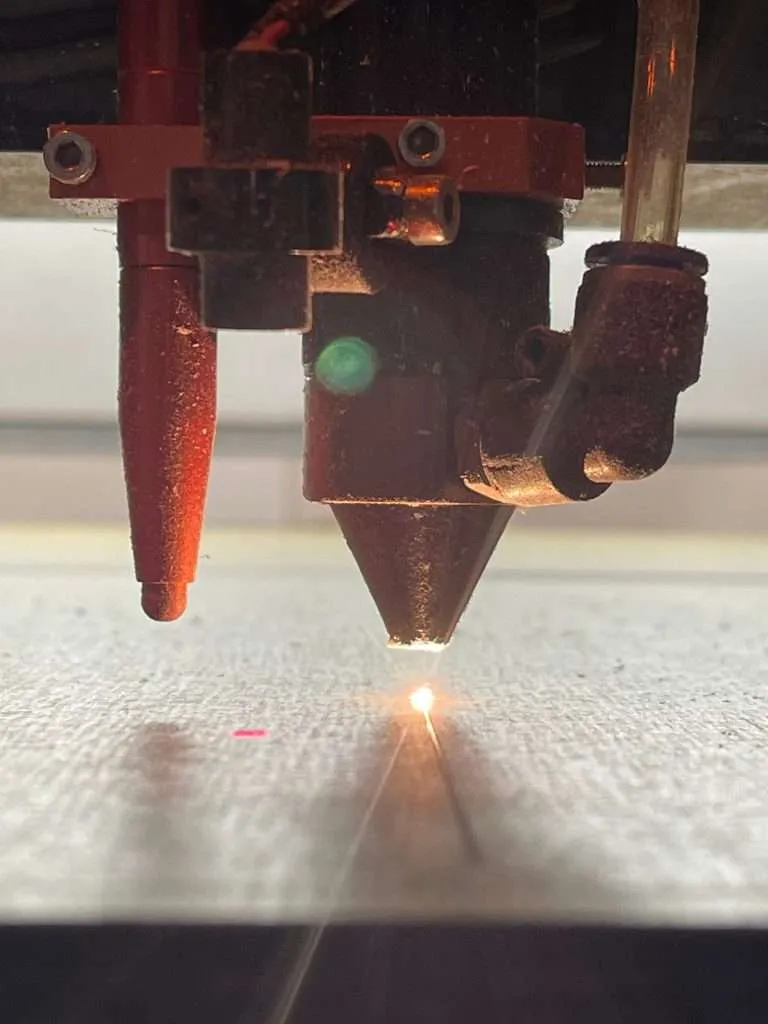
The reason is chemistry, not capability. The chlorine is built into the PVC molecule itself, and sheet manufacturers’ own fabrication guidance is blunt about what happens when it burns: the combustion products include hydrogen chloride, which is hazardous to people and corrosive to the machine itself. A laser is a controlled burn. So “laser-cut PVC” is not a service a reputable shop offers at any price, and a drawing that assumes laser-grade detail in PVC needs either a routed detail or a different material — the full story is in why PVC is never laser-cut. The practical takeaway for designers: specify the part — dimensions, edges, duty — and let the cutting route follow the material.
Forming and bending
PVC heat-bends. Line bending — heating a straight zone and folding the sheet — is a route we run across the materials that tolerate it, PVC included, and it turns flat patterns into trays, covers, and brackets without tooling. The mechanics, and what a bend does to tolerances, are covered in line bending explained.
Joining
PVC solvent-bonds well with cements formulated for it — the same chemistry family that joins PVC pipe all day in every plumbing system, adapted to sheet work. Mechanical fastening is always available, and on parts that see chemical duty plus disassembly for cleaning, it is often the better call. Which joining route a given part should use depends on its geometry, its duty, and whether it ever comes apart — name the duty on the quote and the route gets picked with it. How the bonding conversation differs across the non-acrylic sheet materials is covered in bonding polycarbonate, PETG, and PVC.
Specifying PVC without the common mistakes
- Name the chemical duty, not just the material. “PVC” on a drawing says less than “PVC, continuous contact with sodium hydroxide at the process concentration and temperature.” The second version lets the compatibility check happen at quote stage, against the manufacturer’s data, before anything is cut.
- Don’t carry acrylic’s process assumptions over. Laser detail, flame-polished edges, water-clear bonded joints — those are acrylic’s vocabulary. PVC has its own: routed profiles, machined edges, cemented or fastened joints. Drawings that speak the right vocabulary quote faster and build cleaner.
- Use expanded and rigid PVC for what each is. Expanded PVC is light, printable, and economical — structure and backers, not wear surfaces. Rigid PVC is the chemical-duty workhorse. They share a name and a cutting rule, not a job description.
- Let opacity be a feature. A surprising number of parts specified clear only need to be cleanable. If nobody looks through it, PVC is often the economical answer — and if someone does, the comparison posts above earn their keep.
PVC slots into the same production system as everything else in the shop: the same quoting conversation and the same scheduling tiers — with Reserved Production as the one mechanism that locks a manufacturing completion date when a line shutdown or install window depends on the parts. Where it fits among the processes is mapped in acrylic fabrication processes explained; what we build with it is on the services page.