Almost every display that holds product — not just presents it, but locates each unit in its own well — passes through one construction decision: are the wells formed, with heat and tooling pulling sheet into shape, or fabricated, cut flat and bonded into compartments? Buyers usually inherit whichever construction their last vendor preferred. The decision deserves better than that, because the two constructions carry different economics, hold different tolerance classes, and repeat differently across a program’s releases.
The core trade: tooling versus assembly labor
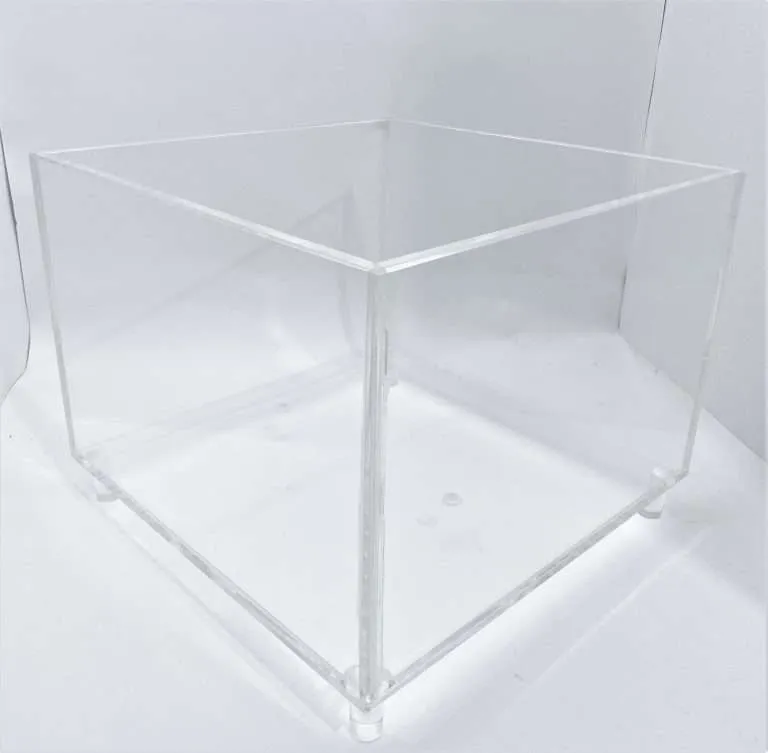
Strip away the details and the economics are one sentence each. Thermoforming buys per-unit speed and organic geometry at the price of tooling: a form has to exist before the first tray does, and after that, each tray is a forming cycle and a trim. Cut-and-bonded construction buys a tooling-free start at the price of per-unit assembly labor: the first bin costs about what the fiftieth costs, because every bin is cut, fitted, and bonded individually.
That shape makes quantity the usual tiebreaker. Short runs and one-offs lean fabricated — no tooling to amortize. Volume runs lean thermoformed — the tooling spreads across the run while per-unit labor stays low. In between sits a crossover zone where the other inputs decide, and a program expecting reorders should weigh the program quantity, not the first release: tooling built once serves every future release, which is a planning point covered in designing POP for volume runs.
Geometry sorts most cases by itself
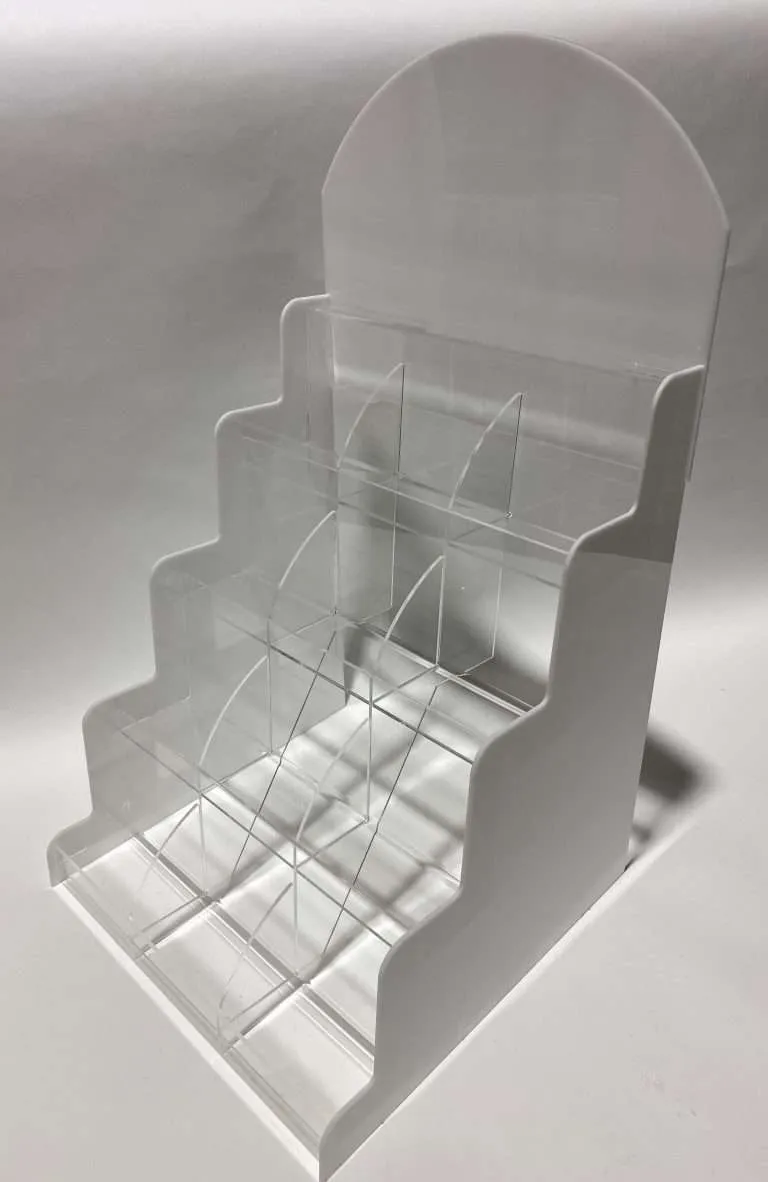
Before the quantity math even starts, geometry often ends the conversation. Contoured product cradles, rounded wells, compound curves, and drafted walls are thermoforming’s home turf — shapes that flat sheet simply will not become by cutting and bonding. Square compartments, straight dividers, sharp internal corners, and crisp rectilinear grids belong to fabrication — exactly the features forming softens. A tray that nests a round-shouldered bottle wants to be formed; a bin that files product into clean rows wants to be fabricated. When the sketch itself is ambiguous, that ambiguity is worth hearing as a hint that either construction could serve, and the economics should pick. The forming process itself — what tooling is, what draft and radii do — is explained in thermoforming explained, and the sheet-behavior side in wall thickness in formed parts: forming redistributes material, so a formed well’s walls are related to, not equal to, the starting sheet thickness.
Tolerances differ by process — and the drawing should say so
Here is the specification detail that separates a clean program from a frustrating one: formed features and machined features hold different tolerance classes, and both are published. Thermoformed features hold the thermoformed ranges in our Fabrication Tolerances standard; machined-and-bonded features hold the CNC and laser ranges. Neither is “better” — they are different physical processes with different dimensional behavior — but a drawing that dimensions a formed well to machined-feature expectations has specified a disagreement, not a part. Nesting a product snugly means designing the well to the right column. The product-fit mechanics — clearance, insertion feel, retention — are worked through in product fit tolerances.
Repeatability: two different mechanisms, both real
Across a run, each construction achieves consistency its own way. A formed tray’s shape is locked to the tooling — the five-hundredth tray matches the first because they came off the same form — and retained tooling is what makes reorders straightforward. Bonded construction achieves its repeatability through assembly fixtures: parts are cut to the machined ranges and assembled in fixtures that hold the geometry, so consistency is engineered into the build process rather than the tool. The practical difference shows up at reorder time — formed programs re-run against retained tooling, fabricated programs against retained fixtures and drawings — and either way the retained record is what keeps release N consistent with release 1.
Hybrids are common, and legitimate
The constructions combine more often than buyers expect, because each is best at a different part of the same fixture. The recurring pattern: a formed insert dropped into a fabricated shell — the insert contributes contoured, product-exact cradling; the shell contributes crisp outer walls, bonded corners, and a retail-clean presentation face. The combination pays when the product demands real contour and the fixture face has to hold a sharp rectilinear line, which describes a large share of counter displays. Hybrids also split the economics usefully: the formed component carries the tooling logic, the shell carries the fabrication logic, and each is sized to its own run. Bonded-shell construction quality is its own subject — covered in bonding methods compared.
What the quote needs, either way
Both constructions share one input requirement that saves a round-trip: the real product. Well fit is designed around the actual object — its true dimensions, its shoulder radii, how its weight sits — not around marketing dimensions from a sell sheet. Product samples are the best input; accurate 3D or 2D geometry of the held product is next best. Send either with the RFQ and the construction recommendation, the tolerance plan, and the yield math all start from reality. With the product in hand, quantity expectations and the program horizon are the remaining inputs, and the construction decision usually makes itself. The wider category context lives in our complete guide to retail and POP displays and on the retail and POP displays page.